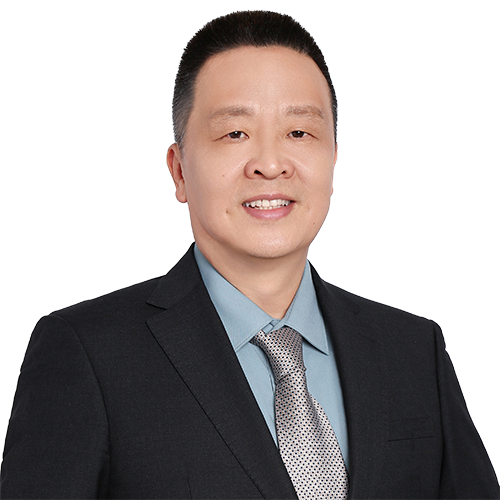


On November 15, 2025, the “4th International Trust Law Frontier Seminar” (hereinafter referred to as "), organized by Nankai University Law School and China Foreign Economic and Trade Trust Co. The Fourth International Trust Law Frontier Seminar (hereinafter referred to as the “Seminar”) was successfully held at the Law School of Nankai University in Tianjin. The theme of this seminar is “Return of Trust to its Roots and High Quality Development”, bringing together nearly 200 renowned scholars and practical experts in the fields of trust and wealth management both at home and abroad to contribute wisdom and strength to promote the high-quality development of China's trust industry and wealth management industry.
In the agenda of the 15th, Gao Chuanjie, former Director of the Non-Banking Department of the CBRC, Kelry Loi, Associate Professor of the National University of Singapore Law School, Cai Guai, Chief Economist of the China Association of Trustees, Zhou Xiaoming, Researcher of the Center for Financial and Legal Studies of Tsinghua University Law School and Expert Director of the China Association of Trustees, Qin Jiangwei, General Counsel and Chief Risk Control Officer of Foreign Trade Trust of China, Director of the Institute of Business Law, School of Civil and Commercial Economics, China University of Political Science and Law, and Director of the China Law and Economics Institute. Li Jianwei, Director of the Institute of Commercial Law of the China University of Political Science and Law and Secretary General of the Commercial Law Research Society of the China Law Society, Han Liang, Professor of the Law School of Nankai University and Director of the Capital Market Research Center of Nankai University, and Bi Jingwei, Chairman of the Macao Society of Financial Law and Associate Professor of the Faculty of Law of the Macao University of Science and Technology, spoke in turn.
At the beginning of the conference, Han Liang, Professor of Nankai University Law School, Doctoral Supervisor and Director of Nankai University Capital Market Research Center, presided over the opening. Han Liang said that this session brings together scholars and industry experts from the United States, New Zealand, Singapore, China's Hong Kong region, Macao region and mainland China trust and wealth management industry. The theme of the conference is to discuss the return of trust to its origin, trust transformation and innovation issues, aiming to build a bridge for close exchange and communication between the theoretical, practical and judicial sectors of trust and wealth management.
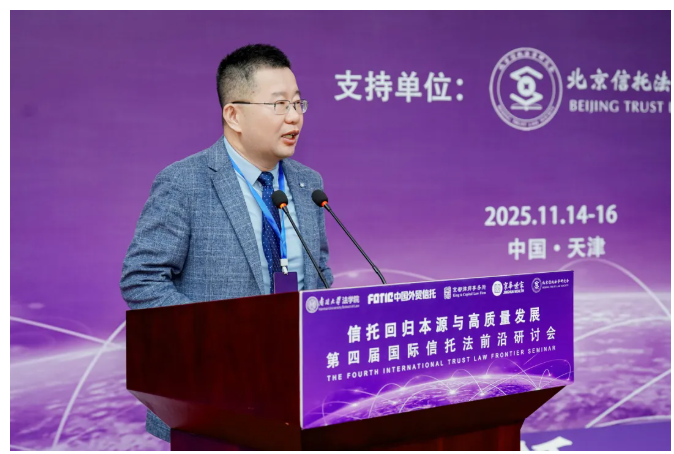
Han Liang, Professor, Doctoral Supervisor of Nankai University Law School and Director of Nankai University Capital Market Research Center
Chen Jun, Executive Vice President of Nankai University and Academician of Chinese Academy of Sciences, Song Hualin, Dean and Professor of Nankai University Law School and the 10th “National Outstanding Young Jurist”, Li Qiang, President of China Association of Trustees (CAIT) and Chairman of Foreign Trade Trust of China (FTTC), and Cai Gao, Chief Economist of CAIT also made opening speeches.
Chen Jun said: the construction of first-class university to have first-class legal education, in Nankai's 100 years of history, the development of Nankai law is rapidly changing. The theme of this International Trust Law Frontier Symposium fits the needs of China's trust transformation and high-quality development, and we hope that everyone in this symposium will share the wisdom and practical experience of the trust industry's innovation and transformation, and will continue to care about and support the development and construction of Nankai University and Nankai Law.
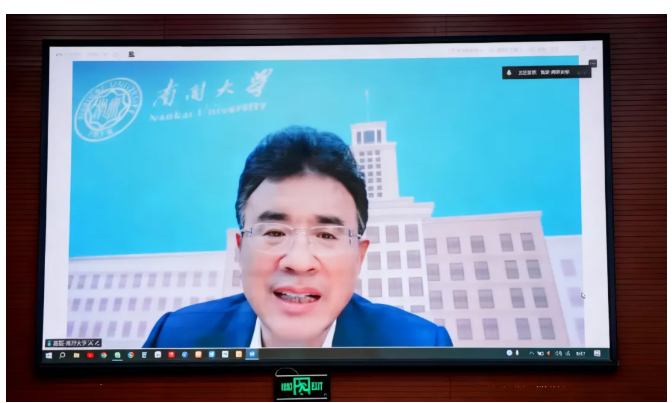
Chen Jun, Executive Vice President of Nankai University and Academician of Chinese Academy of Sciences
Li Qiang said: "Since the 14th Five-Year Plan, the trust industry has been guided by Xi Jinping Thought on Socialism with Chinese Characteristics in the New Era, deeply implemented the spirit of the 20th National Congress of the CPC and the 20th Plenum of the CPC, implemented the deployment of the Central Financial Work Conference, and actively practiced the political and people's nature of financial work, and continued to play an important role in the high-quality development of the real economy and the better life of the people. It has continued to play an important role in serving the high-quality development of the real economy and the people's good life. The “Tenth Five-Year Plan” period is a critical stage for the trust industry to return to its roots and promote high-quality development under the guidance of the “1+N” system. Focusing on the service needs of residents' wealth management, enterprise operation and development, and social governance, the trust industry has continued to promote practical innovation, and the value of trust functions has been more fully utilized. At this stage, building a communication platform between the trust academia and the industry is conducive to summarizing the experience of trust system and practice innovation, accelerating the improvement of trust top-level design and infrastructure, and assisting the industry's high-quality development. This seminar has received strong support from colleagues in the trust industry and the legal profession, and we hope that everyone will fully express their opinions at the seminar, focus on the wisdom of the industry, and jointly explore the road of trust return to its origin and high-quality development.
Song Hualin said: Nankai Law adheres to the school motto of “fairness and competence, rapid change”, and takes “Know China, Serve China” as its responsibility, and has grown into a law school with a scientific layout of disciplines, strong faculty members, a strong academic atmosphere, and a sound system of talent cultivation. A group of scholars represented by Prof. Han Liang has achieved a series of influential academic and practical results in the field of trust law and financial law, and has established extensive and in-depth cooperation with practical departments. It is believed that this seminar will further expand the influence of Nankai Law and further promote the integration of trust law and trust industry practice.
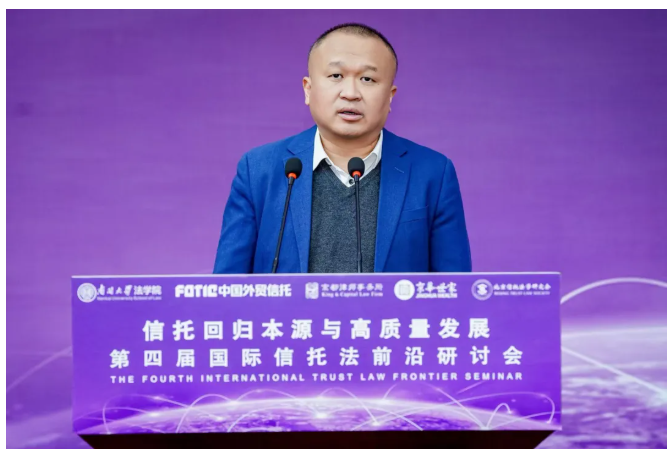
Song Hualin, Dean and Professor of Nankai University Law School, and the 10th “National Outstanding Young Jurist”.
Cai Guan also delivered a speech, looking forward to further exerting the functional advantages of the trust system in the future, further promoting the deepening transformation of China's trust services, and displaying a greater role in serving the national strategy and satisfying the people's better life.

Cai Guai, Chief Economist of China Trust Industry Association, also
In the conference keynote speech session, Nankai University School of Law Professor, doctoral supervisor, Nankai University Capital Market Research Center Director Han Liang as host, the guest speaker around the “trust to return to the origin and high-quality development” keynote speech.
Mr. Gao Chuanjie, former Director of the Non-Banking Department of CBRC, made a speech on the revision of the Trust Law with the title of “Respecting Practice, Improving Methods, and Promoting the Transformation and Development of Trust Services”. Gao Chuanjie said that the basic form of trust activities is property and wealth management, and the essence of its services, especially civil trusts, public welfare and charitable trusts, pension trusts, etc., are far beyond the scope of finance, and are deeply influenced by cultural traditions, characteristics of the times, and social relations, and are effective tools for asset and wealth management, protection of basic rights and interests, integration of various systems, and promotion of social governance. The development of the trust industry should conform to the basic laws of industrial economics, and solve the problems of resources, technology, business model, industrial connection and ripple, and industrial management relationship, etc., and there will be huge space for development in the future.
Commissioned by the legislature in 2011, Gao Chuanjie had presided over the first amendment assessment of the Trust Law and shared more than 20 research points on the amendment based on years of management experience. He pointed out that colleagues in trust research and service should study the spirit of the Central Financial Work Conference, the guidelines and policies on the high-quality development of the trust industry, adhere to the goal-oriented and problem-oriented approach, and focus on the connotation of the high-quality development of the trust industry and the existing problems, study the international practice, and make recommendations to the people's government on the development of the trust industry. problems, study international practices, conduct academic research on the protection of people's rights and interests, the handling of various judicial cases, and the stable development of the trust industry, so as to live up to the times, the mission, and the heavy responsibility, and use their wisdom to make the trust system do more good for the people, so as to enable China's trust industry to realize the grand goal of high-quality development at an early date.
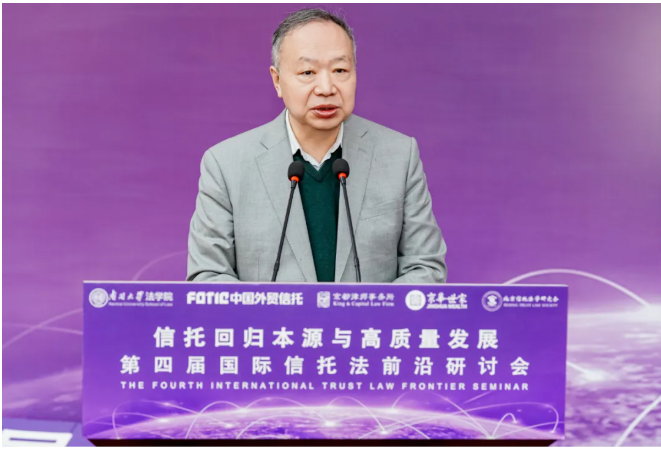
Gao Chuanjie, Former Director of Non-Banking Department, CBRC
Kelry Loi, Associate Professor of the National University of Singapore Law School, delivered a keynote speech in English under the title of “Controlling Trustees' Discretions: Withering Rights”, focusing on the issues of controlling trustees' discretionary powers and safeguarding beneficiaries' rights in private express trusts, pointing out that the control of trustees' discretionary powers and safeguarding beneficiaries' rights in private express trusts are the most important issues. Kelry Loi emphasized that the trust practice in the pursuit of trustees' autonomy has been a major factor in the development of trusts, and that the trustees' discretionary power has been greatly expanded and the beneficiaries' rights have shrunk accordingly - the trustees have been given wide discretionary power, the beneficiaries have difficulties in obtaining trust-related information, and a large number of disclaimers and exclusionary provisions have appeared in the trust documents. While pursuing principal autonomy and trust efficiency in trust practice, it is also important to guard against the erosion of the essence of the trust in order to ensure that the trust system has enforceable coercive powers to maintain the effectiveness of the trust.
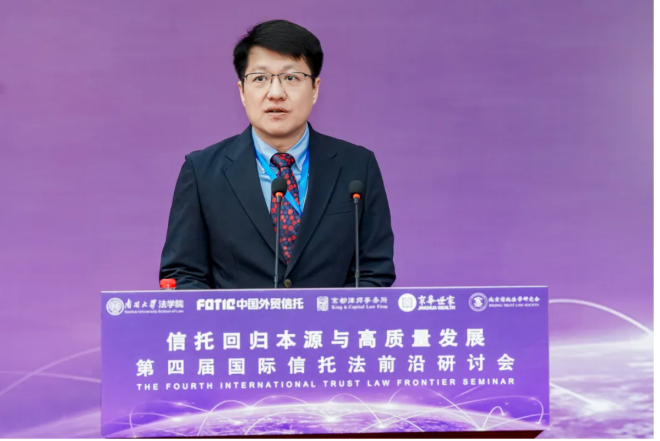
Kelry Loi, Associate Professor, National University of Singapore Law School
Mr. Cai Gao, Chief Economist of the China Association of the Trust Industry, delivered a keynote speech on the topic of “Clarifying the Functions of Trusts and Bringing into Play the Unique Value and Role of Trusts”.
Photo:
Cai Guanzhi, Chief Economist, China Association of the Trust Industry.
In the afternoon, the seminar consisted of keynote speeches and roundtable discussions. Firstly, in the keynote speech session, Ren Zili, President of Beijing Trust Law Society and Professor of Beijing University of Aeronautics and Astronautics, acted as the moderator, and the guest speakers delivered keynote speeches on the topic of “return of trust to its origin, the top-level system of the law of equity and the practice of trust”.
Photo
Ren Zili, President of Beijing Trust Law Society and Professor of Beijing University of Aeronautics and Astronautics.
Zhou Xiaoming, Research Institute of Center for Financial and Legal Studies, Tsinghua University Law School, and expert director of China Trust Industry Association, gave a speech entitled “Institutional Changes and Prospects of Trust Industry”, in which he systematically sorted out the institutional changes and functional evolution of China's trust industry over the past 46 years, and divided the course of development into three major phases: “Pan-trust Era” before the promulgation of Trust Law in 2000, “Pan-trust Era”, “Trust Law Era”, and “Trust Practice”. The development process is divided into three major stages: the “pan-trust era” before the promulgation of the Trust Law in 2000; the “one law and two regulations” stage from 2001 to 2017; and the industry entering the “three classifications” stage after the introduction of the “new rules on asset management” in 2018. After the introduction of the “new rules on asset management” in 2018, the industry has entered a new stage of returning to its origin guided by the “three classifications”, which establishes the three original functions of asset management, wealth management and social services for the trust industry. Zhou Xiaoming pointed out that the current functional positioning of the trust industry has basically matured and finalized, and the key to future development lies in the management and operation capabilities of the trust companies themselves. Whether or not they can seize the huge market opportunities is crucial to realizing the high-quality transformation of trusts.
Photo
Zhou Xiaoming, Research Institute, Center for Financial and Legal Studies, Tsinghua University Law School, and expert director of China Trust Association
Mr. Qin Jiangwei, General Counsel and Chief Risk Control Officer of Foreign Trade Trust of China (FTCT), delivered a speech on the topic of “Balancing Trustee and Shareholder Identity in Equity Trust Business” in connection with FTCT's first batch of equity trust property registration pilot projects in Beijing. Mr. Qin believed that the operational guidelines on equity trust property registration issued by Beijing had laid a solid legal foundation for equity trust business, and emphasized that trustees must balance the fiduciary obligations under the Trust Law and the responsibilities of shareholders under the Company Law, and put forward specific suggestions for active management in the mid- and late-stage in this regard. He called for the nationwide promotion of equity trust property registration and the construction of reasonable supporting tax rules to unleash the huge potential of equity trusts in wealth transmission and social governance.
Photo
Qin Jiangwei, General Counsel and Chief Risk Control Officer of Foreign Trade Trust of China
Mr. Li Jianwei, Director of the Institute of Commercial Law, School of Civil and Commercial Economics Law, China University of Political Science and Law, and Secretary General of the Commercial Law Research Society of the China Law Society, delivered a speech on the topic of “Fiduciary Obligations in Company Law and Trust Law”. He pointed out that “where there is a commission, there is a fiduciary duty”, and systematized the embodiment of the fiduciary duty in many civil and commercial laws such as the Civil Code, the Partnership Law, the Securities and Investment Funds Law, the Trust Law, and the Company Law. Li argues that the fiduciary duty in trust law is the purest, acting as a bridge between contract law and organizational law. He also focuses on the four major cutting-edge developments of fiduciary duty in the new Company Law. According to Li Jianwei, fiduciary duty needs to develop synergistically in the modern legal system, trust law is the origin and bridge, while company law has become the integrator and innovation frontier in practice, and the synergistic development of the two laws needs to be echoed by the practical, theoretical, legislative, judicial, and regulatory authorities and jointly curated by each other.
Photo
Li Jianwei, Director of the Institute of Commercial Law, School of Civil, Commercial and Economic Law, China University of Political Science and Law, and Secretary General of the Commercial Law Research Society of the China Law Society
Han Liang, Professor of Nankai University School of Law and Director of Nankai University Capital Market Research Center, delivered a keynote speech on the topic of “Legal Subject Status of Trusts and Institutional Design”. According to Han Liang, the characterization of trust in China's Trust Law is very vague and easily understood as a civil contractual relationship, which leads to a lot of theoretical and practical problems, and it is necessary and feasible to make trust a legal subject. On the basis of the legislative experience of trust as a legal (tax) subject in overseas common law system and mixed law system, combined with China's legal system and legislative practice, trust should be regarded as an unincorporated organization in the Civil Code. Han Liang has made innovative constructs on the establishment and registration system, denial mechanism, self-regulation and industry supervision mechanism of trust as an unincorporated organization. He also proposes practical transitional measures to realize the goal of future changes in the status of trust legal subjects under the current legal system.
Photo
Han Liang, Professor, Doctoral Supervisor, School of Law, Nankai University, Director of Capital Market Research Center, Nankai University
Mr. Bi Jingwei, Chairman of the Macao Society of Financial Law and Associate Professor of the Faculty of Law of the Macao University of Science and Technology, introduced the recently rewritten Investment Funds Law and its connection with the Trust Law, the new law and its relationship with the Trust Law. The new law specifies three organizational forms of investment funds, namely contractual, corporate and partnership, and focuses on the qualitative difficulties faced by the various organizational forms under Macao's legal system: contractual funds are ambiguous in the attribution of property, and their relationship with the Trust Law has not been clarified; corporate funds, as a kind of joint stock limited company created by a special law, have yet to clarify their relationship with the application of the general company law; and partnership funds are still in a state of confusion under Macao's legal system. The legal nature of partnership funds under Macao's legal system also needs to be further clarified. Mr. Bi pointed out that Macao is committed to the development of a modern financial industry, and the evolution of its legal system can provide a comparative law perspective for mainland legislation.
Photo:
Dr. Pik Ching Wai, Chairman of the Macao Society of Financial Law and Associate Professor of the Faculty of Law of the Macao University of Science and Technology.
Next, in the roundtable discussion session, Li Nan, Vice President and Partner of BJSC Family Office, acted as the moderator. Li Wenhua, Professor of Beijing Jiaotong University School of Law, Wang Qichang, Associate Professor of Shanghai University of International Business and Economics, Vicky Lord, Managing Partner of Hollis & Co. in China, and Zhang Yongfu, Senior Partner of King&Capital Law Firm in Beijing, were the panelists for the roundtable discussion on the topic of “Cross-Jurisdictional Family Trust Disputes”.
Photo:
Li Nan, Vice President and Partner, Kyowa Family Office
Photo
From left to right, Ms. Li Nan, Mr. Wang Qichang, Ms. Vicky Lord and Mr. Zhang Yongfu.
Starting from the differences between civil law and common law systems, Mr. Li pointed out that traditional concepts such as “one property, one right” are gradually softening with international practice. He emphasized that trust registration and independence are key, and called for attention to the integration of cross-border rules and the protection of beneficiaries' rights.
Photo
Prof. Li Wenhua, School of Law, Beijing Jiaotong University
Wang Qichang emphasized the need for a deeper understanding of the jurisprudential origins of equity and trust law and their interrelationships, firstly, by focusing on the rules created by jurisprudence, many of which are not found in statutory provisions; and secondly, through jurisprudential learning and innovation of rules through jurisdiction and adjudication.
Photo
Wang Qichang, Associate Professor, Shanghai University of International Business and Economics
Vicky Lord pointed out that “sham trusts” and over-control are common risks in the context of offshore trust disputes she has handled. She reminded to seek professional advice as early as possible and to emphasize on the substantive fulfillment of trustees' obligations under different jurisdictions.
Photo
Vicky Lord, Managing Partner, China, Hennessy & Co.
From the perspective of domestic practice, Mr. Zhang Yongfu suggested that there are problems with current trust enforcement such as direct penetration enforcement. He supported the introduction of reasonable elements from the common law system and emphasized that the interface between trust law and judicial practice should be strengthened.
Photo
Beijing King&Capital Law Firm Senior Partner Zhang Yongfu
Finally, the participants suggested that in cross-border trust practice, it is necessary to go beyond the form and grasp the substance, and through the deep integration of international rules and local wisdom, in order to truly build a safe and effective wealth inheritance structure.
On November 16, the seminar was divided into two parallel sub-forums: “Trust Transformation, Innovation and High Quality Development” and “Trust Infrastructure Construction and Wealth Inheritance”.
Trust Transformation, Innovation and Quality Development Sub-forum