

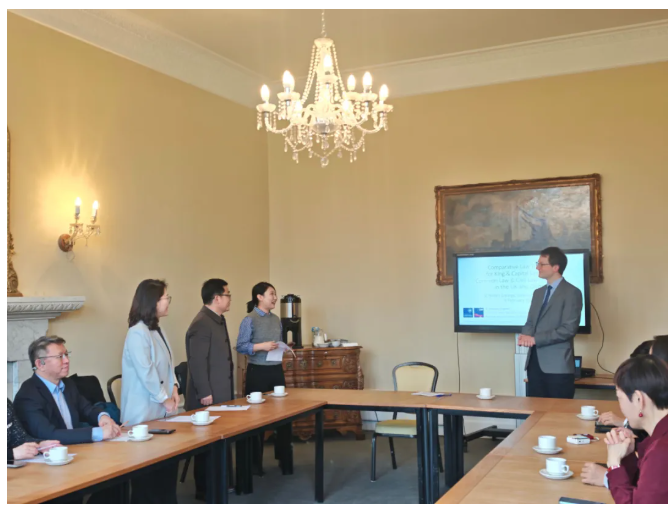
On the morning of February 9, 2026, local time, a cross-border, cross-generation collision of legal ideas was held in Oxford University as scheduled. Representatives of King&Capital Law Firm's lawyers traveled to England with their children, and in a rigorous and professional manner, in this academic institution that has accumulated a thousand years of academic heritage, they started an in-depth exchange with Dr. Johannes Ungerer LL.M.oec., Special Senior Research Lecturer at Oxford University and an Associate Fellow of St. Hilda's College at the University of Oxford, to immersively Learn the essence of the British case law system and explore the unique value of comparative law.


The exchange was led by Dr. Johannes Ungerer LL.M.oec., Erich Brost Senior Research Lecturer at Oxford Law School and Associate Fellow at St. Hilda's College. Dr. Unger has a background in German civil law education and practice, as well as teaching and research experience in the English common law system. He has long been deeply engaged in the field of comparative law and European law, and is an authoritative scholar in the study of the two major legal systems.

At the beginning of the exchange, Dr. Unger gave an overview on "Important Matters in Comparative Law". He pointed out that the world's mainstream legal systems are mainly divided into common law and civil law, with the former represented by England and Wales, and the latter covering China and most countries in mainland Europe. The core value of comparative law is not only to increase legal knowledge, but also to provide reference for law reform and facilitate the development of transnational legal practice. In particular, Dr. Angell introduced the functionalist approach to comparison put forward by German scholars, emphasizing that comparative legal systems should not be limited to the surface of the provisions of the comparison, but should be in-depth investigation of the core functions and legislative purposes behind them, such as in the comparison of criminal law punishment rules, we need to focus on the "punishment of crime", "compensation for damages", "deterrence of others" and other essential functions, in order to achieve a truly meaningful dialogue between the systems.
In the process of communication, Dr. Unger also took the initiative to raise the topic of the construction of the rule of law in China, and he was concerned about the innovation of the practice of the Chinese statutory law system, the effectiveness of the application of guiding cases, and the mode of judicial cooperation in cross-border legal affairs.
In response, the delegation of King&Capital Law Firm lawyers responded systematically with the characteristics of China's rule of law practice: the delegation introduced that in recent years, China has made remarkable achievements in the field of judicial openness, and platforms such as Judgment Documents Network and China Trial Process Information Disclosure Network have become the important first-hand information for studying Chinese law, covering complete judgment documents and trial information of various civil, criminal and administrative cases; in terms of legal reform, China has always insisted on basing itself on local conditions, and at the same time actively learning from the experience of the local government. In terms of legal reform, China has always adhered to the principle of basing itself on local conditions, while actively drawing on useful extraterritorial experiences. For example, in the process of improving the systems in the areas of intellectual property protection and cross-border commercial dispute resolution, China has not only maintained the systematic nature of the codified legal system, but also strengthened the adaptability of the laws through practical exploration; in terms of cross-border legal affairs, the Chinese courts have actively participated in international judicial assistance, and have, in accordance with the relevant international conventions and bilateral agreements, promoted the recognition and enforcement of the judgments of foreign courts. With regard to cross-border legal affairs, Chinese courts actively participate in international judicial assistance, promote the recognition and enforcement of foreign court judgments in accordance with relevant international conventions and bilateral agreements, and provide a stable and predictable institutional environment for cross-border legal cooperation. The delegation also suggested that Dr. Ngong Ping could gain a more comprehensive understanding of the theoretical and practical achievements of the development of the rule of law in China through the research reports released by the China Law Society and the academic journals of law in colleges and universities, among other channels.
In the second part of the core content, Dr. Unger systematically introduced the English case law system and made an in-depth comparison with the Chinese statutory law system from four major dimensions. In terms of sources of law, British case law is centered on judicial precedents, supplemented by the integration of enactment law, while the Chinese statutory law system is based on codes, laws, judicial interpretations and other normative documents, which are highly systematic and predictable; in terms of legal thinking modes, while British judges use "inductive reasoning" to refine the legal principles of the past precedents to apply to new cases, Chinese judges use "deductive reasoning" as the basis for legal thinking, and Chinese judges use "deductive reasoning" to apply to new cases. Deductive reasoning" as the basis, mainly based on the established legal provisions to deduce the results of the decision, but at the same time also in the legal interpretation and case guidance in the integration of analogies and value measurement; in the role of the judge and the level of power, the British judges are not only the applicator of the law, but also under the principle of ‘follow the precedent’ play the role of the law of the progressive development of the role they play through the interpretation, differentiation and even under certain conditions, they are not only the applicators of the law, but also the judges. In China's statutory law system, the core responsibility of judges is to accurately apply the law and realize justice in individual cases through legal interpretation; in terms of the balance between certainty and flexibility of the law, statutory law is known for its certainty but lacks flexibility, and case law has a strong adaptability but may lack stable expectations, while in reality, the two major systems seek a balance by drawing on each other's experience. In reality, the two systems are seeking a balance between each other, with the UK making up for the uncertainty of case law through statute law, and China enhancing the uniformity of law application through guiding cases.
In addition, Dr. Zhang also analyzed the hierarchical structure of the British court system through charts and diagrams, from the Supreme Court, the Court of Appeal to the Royal Criminal Court and the Magistrates' Courts, as well as the division of labor between solicitor and barrister, so that the members of the delegation have a visual cognition of the British judicial system. He emphasized that case law is not a rigid adherence to past judgments, but a dynamic balance between "following precedent" and "developing precedent" to achieve the unity of legal stability and social adaptability.
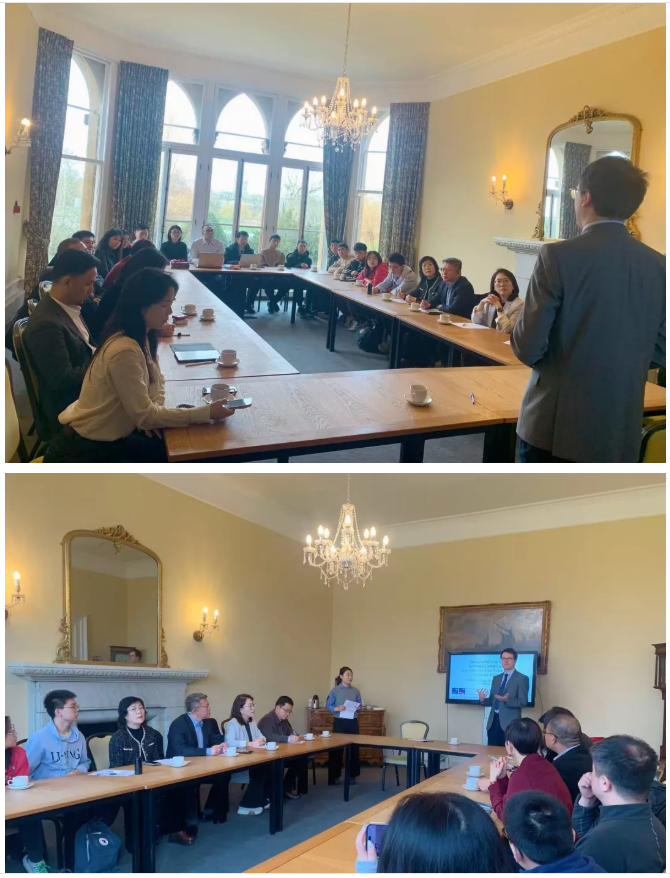
The interactive Q&A session at the end of the exchange activity had a warm atmosphere, with four questioners asking precise and in-depth questions. Dr. Unger highly affirmed the professionalism and relevance of all the questions, and praised the delegation for raising questions that focused on the core institutional differences and were also practice-oriented, adding many valuable dimensions to the discussion of this exchange.

Firstly, Mr. Feng Wang focused on the core difficulty of case law application: "In the English case law system, if there are some similarities and some differences between the current case and several previous cases, how to determine the precedents that should be invoked?" Dr. Unger responded that the core of this process is to persuade the court, not only to argue based on the authority of the precedent, but also to consider the reasonableness of the case in the light of the nature of the case and the reality of the society, and that the debates of the lawyers on both sides will help the court to make the best choice.

Dr. Weng Xiaoping, on the other hand, is concerned about the comparative law research methodology, and he raised the question of "whether to refer to the real court judgments in China when conducting comparative law research related to China". Dr. Unger frankly said that due to the language limitation, it usually relies on the secondary research materials, but high-quality secondary materials can better integrate the legal provisions, cultural background and practical application, and he also recognizes the important value of the Chinese judicial public data for the research, and expects that the artificial intelligence technology will help the court to make the best choice. At the same time, he also recognizes the value of China's public judicial data for research and expects artificial intelligence technology to bring breakthroughs in cross-language legal research.

Senior Partner Yang Damin's question focused on judicial independence, asking, "Are the judgments of British courts influenced by non-legal factors such as public opinion and political opinion?" Dr. Unger pointed out that while English judges go to great lengths to avoid interference from non-legal factors, juries, as fact-finders, can be potentially influenced by public opinion, and this is an issue that needs to be continuously balanced in the case law system.
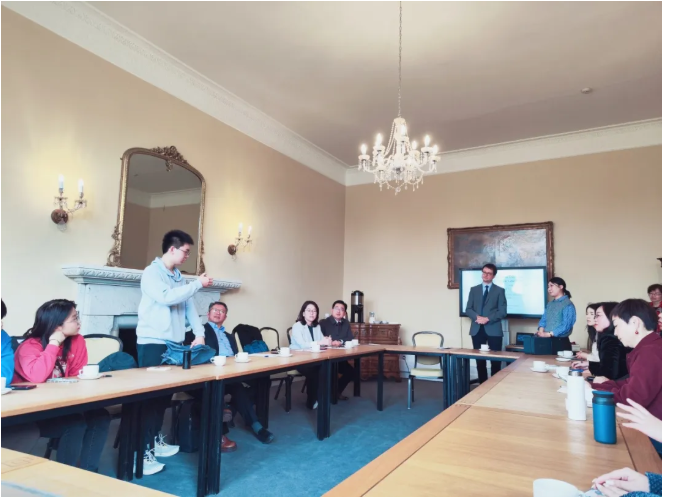
Finally, Tron, a representative of the new generation, who was listening together and participating in the exchange, questioned the rationality of the system from the point of view." The law of the sea system uses past cases to make decisions, but if the judge makes an unfair decision for the first case due to personal factors, and the subsequent cases continue to use the first case that has been developed, then this will lead to a series of unfairness, and how to solve this problem in the English court?" Dr. highly affirmed the value of the question, he explained that the adversarial court model of the case law system provides a guarantee to correct injustice, the lawyers of both sides will fully argue the applicability of the precedent, and the subsequent court will also form a self-improvement mechanism by rigorously scrutinizing the reasonableness of the precedent, and correcting the past deviation through new precedents if necessary.

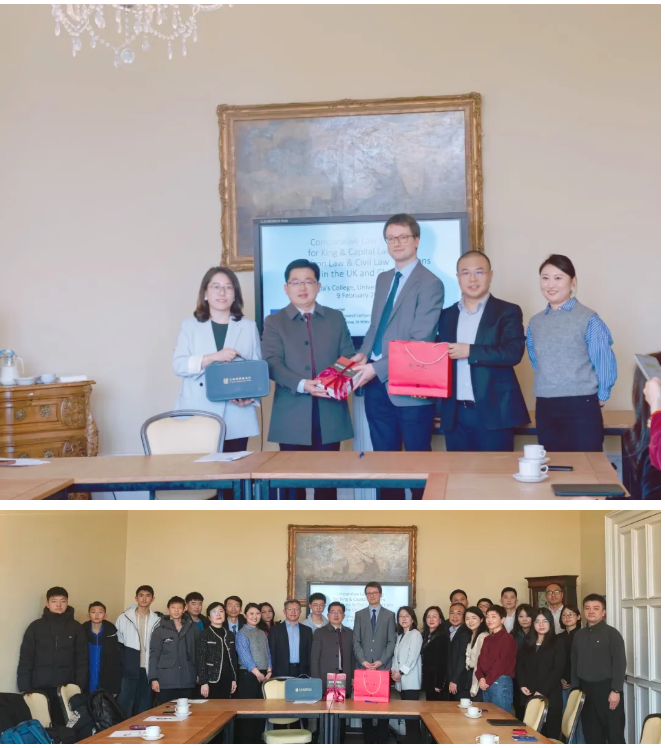
At the end of the exchange, in order to thank Dr. Unger for his wonderful sharing and frank communication, the exchange delegation of King&Capital Law Firm presented the professor with an accompanying gift specially brought from China. This gift full of heartfelt thanks to Dr. Unger for his wonderful sharing and frank communication, the delegation of King&Capital Law Firm presented the accompanying gifts from China to Prof. Unger, including the trilogy of Criminal Defense Tutorials edited by Mr. Tian Wenchang, the founder of King&Capital Law Firm, and compiled by more than 20 lawyers of King&Capital Law Firm, which condenses the experience of the criminal defense practice of the King&Capital Law Firm and the theoretical research, and has become an important carrier for the exchange of the Chinese and English criminal law practice; and the featured King&Capital Law Firm tea sets and the special Chinese tea, which conveys the Oriental elegance and culture, and at the same time, sends the The special Ky&Capital Law Firm tea set and Chinese special tea, while conveying the elegant culture of the East, also conveyed the King&Capital Law Firm's cherishing of this Sino-British legal exchange and the hope that in the future it will be able to continue to deepen the communication between the two sides of the legal culture and enhance the cooperation in the field of specialization. Dr. Unger expressed his heartfelt thanks for this unique gift and looked forward to more in-depth legal exchanges and cooperation with King&Capital Law Firm in the future.
After the academic exchange, the delegation started an in-depth tour of the University of Oxford, exploring the historical heritage of this century-old institution and appreciating the core connotation of the Oxford spirit.
The delegation visited the Ashmolean Museum of the University of Oxford, Christ Church College and other iconic places, where every building carries a heavy history and every courtyard is infused with academic flavor.

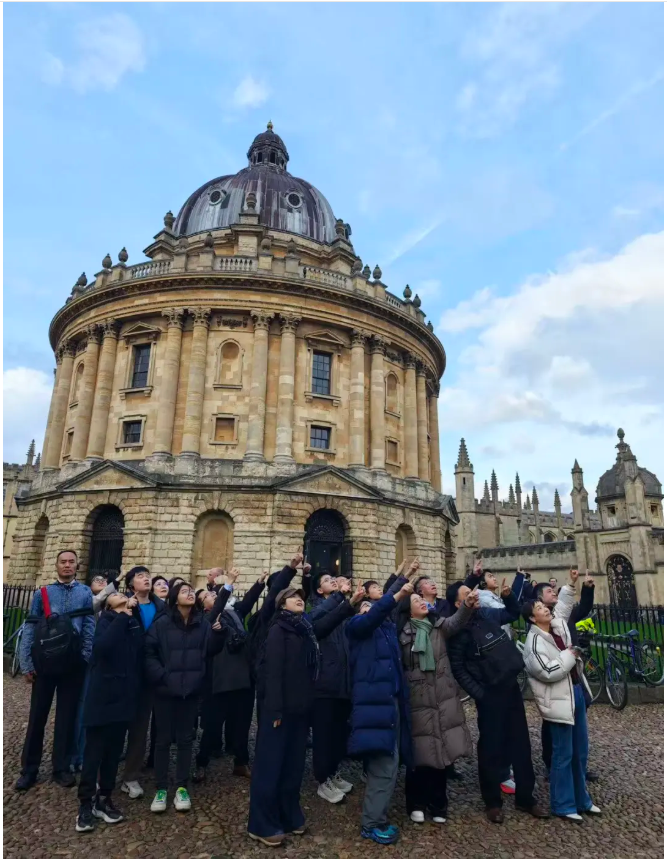
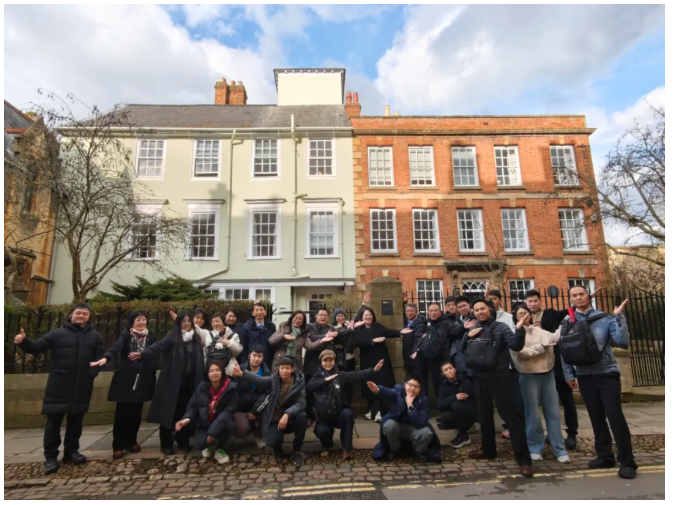
In the Ashmolean Museum, everyone stopped in front of the precious cultural relics and art collections to feel the intermingling and collision of different civilizations; in the cloisters and churches of Christ Church College, to feel the symbiosis between academics and faith. During the tour, members of the delegation took group photos and left their collective figures under the iconic scenes of Oxford University, which not only recorded the beautiful moments of the study tour, but also highlighted the diversified values of the activity in terms of academic depth, cultural breadth and experiential richness.
King&Capital Law Firm attorney Yang Ye served as interpreter for the entire exchange, providing precise and efficient language support in daily communication, academic lectures, interactive Q&A and other professional exchanges, and building a solid bridge for smooth communication and in-depth dialogue between the Chinese and English sides.
The trip to Oxford was not only a professional and in-depth legal exchange, but also a cultural dialog across time and space. The representatives of King&Capital Law Firm lawyers deepened their understanding of transnational legal practice and provided new ideas for dealing with cross-border legal affairs; the new generation of students came into early contact with the world's top legal thinking and academic atmosphere, and sowed the seeds of international vision. Through the double experience of academic exchanges and campus study, the collision and integration of legal cultures of China and the United Kingdom became more in-depth, which not only enhanced mutual understanding between the two sides, but also laid a solid foundation for future cross-border legal cooperation and training of legal talents, and also made King&Capital Law Firm's concept of "Rule of Law Inheritance, Professional Refinement" vividly interpreted in cross-cultural exchanges.