

Spring ushers in the legal arena, and debate sharpens their edge. From March 28 to 29, the first round of the 13th “Kyoto Cup” Criminal Moot Court Competition proceeded smoothly. The first and second sessions of both the main competition and the educational competition concluded one after another. Law students gathered at the competition venue, wielding the law as their sword and debate as their blade, demonstrating their professional competence through legal arguments in the simulated courtroom. For this event, the competition specially invited partners Xu Wei, Yang Haiming, and Xu Ming from King&Capital Law Firm to serve as professional judges. They provided oversight and guidance throughout the competition, offering professional commentary and valuable advice on the students’ performances from a practical legal perspective.
Case Overview
This competition centered on the Zhang San traffic accident case: At approximately 11:02 p.m. on November 28, 2019, Zhang San was driving a small passenger vehicle along Dongzhou Road from west to east. Upon reaching the intersection with Xizhou Road, while attempting to turn left from west to north, he failed to yield to oncoming traffic and collided with Li Si, who was riding an electric bicycle while intoxicated. The collision resulted in damage to both vehicles and injuries to Li Si. Li Si died the following day despite medical efforts. On April 1, 2020, Zhang San was summoned by the Traffic Police Detachment of the Bailu Branch and fully admitted to his illegal conduct. The case has now entered the review and prosecution stage.
Competition Procedure
This round of the competition strictly follows criminal procedure and is divided into four stages: opening of the hearing, court investigation, court debate, and judges’ comments, fully recreating a real courtroom scenario:
I. Opening of the Court Session
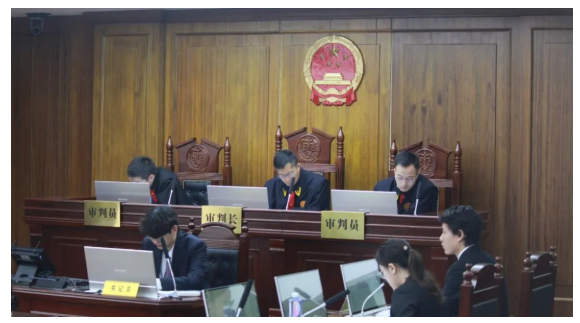
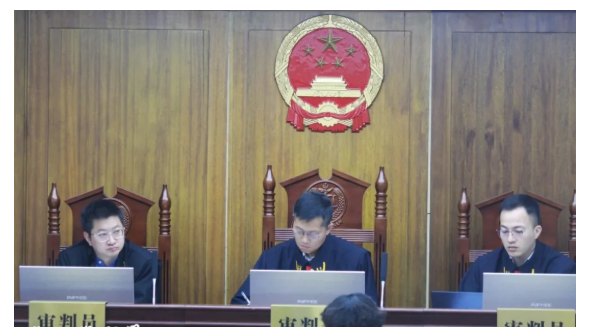
The presiding judge announced the opening of the session, verified the identities of the parties in turn, informed them of their litigation rights and obligations, clarified the composition of the collegiate bench, and confirmed that neither the prosecution nor the defense had filed any recusal motions. Dressed in formal attire and with solemn expressions, the contestants quickly assumed their courtroom roles, establishing a dignified and professional tone for the entire competition through proper etiquette and a rigorous attitude.
II. Court Investigation
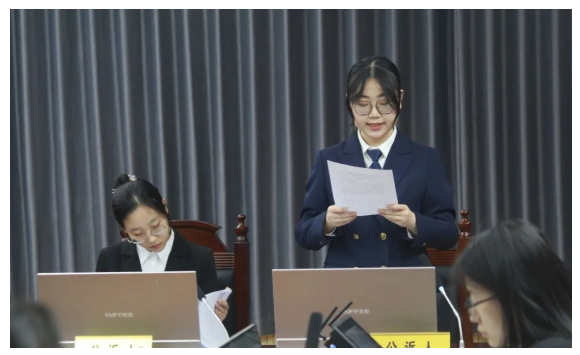
The prosecution reads the indictment, clearly stating the facts of the case and the claims, and presents evidence point by point regarding core elements such as the sequence of events, liability determination, and expert opinions; the defense cross-examines the evidence regarding its legality, relevance, and probative value, and conducts detailed questioning on key issues such as the cause of the accident and the degree of fault on both sides. Through the organization of facts and logical reasoning, both sides gradually clarify the core disputes of the case.
III. Court Debate
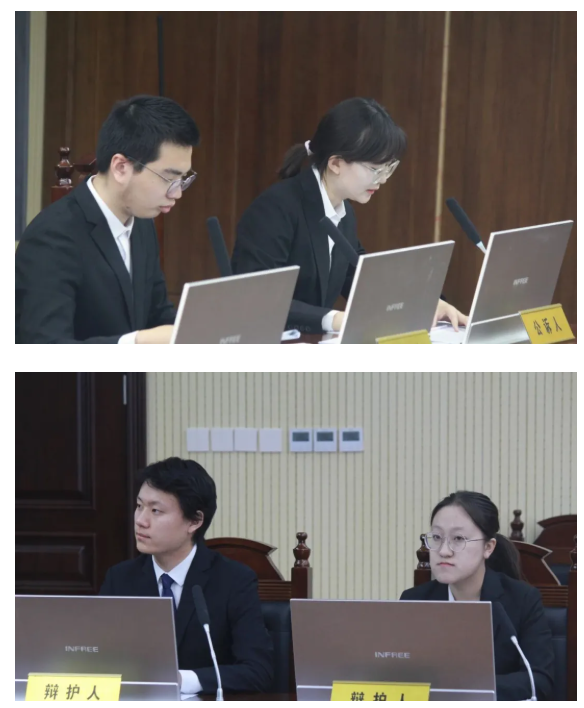
The prosecution and defense engaged in a fierce debate over the elements of the crime of traffic accident and sentencing considerations: The prosecution argued that Zhang San violated traffic safety regulations, failed to fulfill his duty of observation, and failed to yield to oncoming vehicles, which were the primary causes of the accident, and that he should be held criminally liable in accordance with the law; the defense emphasized that Li Si’s drunk driving of an electric bicycle constituted gross negligence and was a major contributing factor to the accident, requesting that Zhang San be given a lenient sentence after a comprehensive assessment of both parties’ liability. The contestants cited legal precedents and presented meticulous logic, demonstrating solid legal knowledge and excellent on-the-spot adaptability as legal principles clashed with practical considerations.
IV. Judges’ Comments
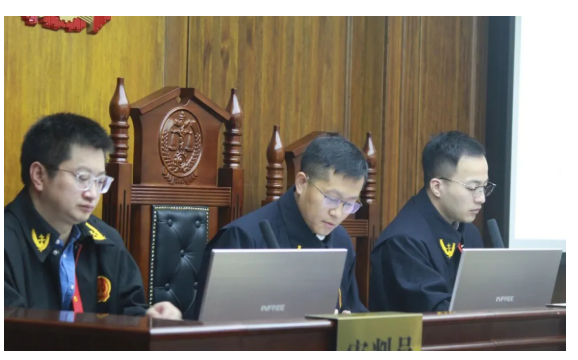
After each match, attorneys Xu Wei, Yang Haiming, and Xu Ming provided professional feedback on each team’s performance, drawing on their extensive practical experience. They fully affirmed the contestants’ overall performance, offering detailed feedback on courtroom etiquette, procedural standards for legal documents, application of the law, and logical expression. They identified the focal points of contention between the prosecution and defense, and provided specific suggestions for improvement regarding weaknesses such as evidence examination techniques, the construction of argumentative logic, and the use of legal language. They also shared practical approaches and defense strategies for handling traffic accident cases, offering valuable practical guidance to the contestants.
Event Summary
Over the two-day competition, participants in both the main trial and the instructional trial demonstrated professionalism throughout the full trial simulation process. Through competitive engagement, they enhanced their ability to apply legal principles, and through critical analysis, they deepened their understanding of the criminal justice system. The professional commentary provided by the three lawyers from King&Capital Law Firm infused the competition with a strong practical focus, allowing participants to experience firsthand the responsibilities and humanity of the legal profession beyond the confines of the classroom.
Serving as a bridge between legal education and judicial practice, the “Kyoto Cup” Criminal Moot Court Competition not only provides law students with a platform to hone their professional skills but also fosters in-depth exchange between academia and the legal profession. The participating teams expressed their commitment to reflecting on their experiences, redoubling their efforts, and continuing to shine in subsequent rounds, using their arguments to clarify the law and their reasoning to uphold justice.