

On April 26, 2026, the Second “Xizheng Criminal Defense Forum” symposium was grandly held in the Liangjiang New Area of Chongqing. With the core theme of “Defense Practices and Legislative Improvements During the Prosecution Review Stage,” the forum brought together top legal experts and judicial practitioners from across the country to explore cutting-edge developments in criminal defense and discuss institutional improvements. Attorney Liang Yali, Deputy Dean of the Institute of Advanced Studies in Criminal Defense at Southwest University of Political Science and Law, Senior Partner at King&Capital Law Firm, and Director of the King&Capital Criminal Defense Research Center, was invited to attend and deliver a keynote speech. Drawing on her professional expertise, she offered insights and recommendations regarding the review of evidence admissibility and the performance of prosecutorial duties during the review and prosecution stage.
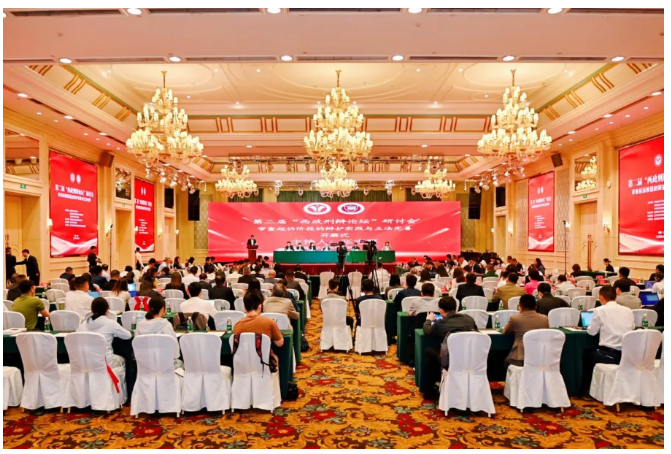
Scene from the opening ceremony
The forum was jointly organized by the School of Law at Southwest University of Political Science and Law, the Institute of Advanced Studies on Criminal Defense at Southwest University of Political Science and Law, and Beijing Dongwei Law Firm, with the support of the Center for Evidence Law Studies at Southwest University of Political Science and Law. Over 300 participants gathered, including legal experts from more than 20 renowned universities nationwide—such as Peking University, Tsinghua University, Renmin University of China, China University of Political Science and Law, and Southwest University of Political Science and Law—as well as representatives from the Supreme People’s Procuratorate, local procuratorial and judicial organs at all levels, judicial practice departments, and the legal profession. They engaged in in-depth discussions on key issues such as the theory and practice of defense during the review and prosecution stage, prosecution-defense negotiations, and legislative improvements.

Attorney Liang Yali Delivers a Keynote Speech
During the conference’s thematic discussion session on “Defense Practices in the Prosecution Review Process,” Attorney Liang Yali delivered a special presentation titled “Prosecutorial Verification of the Legality of Evidence in Major Cases.” She noted that major cases—which attract high public attention, involve complex circumstances, and entail a large volume of evidence—represent both a focal point and a challenge in criminal proceedings, as well as a high-risk area for procedural violations and irregularities in evidence collection. Consequently, the prosecutorial authorities’ upfront verification of evidence legality is of paramount importance.
Drawing on legislative norms and judicial practice, Attorney Liang Yali systematically elaborated on four core points:
Image
1. When verifying the legality of evidence in major cases, the primary concern is whether “the evidence is admissible,” rather than whether “there is sufficient evidence.” The legality of evidence forms the foundation of a case; during the review and prosecution stage, the baseline for evidence admissibility must be strictly upheld to prevent “tainted evidence” from entering the prosecution system.
2. Closely monitor four categories of high-risk evidence to fortify the defense line of legality review. First, interrogation records and synchronized audio-visual recordings: strictly control the legality of confessions to solidify the foundation of the entire case’s evidence; second, electronic data and audiovisual materials: guard against procedural risks such as copying, editing, and tampering; third, specialized evidence such as expert opinions, price appraisals, and forensic accounting opinions: strictly prevent presumption of guilt disguised as “professional packaging”; Fourth, identification records, inspection reports, and testimonial evidence: Exclude evidence influenced by vested interests, exaggerated speculation, and hearsay, while strengthening objective corroboration.
3. The core of verifying the legality of evidence is to prevent the overall distortion of the evidentiary framework. The front-end verification conducted by procuratorial organs is not a passive response to defense objections, but an active measure to ensure that the entire chain of evidence is authentic, lawful, and relevant, thereby preventing cases from being built on an unreliable foundation.
4. The verification of evidence legality should serve as a preliminary step in the prosecution’s duties. By identifying issues before the conclusion of the investigation and resolving them before the case is transferred for prosecution—through exclusion, correction, return for further investigation, and forward-looking supervision—we can prevent wrongful convictions at the source and achieve the unity of procedural and substantive justice.
Image
Attorney Liang Yali concluded by emphasizing: The more significant the case, the more we must adhere to statutory procedures; the greater the public attention, the stricter we must be in applying evidentiary standards. Only by fully leveraging the procuratorial organs’ role in pre-trial verification of evidence legality—as a gatekeeper and supervisory function—can we truly achieve the unity of punishing crime and safeguarding human rights, as well as procedural and substantive justice.
As a senior criminal defense expert with over 30 years of practice, Attorney Liang Yali has long specialized in major and complex criminal cases, cases involving the intersection of criminal, civil, and administrative law, as well as research on corporate compliance and criminal defense. She possesses both a deep theoretical foundation and extensive practical experience. Her remarks at the “West China University of Political Science and Law Criminal Defense Forum” addressed the pain points of judicial practice with clear perspectives, rigorous logic, and strong practical applicability, earning recognition and praise from experts, scholars, and fellow practitioners in attendance.
This forum helped build consensus and clarify the direction for the practical development and legislative improvement of the defense system during the prosecution review stage. Moving forward, Attorney Liang Yali will continue to focus on cutting-edge areas of criminal defense, deepening her research and practice in evidence review, procedural defense, and effective defense in major cases. She will leverage her professional expertise to advance the criminal litigation system, contributing her wisdom and efforts to upholding judicial fairness, safeguarding the legitimate rights and interests of parties, and advancing the construction of a China governed by the rule of law.