

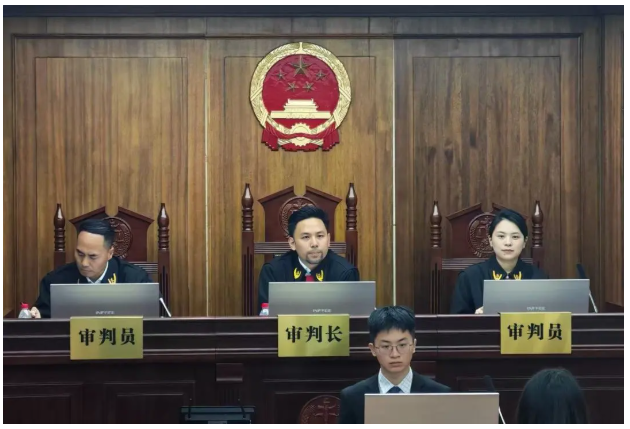
With a thousand sails racing under the strong east wind, a hundred boats vie for the lead. On May 10, the finals of the 13th “Kyoto Cup” Criminal Moot Court Competition were successfully held in Moot Court Room 405 of Mingfa Building at China University of Political Science and Law. The competition consisted of multiple segments, including the opening of the proceedings, court investigation, court debate, judges’ comments, and the awards ceremony.
The courtroom was filled with a gathering of elite participants whose witty and eloquent arguments sparked intellectual debate. For this final round, a panel of judges was specially assembled, comprising Senior Partner Weng Xiaoping, Partner Ma Lixi, and Attorney Deng Yi from King&Capital Law Firm, who provided valuable guidance to the contestants.
Highly Realistic: A Complete Reconstruction of the Criminal Trial Process
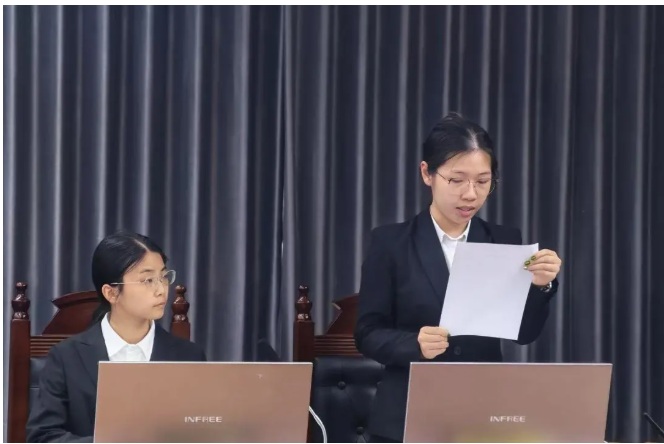
The mock trial commenced with the prosecutor reading the indictment, charging defendant Han Huiqin with bribery. The defendant denied the charges.
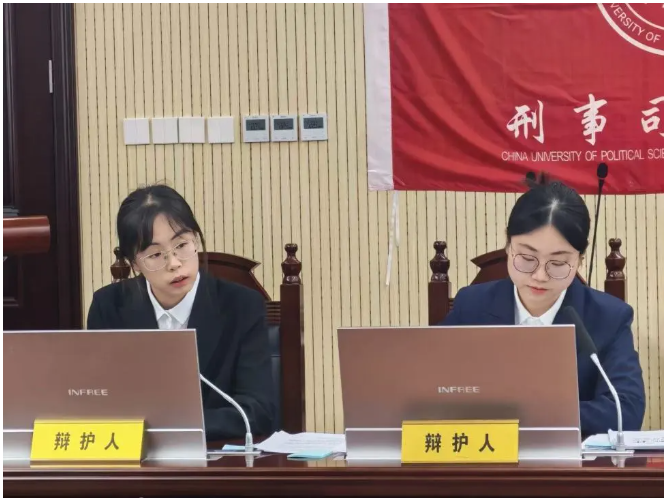
The defense argued that the indictment’s allegations of bribery against the defendant were based on unclear facts, insufficient evidence, and improper application of the law. Subsequently, both the prosecution and the defense cross-examined the defendant on relevant issues. The defendant presented a statement regarding the basic facts of the case and denied engaging in conduct constituting bribery.
The proceedings then moved to the evidentiary phase. The prosecution presented a series of pieces of evidence and called witness Zou Yuanxun to the stand, while the defense cross-examined the prosecution’s evidence. After multiple rounds of presentation and cross-examination, both sides fully articulated their respective positions.
During the court debate phase, the prosecution argued that the defendant, Han Huiqin, as a public official, objectively engaged in the act of soliciting bribes by taking advantage of her official position, subjectively possessed the intent to accept bribes, and possessed full criminal responsibility. The prosecution contended that the facts of the crime were clear and the evidence was sufficient and conclusive, constituting the crime of accepting bribes.
The defense, however, argued that the defendant, Han Huiqin, was merely performing her duties as a public official and did not seek any improper benefits. She accepted the bribe without the subjective intent to do so, and therefore did not commit the crime of accepting bribes.
Both the prosecution and the defense delivered their closing statements, and the defendant made her final statement. Finally, the presiding judge adjourned the court, and the panel of judges retired to deliberate.
Focusing on Practical Application: King&Capital Law Firm Lawyers Provide Post-Mortem Guidance on Contestants’ Performance
Following the conclusion of the competition, the attending legal experts conducted professional post-mortem reviews and evaluations of each participating team’s on-site performance. Attorneys Weng Xiaoping, Ma Lixi, and Deng Yi fully affirmed the performance of all contestants, commending the sophomore students for their outstanding on-site performance, solid theoretical foundation, and thorough preparation for the competition, while expressing high hopes for the students’ future professional development.
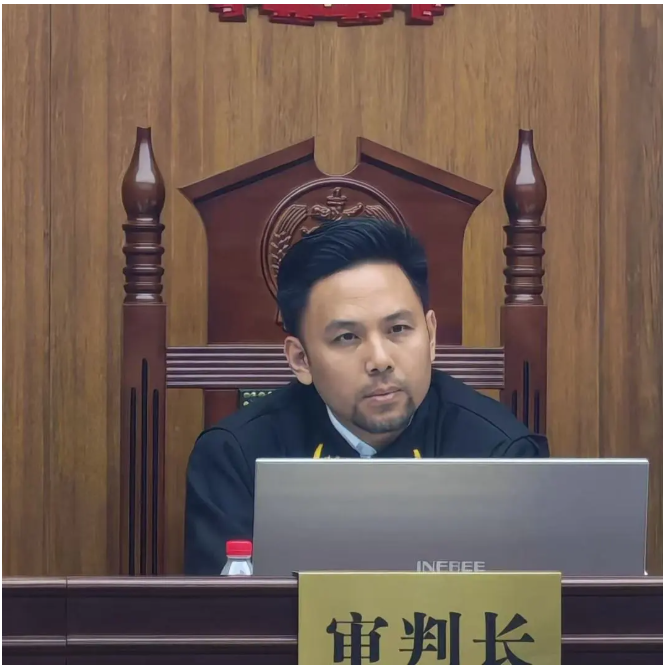
Attorney Weng Xiaoping provided a detailed analysis centered on core courtroom competencies and practical techniques for each stage of the proceedings. He emphasized that court hearings hinge on on-the-spot observation, adaptability, and pacing, and that the primary goal in competition should be to persuade the court while avoiding excessive confrontation.
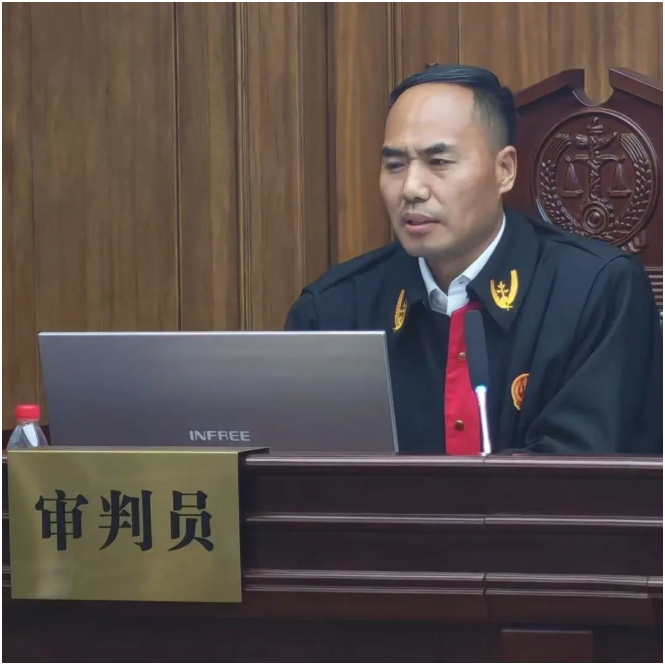
Attorney Ma Lixi systematically outlined key points regarding questioning techniques, presentation and cross-examination of evidence, and courtroom debate. He distinguished between the practical approaches of the prosecution and defense, emphasizing the need to adhere closely to the three characteristics of evidence, focus on the essential elements of the case and the points of contention, and skillfully apply the rules of court proceedings.
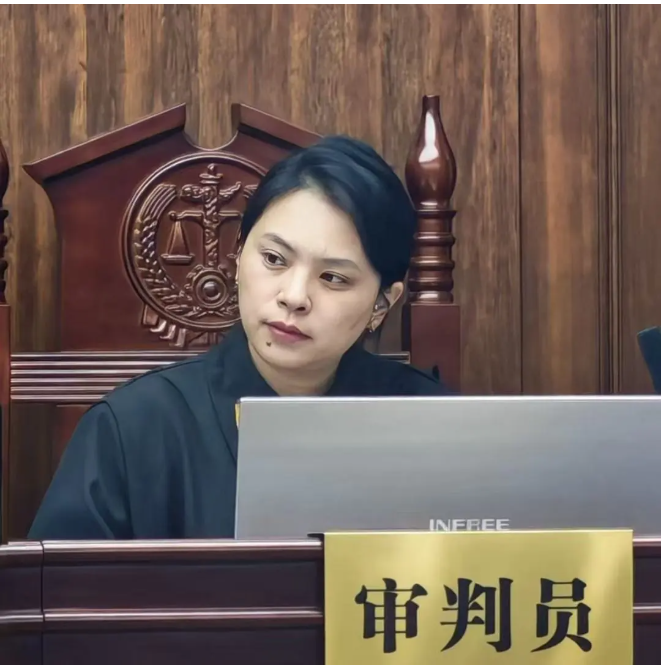
Attorney Deng Yi offered suggestions for improving on-the-spot statements, the use of legal documents, and the presentation of arguments. She advocated for flexible, extemporaneous responses, combining statutory provisions with empirical evidence to construct arguments, and precisely addressing weaknesses in competition performance. She provided contestants with practical, highly applicable professional guidance.
Using the Competition as a Bridge: King&Capital Law Firm Establishes a Platform for Legal Practice Exchange
Based on the teams’ courtroom performances and written submissions, the judges cast their votes. The team with the highest number of votes was declared the winner. In the main competition final, the prosecution team emerged victorious, with lead prosecutor Zhao Chenyu named Best Debater; in the teaching competition final, the prosecution team also prevailed, and lead prosecutor Xiao Haowen was awarded the title of Best Debater.
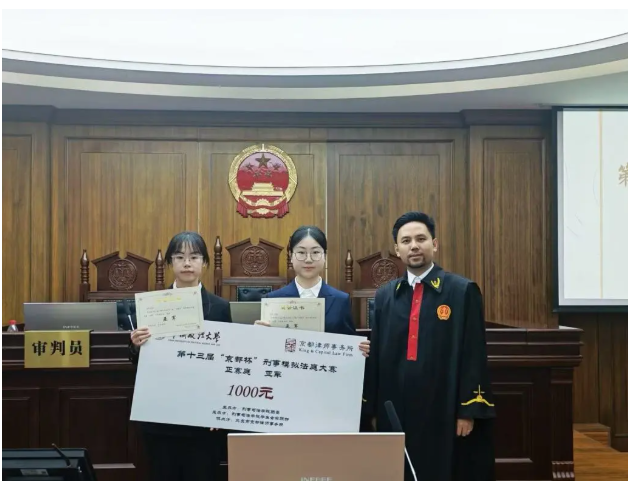
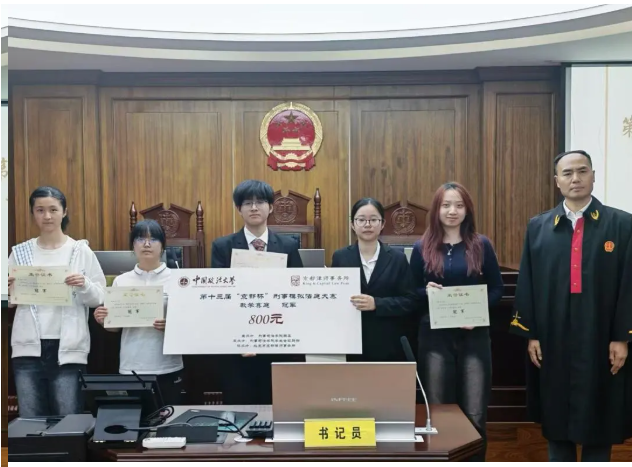
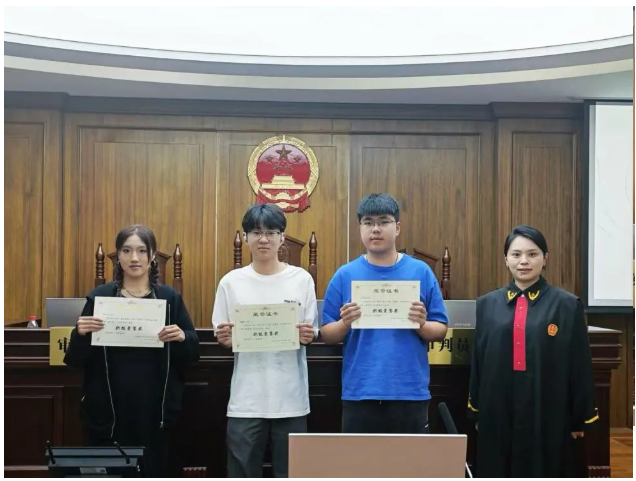
At the event, three lawyers presented certificates to the champions, runners-up, Best Brief writers, and Best Advocates of both the main competition and the educational competition.
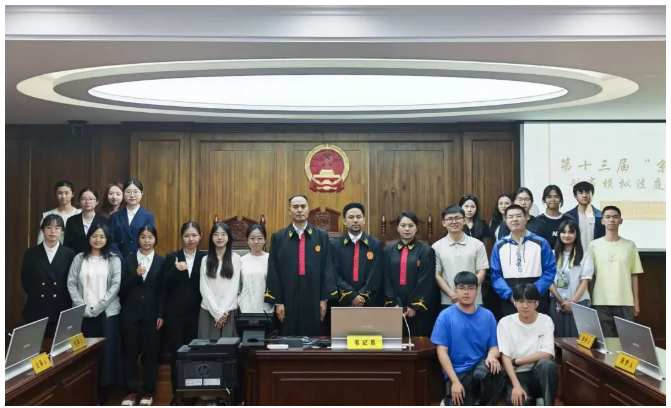
For many years, Beijing King&Capital Law Firm has remained deeply committed to cultivating legal talent and supporting the growth and development of young law students. The firm has consistently provided generous sponsorship and strong support for university competitions such as the China University of Political Science and Law’s “Jingdu Cup” Moot Court Competition. Leveraging its deep professional expertise and extensive practical experience, King&Capital Law Firm uses these competitions as a bridge to build a platform for practical legal exchange, dedicated to helping students hone their courtroom reasoning skills and strengthen their legal expertise.
From competition preparation to providing full-process support, King&Capital Law Firm has consistently upheld its original mission of public-spirited education. Numerous senior partners, partners, and attorneys have personally attended the events to provide guidance, offering hands-on assistance to help the next generation of legal professionals grow. Through these concrete actions, the firm fulfills the legal industry’s social responsibilities, continuously infusing the development of future legal talent with warmth and professional momentum.