

Recently, a public order case involving personal conduct handled by attorneys Li Mingzhen and He Shunqi of Beijing King&Capital Law Firm has been resolved. The defendant, Zhang, was accused by Li of indecent assault based on alleged physical contact between the two. After an investigation, the public security authorities decided not to impose an administrative penalty. Subsequently, Li filed both an administrative reconsideration petition and an administrative lawsuit. The court ruled to overturn the decision not to impose administrative penalties. After a re-investigation, the public security authorities once again issued a decision not to impose administrative penalties—still concluding that the alleged violation could not be substantiated.
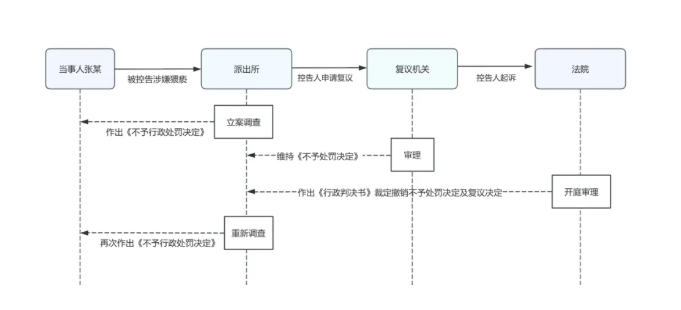
This case spanned nearly a year, undergoing four rounds of proceedings—including a public security investigation, administrative reconsideration, administrative litigation, and a re-investigation—and ultimately, the client was not found liable for any violation. The two “decisions not to impose administrative penalties” represent two independent judgments by the public security authorities regarding the same set of facts, and are the result of the defense attorney’s persistent advocacy and legal arguments throughout each stage of the proceedings.
This article offers a brief analysis, from the perspective of the defense attorney and based on the course of this case, of the scope for legal intervention and the representation strategies in public order cases involving personal conduct.
I. Public Order Investigation Stage: Legal Assistance Provided by the Attorney
During the investigation of public order cases, the person alleged to have committed the violation has the right to make statements and present a defense. In practice, however, the person often faces a dilemma: they do not know what to say or what not to say, worrying that silence will be interpreted as an admission of guilt, yet also fearing that explanations might make matters worse.
Although the *Law on Public Security Administration Punishments* does not explicitly stipulate that a person alleged to have committed a violation may retain a lawyer to participate in the investigation process, according to the *Lawyers Law*, lawyers may accept a retainer to provide legal consultation to the client. During the investigation phase, a lawyer’s value lies not in communicating directly with public security authorities, but in helping the client make rational and effective statements and defenses based on a full understanding of the legal consequences—which facts must be explained, which statements might be misinterpreted, and which lines of evidence should be proactively provided. All of these require professional judgment.
Following the public security authorities’ investigation of this case, a decision was made not to impose a penalty. It is worth noting that once the public security authorities conclude their investigation, the following three outcomes are most common: first, a decision to impose an administrative penalty (such as detention or a fine); second, a decision not to impose a penalty (where the facts of the violation cannot be established, or the circumstances are significantly minor, etc.); and third, referral to the competent authority for criminal prosecution where a criminal offense is suspected. In this case, the public security authorities based their decision not to impose a penalty on the grounds that “the facts of the violation cannot be established,” meaning the client did not commit a violation at all, rather than “the circumstances are minor and thus exempt from punishment” . The grounds for this decision not to impose penalties play a guiding role in the subsequent course of the case.
II. Administrative Review Stage: The Third Party “Takes the Initiative”
After the public security authorities issued the decision not to impose penalties, Li, dissatisfied with the decision, filed an application for administrative review with the district government. At this stage, Zhang’s status in the review proceedings was that of a third party.
Many parties have a misconception: they believe that administrative reconsideration is about “suing the police” and has nothing to do with them. In reality, if the reconsideration authority accepts the aggrieved party’s arguments, it is entirely possible that the decision not to impose a penalty will be revoked, the public security authorities will be ordered to reissue a penalty decision, or the decision not to impose a penalty will be directly amended. The third party’s interests are directly affected by the outcome of the reconsideration; passively waiting is tantamount to leaving one’s fate to the whims of others.
At this stage, the third party may retain a lawyer to carry out the following tasks during the review process:
1. Thoroughly Review the Case Files
The right to review case files during the administrative review stage is an important right granted to third parties by the *Administrative Review Law*. By reviewing the case files, the lawyer obtains all materials from the public security authorities’ investigation—including interrogation transcripts and surveillance footage—laying a factual foundation for subsequent representation. Reviewing the case files is a prerequisite for identifying deficiencies in the evidence and finding points of breakthrough in the argumentation; it is also one of the most valuable aspects of a lawyer’s involvement in the administrative reconsideration process.
2. Submitting Written Legal Opinions
After reviewing the case files, the attorney argues—from the perspectives of the integrity of the chain of evidence, the reasonableness of the victim’s statements, and the objective corroboration provided by on-site surveillance footage—that the public security authorities’ decision not to impose a penalty is based on clear facts and the correct application of the law. The legal opinion submitted during the administrative reconsideration stage essentially serves as a “second verification” of the public security authorities’ investigative conclusions—the lawyer must examine all evidence in the case from an independent perspective, identify substantive grounds supporting the decision not to impose punishment, and simultaneously address any potential objections raised by the victim.
3. Participating in the Administrative Reconsideration Authority’s Investigation
In certain cases, the applicant may file a request for a hearing with the administrative reconsideration authority, which may also organize a hearing on its own initiative. Although a third party cannot directly request a hearing, they may authorize a lawyer to participate in the hearing to present their views and submit evidence.
Ultimately, the district government issued a reconsideration decision upholding the decision not to impose penalties. However, this was not the end—Li subsequently filed an administrative lawsuit with the People’s Court.
III. The Administrative Litigation Phase: A Professional Showdown in Court
In the administrative litigation, the defendant was the district government that had issued the administrative reconsideration decision, while Mr. Zhang continued to participate in the proceedings as a third party. The focal point of the trial at this stage was whether the public security authorities’ decision not to impose a penalty was lawful.
In this case, the court issued a judgment of revocation—revoking both the decision not to impose a penalty and the administrative reconsideration decision. However, this outcome does not equate to a finding that the parties had committed a violation. The court’s grounds for revocation were that the public security authorities’ factual findings were unclear and the primary evidence was insufficient; it did not constitute a substantive determination on whether the alleged violation had occurred.
Following the judgment, the public security authorities reopened the investigation. After gathering supplementary evidence and conducting a re-examination, they once again issued a decision not to impose a penalty—still concluding that the facts of the violation could not be established and that the act did not constitute indecent assault.
This outcome highlights an important point: “winning” or “losing” an administrative lawsuit cannot be simply determined by the outcome of the judgment. While the court’s annulment of the decision not to impose a penalty may appear to be a victory for the alleged victim, if the annulment pertains to procedural issues or the sufficiency of evidence, the public security authorities can still reach the same substantive determination after rectifying the deficiencies. What truly determines the party’s fate is not the operative part of the administrative reconsideration decision or the first-instance judgment, but rather the final substantive determination made by the public security authorities.
IV. Key Considerations in Handling Public Order Cases Involving Personal Safety
Based on this case, the author has summarized the following core points:
1. Evidence Review Is of Utmost Importance
The core of case review lies in the evidence. Particular attention should be paid to the following: Are the interrogation transcripts complete? Have the surveillance videos been fully extracted? Are the expert opinions objective? These factors directly determine whether the facts of the violation can be established. During the administrative reconsideration stage, attorneys should immediately request access to the case files and conduct a systematic review of all evidence—examining not only the content of the evidence itself but also the corroborative relationships and logical chains among the evidence.
2. Focus on Procedural Legality
In this case, one of the reasons the court overturned the decision not to impose a penalty was procedural issues. When reviewing an administrative penalty decision, special attention should be paid to whether there were flaws in the public security authorities’ investigative procedures: whether the number of law enforcement officers met requirements, whether expert opinions were served in accordance with the law, and whether rights were fully communicated—these are all entry points through which lawyers can raise objections. Procedural legality is not merely a formal requirement but also a safeguard for substantive justice.
3. Focus on “Multiple Remedies” in Administrative Proceedings
Cases of this nature may go through multiple rounds of proceedings, such as “public security investigation → decision not to impose a penalty → administrative reconsideration → administrative litigation → reinvestigation → new decision,” and may even trigger a new round of litigation after the new decision is issued. Each round of proceedings presents an opportunity for lawyers to play an active role: during the reconsideration stage, they can request access to case files and submit legal opinions; during the litigation stage, they can apply to appear in court to present arguments; during the reinvestigation stage, the parties have the right to submit new evidence and present statements and defenses.
V. The Other Side: Remedies Available to Victims
The above analysis is from the perspective of the suspected offender. However, the legal tools available in public order cases involving personal injury do not belong exclusively to one party; victims also have multiple avenues for redress. Understanding what the other party can do is precisely the prerequisite for effectively defending one’s own position.
1. Filing an Application for Administrative Review
If the victim disagrees with a decision not to impose a penalty, they may file an application for administrative review within 60 days of receiving the decision notice. During the review proceedings, the victim may request access to case files, submit evidence, present arguments, and demand that the reviewing authority revoke the decision not to impose a penalty.
2. Filing an Administrative Lawsuit
If the administrative review upholds the decision not to impose a penalty, the victim may still file an administrative lawsuit with the People’s Court within 15 days of receiving the review decision. In the lawsuit, the victim may act as the plaintiff and request that the court review whether the public security organ’s decision not to impose a penalty is lawful.
It is important to note that in an administrative lawsuit, the victim does not directly ask the court to rule that the other party’s conduct was unlawful; rather, the victim requests that the court revoke the decision not to impose a penalty and order the public security organ to re-examine the case. The court cannot directly issue a penalty decision in place of the public security authorities, but it can require the public security authorities to reinvestigate the case after correcting any procedural defects.
3. The Private Criminal Prosecution Route
If the victim has sufficient evidence to prove that the perpetrator’s actions constitute a criminal offense (such as the crime of forced indecent assault) and the public security authorities refuse to file a case, the victim may also file a private criminal prosecution with the People’s Court. This is a more severe legal avenue than administrative penalties, but it also entails a higher standard of proof and a greater burden of proof.
VI. Conclusion: Every Round of Proceedings Deserves Serious Attention
Public order cases may seem like “minor matters,” but they actually concern citizens’ reputation and freedom. Behind the two “decisions not to impose penalties” in this case lies a continuous struggle across four rounds of proceedings. For the parties involved, the greatest danger often lies not in “losing” a particular round of proceedings, but in “failing to appear” during that round. The value of a professional lawyer lies not in promising a specific outcome, but in ensuring that the client does not fail to appear, remain silent, or give up at any stage of the proceedings—exhausting every available legal means, within the bounds of the law, to secure the most favorable substantive outcome for the client.