

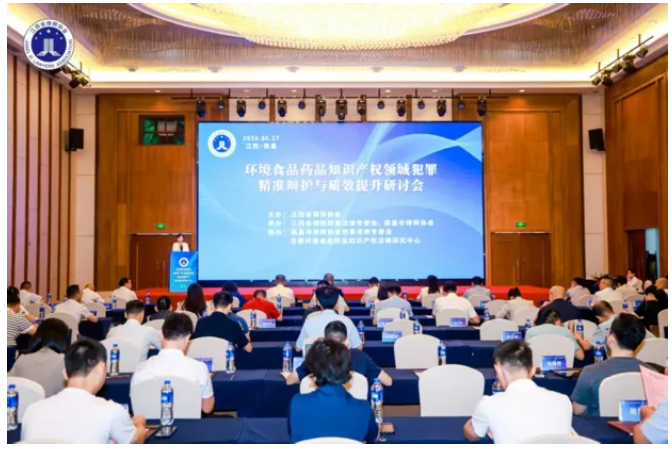
On June 27, the “Seminar on Targeted Defense and Improving the Quality and Efficiency of Defense in Crimes Related to the Environment, Food, Drugs, and Intellectual Property” was successfully held in Nanchang. The event was hosted by the Jiangxi Provincial Bar Association in Nanchang, jointly organized by the Criminal Law Professional Committee of the Jiangxi Provincial Bar Association and the Nanchang City Bar Association, and co-organized by the Criminal Law Professional Committee of the Nanchang City Bar Association and the King&Capital Research Center for Environmental, Food, Drug, and Intellectual Property Law. Tang Jianbin, Director of the Center; Zhang Sijia, Deputy Director and Secretary-General; and Wang Zhiqiang, Deputy Director, delivered specialized lectures on defense strategies for food, drug, environmental, and intellectual property crimes, respectively, while Deputy Director Lü Yan delivered a presentation during the discussion session.
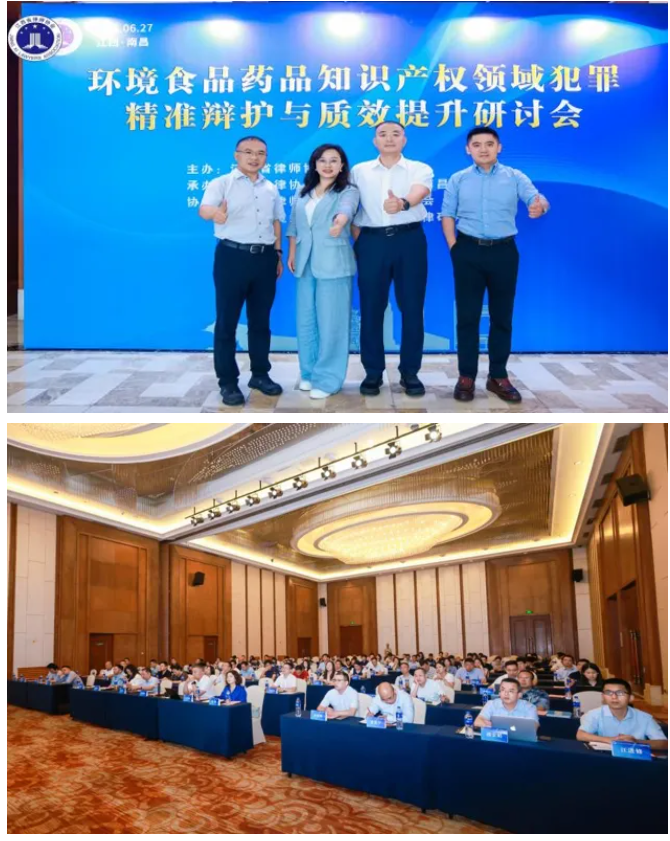
Hu Bin, Director of the Criminal Law Specialized Committee of the Jiangxi Provincial Bar Association, delivered the opening remarks, emphasizing the importance of this seminar and noting that it marked the first large-scale training and seminar event organized by the Jiangxi Provincial Bar Association to focus specifically on defense strategies for environmental, food, drug, and intellectual property crimes. More than 170 participants attended, including Mao Qiaoyun, Chair of the Criminal Procedure Law Committee of the Jiangxi Provincial Bar Association; Xu Qian, member of the Criminal Law Committee of the Jiangxi Provincial Bar Association and Vice President of the Nanchang Bar Association; Yu Yangfan, Chair of the Criminal Law Committee of the Nanchang Bar Association; Hu Chenzhou, Supervisor of the Supervisory Board of the Nanchang Bar Association; and lawyers from various regions who had registered for the event.
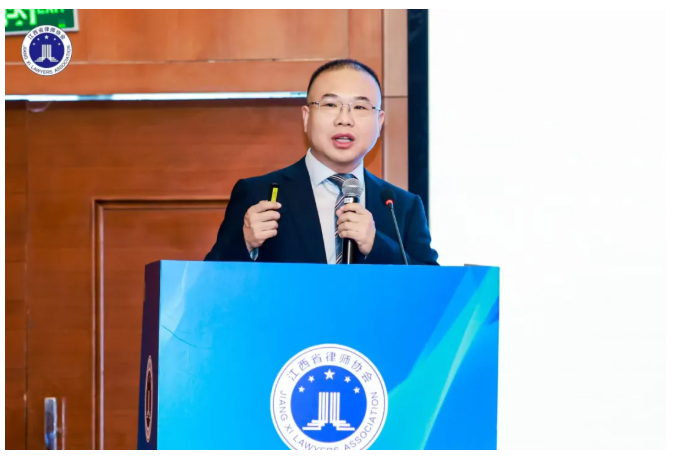
Attorney Tang Jianbin, Director of the King&Capital Environmental, Food, Drug, and Intellectual Property Law Research Center, delivered a presentation titled “Defense Strategies for Hot-Button and Complex Issues in Food and Drug Crimes,” systematically explaining practical defense methods while addressing the challenges encountered in food and drug-related criminal cases.

Attorney Zhang Sijia, Deputy Director and Secretary-General of the King&Capital Environmental, Food, Drug, and Intellectual Property Law Research Center, focused on “Analysis of Complex Issues and Defense Strategies for the Crime of Environmental Pollution from the Perspective of Judicial Practice.” Drawing on frontline judicial cases, she analyzed the boundaries of determining complex issues in environmental crimes and the pathways for defense.

Attorney Wang Zhiqiang, Deputy Director of the King&Capital Environmental, Food, Pharmaceutical, and Intellectual Property Law Research Center, presented on “The Criminal Logic of Defense in Intellectual Property Crimes,” dissecting the core logic and defense strategies for intellectual property crime cases from the perspective of legal application.
Drawing on actual case examples, the three attorneys explained how to fully leverage industry terminology and professional knowledge, rigorously scrutinize evidence, and pinpoint key defense arguments. They clarified the core disputes and technical issues involved in handling related criminal cases for attendees, thereby enhancing their ability to mount effective defenses and raising their professional standards.
The conference was divided into four sessions: a seminar on food and drug-related crimes, a seminar on environmental and resource-related crimes, a seminar on intellectual property-related crimes, and a session for commentary and interactive discussion. Participants engaged in in-depth discussions on these three topics, sharing defense experiences and exchanging defense strategies. Participants unanimously agreed that the seminar was highly specialized, focusing on three major areas, with content closely aligned with hot topics, bottlenecks, and complex issues in judicial practice. The case studies were detailed and the defense arguments were clear, providing strong guidance and valuable insights for handling similar cases, and participants found the event extremely beneficial.
This seminar also served as a concrete demonstration of the Center’s implementation of the “National Campaign on Environmental, Food, Drug, and Intellectual Property Crimes” strategy. Moving forward, the Center will continue to strengthen cooperation with local bar associations to jointly organize activities focused on the defense of crimes related to environmental protection, food safety, drug regulation, and intellectual property.