

Recently, a specialized training session titled “Analysis of the Infringement of Legal Interests by Online Business Operators Engaging in Fake Orders and Review Manipulation” was held at King&Capital Law Firm. The session was organized by the Kyoto Criminal Law Committee and hosted by the Cybercrime Research Group. As a specialized research working group under the Kyoto Criminal Law Committee, the Cybercrime Research Group was responsible for organizing and hosting this event.
This training session was inspired by a case handled by the team involving an online business operator’s practice of “fake orders and inflated ratings,” which resulted in an “acquittal” following the attorneys’ professional defense. Focusing on issues that emerged during the case—such as the assessment of legal interests, selection of charges, examination of evidence, and defense strategies—three speakers shared their insights based on their case experience and research. At the conclusion of the event, Attorney Xu Ying delivered closing remarks.
Speech by Attorney Yan Huainan

Speaker Profile: Attorney Yan Huainan is a Senior Partner at King&Capital Law Firm and holds a Ph.D. in Supervision Law from China University of Political Science and Law. He has long specialized in the defense of crimes involving public officials and corporate personnel, as well as criminal risk management and compliance.
Using a case involving fake orders and inflated ratings handled by his team as a starting point, Attorney Yan Huainan reviewed the process of gradually shifting the focus from the evaluation of computer-related charges back to the essence of online business operations. His presentation centered on objections to jurisdiction, the exclusion of three computer-related charges, responses to charges of false advertising, the validation of experimental data, negotiations regarding plea agreements, and the comprehensive assessment of case circumstances. Attorney Yan particularly emphasized that complex cybercrime cases cannot rely solely on isolated defenses; instead, procedural disputes, technical facts, assessments of legal interests, and the client’s ultimate interests must be considered as part of a unified strategy. The case also demonstrated that meticulous defense should serve the overall outcome most favorable to the client, providing an observable and verifiable model for handling similar cases.
Remarks by Attorney Xu Wei
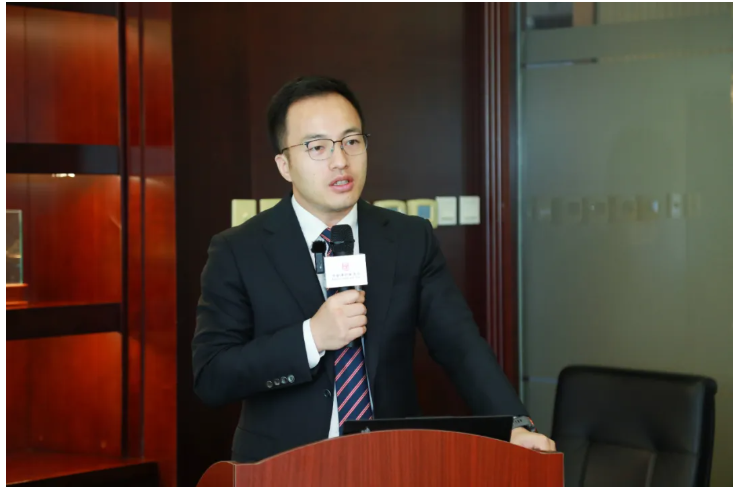
Speaker Profile: Attorney Xu Wei is a partner at King&Capital Law Firm and the head of the Cybercrime Research Group within the firm’s Criminal Law Committee. He specializes in digital criminal defense, is the author of *Case Studies in Cybercrime*, and handles criminal compliance matters related to online gaming and data compliance.
Attorney Xu Wei delivered a speech titled “Fake Orders and Inflated Reviews Do Not Necessarily Constitute Data Crimes,” focusing on the legal boundaries between computer crimes and market order crimes in cases involving online business operations. He pointed out that in handling such cases, one should not automatically apply the evaluation framework for “illegal acquisition of data” or “illegal control or destruction of computer information systems” merely because the conduct involves the use of software, scripts, or API calls. Before determining the criminal charge, one must first examine whether the conduct substantially infringes upon system security, data confidentiality, integrity, or availability. If the technical means merely serve to increase the efficiency of business violations, and the core harm remains in false advertising and disruption of market order, the conduct should be evaluated within the framework of false advertising, illegal business operations, or administrative regulations.
Remarks by Consultant Cong Zhuoyi
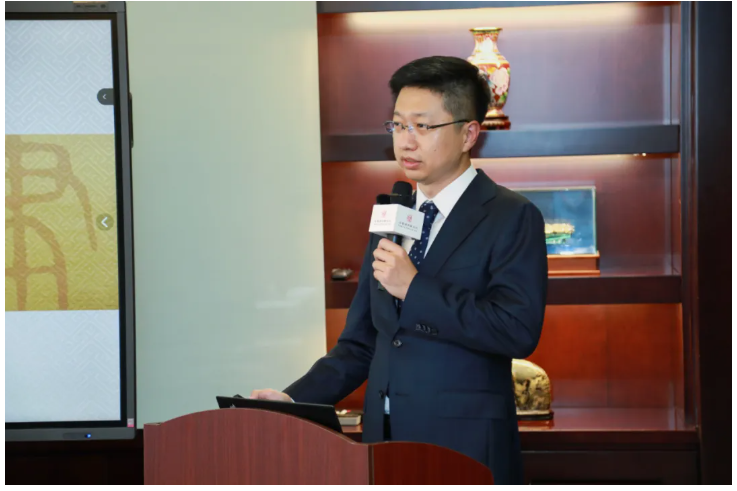
Speaker Profile: Consultant Cong Zhuoyi, a consultant at Beijing King&Capital Law Firm, holds a Master of Laws degree. He is a former senior criminal judge and trial expert at a Beijing Intermediate People’s Court, with nearly 16 years of experience in criminal trial work. In this session, he will deliver a presentation on the boundaries of criminal liability for “order-padding and rating manipulation” and related defense strategies.
Consultant Cong Zhuoyi began by examining the behavioral characteristics and legal regulations surrounding “brushing” and “credit inflation,” outlining the division of labor among entities in the transaction chain—including brushing platforms, online store operators, and “brushers”—and noting that such cases often involve overlapping administrative, civil, and criminal legal relationships; He analyzed the illegality of order-padding and review-manipulation based on laws such as the Anti-Unfair Competition Law and the Advertising Law, and explored the boundaries of criminal liability for these acts in relation to specific criminal charges. Counselor Cong also shared defense strategies for cases where order-padding and review-manipulation are prosecuted under the crimes of illegal business operations and false advertising. Drawing on the background and purpose of relevant judicial interpretations, he argued that the provisions of Article 7 of the “Interpretation by the Supreme People’s Court and the Supreme People’s Procuratorate on Several Issues Concerning the Application of Law in Handling Criminal Cases Involving Defamation and Other Offenses Committed via Information Networks” should not be applied to order-padding and rating-inflation activities, as they do not constitute the crime of illegal business operations. For cases filed under the crime of false advertising, the defense should focus on examining whether there is sufficient evidence regarding the amount of illegal proceeds. Furthermore, by analyzing the actual harmful consequences caused by the order-padding and review-manipulation activities, the defense should argue that the specific case involves minor criminal circumstances and poses little social harm, with the aim of securing a decision not to prosecute, a conviction without sentencing, or a suspended sentence.
Message from Attorney Xu Ying

Finally, Attorney Xu Ying, Deputy Director of the Jingdu Criminal Law Committee, extended congratulations on behalf of the Committee for the successful conclusion of this event. She noted that this event was of great significance, as it was not only the first official event since the Committee’s establishment but also the inaugural appearance of the Cybercrime Research Group. It marks the official launch of the Jingdu Criminal Law Committee’s cutting-edge practical research efforts and holds landmark and pioneering significance. Through case studies, the session addressed hot topics and challenging issues in legal practice. The three guest speakers delivered insightful presentations covering various aspects, including legal interpretation and application, the selection of defense strategies, and communication techniques between prosecution and defense. She emphasized that the Cybercrime Research Group should promote the sharing of successful case reviews, transform individual case experiences into reusable methodologies, clearly articulate technical facts, firmly uphold the boundaries of legal interests, and consolidate defense achievements into the team’s collective capabilities.
Translated with DeepL.com (free version)