

On July 31, 2026, King&Capital Law Firm’s 20th “Criminal Case Debate Forum” and the inaugural “Pioneering New Paths in Debate: Digital Finance Criminal Defense” thematic seminar were held in Beijing and streamed live online.
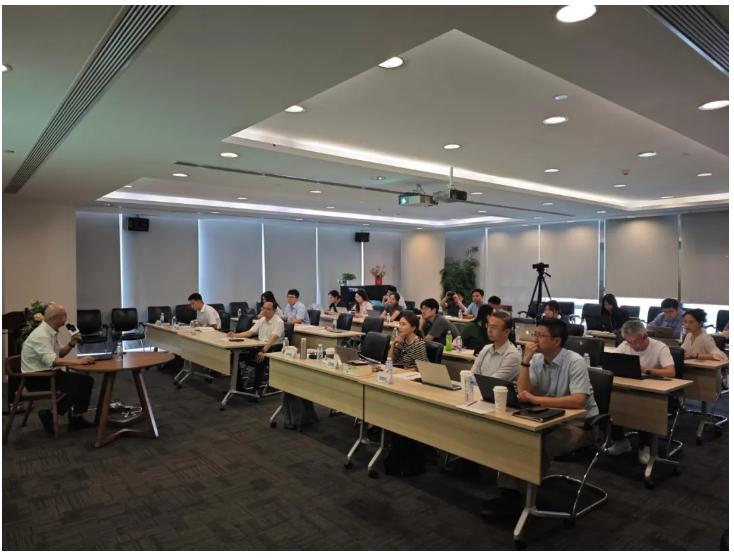
Co-hosted by the Third Criminal Law Department of King&Capital Law Firm and the Second Group of the Financial Crime Defense Specialized Committee of the King&Capital Criminal Law Committee, the event centered on the theme “Practical Discussion on Multidimensional Evidence and the Coordination Between Administrative and Criminal Proceedings in Digital Financial Crimes.” It focused on challenging issues—such as new perspectives, data characterization, evidence admissibility, and the coordination between administrative and criminal proceedings—in emerging financial crimes involving virtual currencies, generative artificial intelligence, and securities and futures violations.
Zhu Yonghui, Director of King&Capital Law Firm, attended the entire event and delivered the opening remarks. Invited speakers included Zhu Tonghui, Associate Professor at the School of Law, Nankai University, and electronic data expert at the Beijing Yunzheng International Appraisal Center; Song Zhenyu, Partner at Beijing Dacheng Law Firm; Niu Xingli, Senior Partner at King&Capital Law Firm; and Wang Jiaming, Partner at King&Capital Law Firm. Attorney Feng Wang served as the moderator.

At the start of the event, moderator Attorney Feng Wang first introduced the background, themes, and agenda to both online and in-person attendees, and then introduced each of the opening speakers, keynote speakers, and colleagues from various sectors participating in the discussion.
Opening Remarks:
Deepening Expertise in Professional Fields to Meet the Challenges of Our Time

Zhu Yonghui, Director of King&Capital Law Firm, delivered the opening remarks. He began by extending a warm welcome and sincere gratitude to all guests and colleagues in attendance, and briefly introduced King&Capital Law Firm: Founded in 1995, King&Capital Law Firm is a large, full-service law firm in China that has long enjoyed a distinguished reputation for its criminal defense practice, bringing together a team of professional attorneys deeply rooted in the criminal law field. He noted that against the backdrop of the rapid development of the digital economy, new forms of financial crime continue to emerge, and the complex issues encountered in handling such cases present entirely new challenges for criminal defense work. Concluding his remarks, Director Zhu Yonghui expressed his best wishes for the seminar’s success and officially declared the event open.
Session 1 | Zhu Tonghui: Defending Virtual Currency Cases from Multiple Perspectives—Finance, Assets, and Data

Zhu Tonghui began his presentation titled “Defense in Virtual Currency Cases from Multiple Perspectives: Finance, Assets, and Data.” He pointed out that cryptocurrencies and their trading systems represent the currency of the future; their transaction ledgers function as both relational databases and decentralized storage systems. They not only solve the problem of remote payments but also enable transactions, clearing, and settlement to be completed in a single step, while supporting 24-hour trading. and thus represent a future-oriented, next-generation, decentralized innovation in financial infrastructure for the internet and artificial intelligence eras. As this future is bound to arrive sooner or later, defense strategies and research must be approached from multiple perspectives, including securities, currency, assets, property, and data.
Zhu Tonghui clarified the five-tiered legal attributes of virtual currency, pointing out that while virtual currency was originally conceived as decentralized electronic cash, it does not possess the status of legal tender or legal tender power in China. Its underlying foundation is cryptographic code, and early cases involving property theft related to virtual currency were mostly classified as computer data-related crimes. He noted that judicial rulings have now established a unified standard: virtual currencies possessing actual property value can be recognized as property, and the theft of virtual currencies is generally prosecuted as theft. At the same time, he mentioned that virtual currencies possess the attribute of asset appreciation and have been classified as operating assets by many institutions. With the development of various crypto ETFs and asset tokenization models, the securitized investment and financing attributes of virtual currencies are becoming increasingly prominent.
During the lecture, Zhu Tonghui focused on comparing the characteristics of mainstream stablecoins and the regulatory differences between China and overseas markets: USDT lacks transparency in its reserve holdings and possesses centralized freezing authority, whereas USDC’s audit mechanisms are more standardized; China strictly controls the circulation and trading of stablecoins to resolutely safeguard the monetary sovereignty of the renminbi, while Hong Kong has introduced specialized regulatory rules to allow compliant cryptocurrency trading, supported by offline infrastructure, and actively participates in international financial competition.
Zhu Tonghui also summarized practical defense strategies tailored to virtual currency cases: “The defense can use on-chain data analysis to distinguish between legitimate funds and proceeds of crime, and can develop tiered evidence-gathering plans based on the characteristics of different trading platforms.” He emphasized that the defense can use on-chain data analysis to distinguish between legitimate funds and proceeds of crime, and can develop tiered evidence-gathering plans based on the characteristics of different trading platforms; Defense counsel can rely on the centralized freezing mechanism of stablecoins to counter arguments regarding the distortion of virtual currencies’ decentralized nature. He noted that case defense must adhere to the judicial principle of “like conduct, like regulation; like conduct, like conviction.” In practice, defense counsel can draw on established financial defense models to identify abnormal transactions, focus on the core issues of the case, and uncover counterfactual evidence, thereby achieving a refined defense in new types of virtual currency cases.
Session 2 | Song Zhenyu:
Frontier Issues in Generative AI Evidence

Song Zhenyu, a partner at Beijing Dacheng Law Firm, focused on the new practical challenges regarding the admissibility of AI-generated materials in court proceedings. Drawing on real judicial precedents from both China and abroad, he compared the underlying logical differences between traditional expert systems and generative AI, analyzed the current status of admissibility for three types of AI evidence—text, images, and audio—and proposed a dual cross-examination system combining technical verification and procedural regulation.
Song Zhenyu summarized the current state of judicial admission practices for these three categories of AI evidence. He noted that in a 2026 civil case in Baoshan, Shanghai, an AI calculation report submitted by a party was rejected by the court on the grounds of insufficient objectivity due to conflicting conclusions from multiple models. He pointed out that in a U.S. homicide case, the court did not admit crime scene video footage enhanced by the defense’s AI tool because the underlying logic of the algorithm could not be explained. He noted that audio cloned using AI technology is highly realistic; however, Chinese judicial practice currently recognizes such audio only as supporting evidence for similarity, and it cannot stand alone as core evidence for determining a case’s outcome.
Song Zhenyu pointed out that the four existing industry approaches to handling AI evidence all have significant flaws, and none of them align with current criminal evidence rules. He emphasized that a blanket ban on AI evidence lacks practicality, as judicial proceedings generally rely on AI tools to assist in organizing evidence, and parties may deliberately conceal the source of AI evidence. He noted that the approach taken by investigative authorities—directly classifying AI evidence as “electronic data”—contains a logical flaw, as electronic data rules only verify the integrity of the medium, whereas the core controversy surrounding AI evidence lies in defects in the algorithmic reasoning.
In response, Song Zhenyu proposed that lawyers could adopt a tiered approach to cross-examining AI evidence. He explained that for secondary, supplementary evidence in a case, lawyers could independently conduct “black-box” testing and use multidimensional verification methods to assess the basic reliability of AI evidence. However, in practice, “white-box” testing—which requires access to the model’s complete data—is only theoretically feasible and cannot be applied in real-world judicial scenarios.
During this professional presentation, Song Zhenyu outlined a comprehensive solution for end-to-end authenticity preservation and anti-forgery of AI evidence, recommending that legal practitioners secure original case materials in advance through methods such as timestamping, hash verification, and blockchain-based evidence storage. He believes that practitioners need to focus on guarding against two types of evidence risks: they must identify false AI evidence that could interfere with case proceedings, and they must also prevent situations where the metadata of authentic source material is tampered with and disguised as AI-generated content. Securing the original media is the primary key to evidence preservation.
Session 3 | Niu Xingli:
Understanding and Application of “Deception” in Financial Fraud Crimes

Niu Xingli, a senior partner at Beijing King&Capital Law Firm, focused on the distinction between financial fraud and ordinary fraud, pointing out that the intent to illegally appropriate property serves a dual function: distinguishing between criminal and non-criminal acts, as well as differentiating between specific offenses.
Niu Xingli clarified the differences in the structural composition of acts between financial fraud and ordinary property crimes. She explained that ordinary property crimes, such as theft and robbery, infringe upon another person’s right of possession from the outset, and the acts are unlawful from the very beginning; in contrast, financial fraud cases—such as those involving loans and credit cards—have a distinct structural composition. The perpetrator’s initial application for credit limits and acquisition of financing funds comply with contractual terms, and the act of obtaining funds possesses formal legality. She stated that judicial authorities cannot retroactively infer that the perpetrator possessed subjective intent to defraud merely because they were unable to repay the debt upon maturity or because the status of fund possession changed.
Attorney Niu Xingli highlighted a core paradox in the adjudication of current financial fraud cases. She pointed out that the adjudicative rule in the Supreme People’s Court’s meeting minutes—stating that a person “knowingly defrauded a large amount of funds despite having no ability to repay”—is often improperly expanded by the prosecution during trials.
Drawing on her experience handling a financing and loan case involving over 600 million yuan and a major bill fraud case that took eight years to have the sentence reduced from life imprisonment to 14 years, she outlined a comprehensive defense strategy. She summarized the core defense strategy for such cases, emphasizing that defense work must strictly distinguish between two types of subjective mental states of the perpetrator. Lawyers must exclude cases involving only normal business risks—and no intent to permanently misappropriate assets—from the scope of evaluation as serious financial fraud offenses, thereby effectively safeguarding the defendant’s room for a lighter sentence and achieving a judicial outcome where the punishment is commensurate with the crime.
Session 4 | Wang Jiaming: The Dilemma and Solutions Regarding the Conversion of Evidence Between Administrative and Criminal Proceedings in Securities Crime Cases

Wang Jiaming, a partner at Beijing King&Capital Law Firm, focused on the shortcomings in the system for coordinating administrative and criminal proceedings in securities crime cases. Closely aligning with the 2024 joint document issued by the “Two Highs and One Ministry” and the China Securities Regulatory Commission (CSRC), she conducted a concise analysis of three major practical pain points—referral standards, standards of proof, and administrative determination letters—and identified key leverage points for procedural defense.
Attorney Wang Jiaming provided a practical analysis of the challenges in defending cases involving the transition from administrative to criminal proceedings in the securities sector. She systematically outlined three typical issues currently encountered in the conversion of securities violations into criminal cases, clarified common pitfalls in judicial rulings, and identified corresponding key points for courtroom defense, thereby offering practical guidance for the defense of securities-related criminal cases.
Attorney Wang Jiaming pointed out that the current referral of leads on securities violations suffers from the overbroad application of the “refer all that should be referred” rule, which lacks clear and actionable quantitative referral standards. She noted that in practice, a large number of administrative cases involving only professional negligence and lacking criminal intent are improperly referred to criminal proceedings. This improper practice unduly broadens the scope of criminal liability. For example, when a financial officer continues to use a predecessor’s false financial reports, this constitutes merely negligence in the performance of duties—an act that falls solely within the scope of administrative penalties and does not meet the subjective elements required for a criminal offense. Judicial authorities should not impose criminal sanctions for such negligent acts.
Attorney Wang Jiaming believes that current judicial rulings in securities cases suffer from the practical flaw of over-reliance on the CSRC’s administrative determination letters. She explained that China’s Securities Law has explicitly enumerated the scope of insider information and material events; administrative determination letters issued by the CSRC do not constitute a statutory category of criminal evidence. Such letters serve only as a reference for cases. In judicial practice, courts generally accept the conclusions of these letters at face value, and this approach to adjudication significantly restricts the scope for independent judicial review and autonomous judgment. She recommended that defense attorneys, during trials, should focus closely on the facts of the case and the legal elements, conducting comprehensive cross-examination specifically targeting the probative value, reasonableness, and legality of the administrative determination letters, and actively request that the court independently review the facts of the case and make its own legal determinations.
Summary and Outlook
This edition of “Criminal Case Debate Forum” focused on new types of criminal offenses in digital finance, integrating the latest trends in virtual currencies, computer technology, financial market regulations, administrative oversight standards, and criminal law provisions to form a comprehensive framework of knowledge and practical skills tailored for frontline attorneys. The Third Criminal Law Department of King&Capital Law Firm will continue to leverage the “Criminal Case Debate Forum” as a regular platform for professional exchange. We will maintain our focus on cutting-edge topics such as handling virtual currency cases, AI evidence rules, defense in financial fraud cases, and the coordination between securities and criminal law enforcement. By building a platform for shared exchange among academia, judicial authorities, and practicing attorneys, we will continue to produce high-quality professional content to support the industrialization and professionalization of the criminal defense sector.
Upcoming Events
The “Criminal Case Debate Forum” series is a special initiative established by the Third Criminal Law Department of King&Capital Law Firm to strengthen internal communication, enhance attorneys’ practical criminal defense skills, and boost the firm’s reputation in criminal defense. The series aims to promote exchange and cooperation among King&Capital’s main office and branch offices, between in-house and external peers, experts, and scholars, as well as among the firm’s internal departments. The “Criminal Case Debate Forum” will be held once a month, and the next session will continue to feature presentations and discussions by industry professionals.