

The advancement of ecological civilization has entered a new era of codification, with the official promulgation of the *Ecological and Environmental Code*, marking a new phase of systematic, standardized, and rule-of-law-based governance of China’s ecological and environmental affairs. Faced with new judicial challenges—such as increasingly covert methods of environmental crime, increasingly complex criminal chains, and diversified liability—how can we precisely distinguish between criminal and non-criminal acts, and differentiate between one offense and another? How can we balance ecological protection with the legitimate rights and interests of the parties involved? How can we resolve the long-standing challenges in evidence collection, case classification, and sentencing that have plagued legal practice?
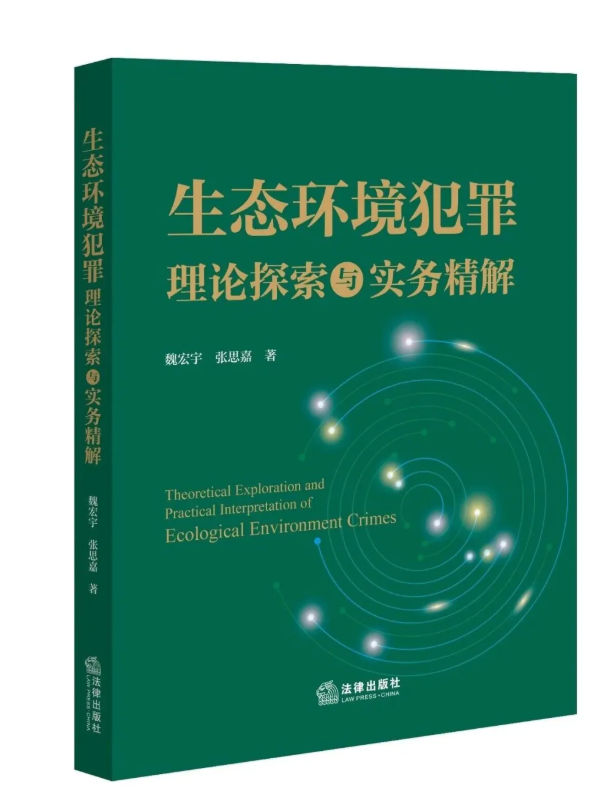
Co-authored by Wei Hongyu, a national expert in procuratorial affairs, and Zhang Sijia, a senior defense attorney specializing in environmental, food, drug, and intellectual property crimes, with forewords by Tian Wenchang, Honorary Director of Beijing Jingdu Law Firm and Honorary Dean of the Advanced Research Institute of Criminal Defense at Northwest University of Political Science and Law; and Professor Wang Canfa of China University of Political Science and Law—a doctoral advisor, Chairman of the Supervisory Board of the Chinese Society for Environmental Sciences, and an active promoter and contributor to the compilation of the *Ecological and Environmental Code*; jointly recommended by Professor Ruan Qilin, a doctoral advisor at China University of Political Science and Law; Professor Wang Chong, Vice Dean of the College of Resources and Environment at China Agricultural University and a doctoral advisor; Professor Yuan Bin, PhD advisor at the School of Law and the Institute of Criminal Legal Science at Beijing Normal University; and Professor Li Yumei, PhD advisor and Vice Dean of the College of Humanities and Development at China Agricultural University, have jointly recommended this landmark work on the criminal rule of law in ecological and environmental protection—*Theoretical Explorations and Practical Analyses of Ecological and Environmental Crimes*—which was grandly published by China Law Press in early April 2026.
Forewords by Two Eminent Scholars · Endorsed by an Authoritative Panel
The book features forewords by Professor Tian Wenchang, Honorary Director of Beijing Jingdu Law Firm and Honorary Dean of the Advanced Research Institute of Criminal Defense at Northwest University of Political Science and Law, and Professor Wang Canfa, Professor and Ph.D. Advisor at China University of Political Science and Law and Chairman of the Supervisory Board of the Chinese Society for Environmental Sciences.

Professor Tian Wenchang highly praised the book, stating: “This work transcends the limitations of traditional research—which tends to ‘emphasize theory over practice’—by adopting a problem-oriented approach grounded in practical experience. It serves as a ‘bridge’ connecting theory and practice, providing powerful momentum to advance the specialization and refinement of environmental criminal justice.”

In his foreword, Professor Wang Canfa noted: This book combines theoretical depth with practical substance. It employs a dual structure of “common issues—analysis by crime category,” directly addressing the pain points in theoretical research on environmental crimes and the challenges in judicial practice, thereby providing a solid foundation for the precise prosecution of environmental crimes and the improvement of the rule of law in environmental criminal justice.
Authoritative Recommendations · Unanimous Industry Recognition
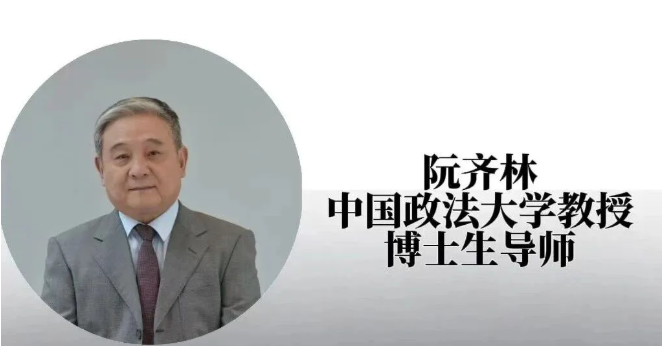
The author of this book has long been engaged in judicial practice and thus possesses a deep understanding of environmental crime adjudication. Using typical cases as a lens, the book emphasizes the integration of criminal law theory and judicial practice, distilling referenceable adjudication rules from “vivid” judicial cases. This research methodology breaks down the “barriers” between academic research and judicial practice, offering both theoretical and practical value for advancing the improvement of environmental criminal law and supporting the construction of an ecological civilization.

Adopting a problem-oriented approach, this book addresses major, high-profile, and complex issues in the judicial application of environmental crime laws. Through the analysis of representative cases, it provides an accessible yet in-depth examination of criminal legal principles, legislative provisions, and judicial interpretations, serving as a valuable reference for legal practitioners, researchers, and environmental professionals.

Closely aligned with judicial practice regarding environmental crimes, this book focuses on theoretical controversies and practical challenges. Covering topics ranging from the definition of legal interests and the interface between administrative and criminal enforcement to adjudication rules for individual cases, it not only clarifies the fundamental theoretical logic of environmental crimes but also resolves ambiguities in the application of various criminal charges, providing professional and practical case-handling guidance for judges, prosecutors, attorneys, and administrative law enforcement officers.
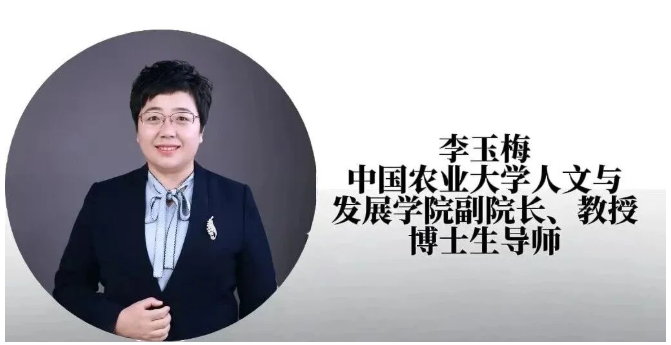
This book systematically and thoroughly addresses nearly all issues in the judicial practice of environmental crimes, ranging from common issues to specific offenses, with a clear structure and rigorous logic. It not only explores theoretical issues such as the administrative subordination of environmental crimes and corporate liability but also focuses on practical challenges such as distinguishing between different offenses and the disposition of assets involved in cases. Combining theoretical depth with practical value, it offers a valuable perspective for both criminal law research and case handling.
Three Core Features of This Book
First, it employs a case-driven research approach, selecting representative cases of environmental and resource crimes to vividly illustrate judicial disputes regarding the determination of crimes such as environmental pollution, destruction of wildlife resources, destruction of land and mineral resources, and destruction of forest resources;
Second, it adopts a distinctly problem-oriented approach, proposing concrete solutions to practical challenges in the causation of environmental crimes, restorative justice, the interface between administrative and criminal enforcement, and the judicial application of specific offenses;
Third, it closely follows legislative developments, providing in-depth interpretations of the amendments to the Criminal Law regarding environmental crimes and the latest judicial interpretations, thereby addressing the needs of contemporary environmental criminal law.
Deep Integration of Theory and Practice · Maximizing Dual Value
This book is a collaborative effort by two leading professional forces from the front lines of prosecution and defense. The author team possesses dual expertise in top-tier prosecutorial case handling and high-level criminal defense, achieving a perfect synthesis of theoretical exploration and practical analysis.
Theoretical Significance: Strengthening the Foundations of Environmental Criminal Law
The book opens by focusing on eight core theoretical issues—including the definition of legally protected interests in ecological and environmental crimes, the subsidiary nature of administrative sanctions, corporate liability, causation, and the interface between administrative and criminal proceedings—without shying away from academic disagreements and providing an in-depth analysis of legal logic. It also explores cutting-edge topics such as restorative justice and civil public interest litigation attached to criminal proceedings, thereby laying a solid theoretical foundation for the criminal regulation of environmental crimes and filling gaps in research in this field.
Practical Value: Directly Applicable to Frontline Case Handling
Organized by categories of offenses, the book adopts an approach of “addressing application challenges + analyzing legal principles” for each category. It clearly delineates the boundaries between criminal and non-criminal conduct, as well as between different offenses, and clarifies the standards for determining sentencing factors. It provides judges, prosecutors, attorneys, and environmental law enforcement officers with adjudication frameworks and case-handling methods that can be directly applied and referenced, significantly enhancing the quality and efficiency of case handling.
Closely Aligned with the *Ecological and Environmental Code* · Responding to Contemporary Rule-of-Law Demands
The enactment of the *Ecological and Environmental Code* marks a new phase of codification in China’s ecological and environmental governance, setting higher standards for the punishment and prevention of environmental crimes.
This book is fully aligned with the new law enforcement and judicial requirements following the implementation of the *Ecological and Environmental Code*. It deeply integrates environmental criminal justice with the ecological and environmental governance system, upholding the principle of restraint in criminal law to avoid the excessive expansion of criminal regulation while strengthening the criminal enforcement of ecological protection. This approach enables precise crackdowns on and lawful punishment of environmental crimes, thereby achieving the organic unity of legal, social, and ecological outcomes.
Author Biography
Wei Hongyu holds a Master of Laws from China University of Political Science and Law. He has been honored as a National Outstanding Public Prosecutor, a National Expert in Procuratorial Affairs, and an Advanced Worker in the National Procuratorial System. He was awarded a First-Class Merit by the Supreme People’s Procuratorate and has received multiple Second- and Third-Class Merits. He has been selected for the National Procuratorial System’s Expert Pool for Serious Crimes, the Autonomous Region’s Expert Pool for Rule of Law Construction, and the Regional Public Security Economic Investigation Expert Pool. He has served as Procurator-General of the Lingwu City People’s Procuratorate and Deputy Procurator-General of the Yinchuan City People’s Procuratorate. He currently serves as a member of the Procuratorial Committee and Director of the Department of General Criminal Prosecution at the People’s Procuratorate of the Ningxia Hui Autonomous Region. He is the author of *Theoretical Explorations and Practical Analyses of Ecological and Environmental Crimes* and has led or participated in more than 10 research projects commissioned by the Supreme People’s Procuratorate, the Ningxia Autonomous Region Law Society, and the People’s Procuratorate of the Ningxia Autonomous Region.
Zhang Sijia, attorney at Beijing Jingdu Law Firm, holds a master’s degree. She serves as Deputy Director and Secretary-General of the Jingdu Legal Research Center for Environment, Food, Drugs, and Intellectual Property; member of the Environment and Resources Committee and head of the Criminal Defense Group at the Beijing Lawyers Association; researcher at the Food Safety Law Research Center of Beijing Technology and Business University; expert in the *Rule of Law Daily*’s attorney expert database; off-campus mentor for undergraduates at the School of Food and Pharmacy, Xuchang University; and council member of the Civil and Commercial Law Research Association of the Ningxia Law Society. expert on the Drug Safety Expert Committee of the Ningxia Drug Administration; and expert advisor to multiple administrative and judicial agencies, including the Shizuishan Municipal Market Supervision Administration in Ningxia and the Nanhua County Public Security Bureau in Yunnan Province. She is the author of *Theoretical Explorations and Practical Analyses of Ecological and Environmental Crimes*, *Handbook on Handling Food and Drug Cases*, and *Explanations of Complex Legal Issues in Environmental, Food, Drug, and Intellectual Property Law*.
Target Audience
Judges, prosecutors, public security officers, and other judicial personnel involved in case handling
Criminal defense attorneys and lawyers specializing in environmental, food, drug, and intellectual property law
Administrative law enforcement officers in fields such as ecological environment and market regulation
Legal researchers and university faculty
Corporate compliance and environmental legal affairs professionals
Basic Information on the New Book
Title: *Theoretical Explorations and Practical Insights into Ecological and Environmental Crimes*
Authors: Wei Hongyu, Zhang Sijia
Publication Date: Early April 2026
Publisher: China Law Press
Safeguarding our green mountains and clear waters through the rule of law, and advancing ecological civilization with professional expertise. *Theoretical Explorations and Practical Insights into Ecological and Environmental Crimes* will be released in April 2026—stay tuned!
Translated with DeepL.com (free version)