
Against the backdrop of normalized, high-pressure anti-corruption efforts and the ongoing deepening of reforms to the oversight system, the investigation and prosecution of official corruption cases continue to extend into key sectors and critical areas. Investigations into such cases are highly closed-off, rely heavily on confessions for evidence, and offer increasingly limited room for defense; as a result, defending these cases is far more challenging than in ordinary criminal cases—making effective defense all the more valuable and serving as a true test of a defense attorney’s professional competence and sense of responsibility.
Recently, in a case where a bank president, represented by attorney Liu Lijie, was suspected of embezzlement, bribery, and the illegal issuance of loans, the defense achieved a significant interim success: the legal team intervened urgently just as the first-instance verdict was about to be handed down, successfully securing a postponement of the verdict and a reopening of the trial. During the first-instance proceedings, the defense’s argument that “the amount of loans secured by time deposit certificates should be deducted” was accepted, resulting in a direct reduction of 400 million yuan from the alleged amount in the charge of illegal loan issuance; Through persistent efforts during both the first and second trials, the appellate court accepted the defense’s arguments regarding the determination of the embezzlement amount, ruling that the evidence supporting the 3 million yuan embezzlement charge was not yet conclusive or sufficient. In accordance with the principle of resolving reasonable doubt in favor of the defendant, the embezzlement amount was reduced to 1 million yuan, The sentence for the embezzlement charge was reduced from 10 years’ imprisonment to 5 years, the fine was reduced from 500,000 yuan to 250,000 yuan, and the amount of illicit gains subject to confiscation was reduced from over 7 million yuan to over 3 million yuan. Given the reality that it is difficult to secure revised judgments and exclude non-criminal charges in cases of official misconduct, the substantive revision of the embezzlement charges in this case’s second-instance ruling was hard-won.
Currently, the legal team has accepted a renewed retainer from the client and his family to initiate the petition process on behalf of the client.
I. Taking on the Case in a Time of Crisis:
Intervening with Just Two Weeks Left Before the First-Instance Sentencing
The client in this case is the president of a local bank who was indicted on charges of embezzlement, bribery, and the illegal issuance of loans. When the legal team became involved, the first-instance trial had already concluded several months prior, and the court had notified the parties that the verdict would be handed down within two weeks.
At that time, the family was deeply concerned about the effectiveness of the defense in the first instance. They had originally intended to retain Attorney Liu Lijie as the defense counsel for the second-instance proceedings, pinning their hopes on a turnaround in the appellate process—as they held no hope whatsoever regarding the first-instance outcome.
After accepting the case, Attorney Liu Lijie did not passively wait for the appellate proceedings to begin. Instead, he immediately threw himself into the work, working day and night to conduct an intensive review and preliminary analysis of the entire case file. Within an extremely limited timeframe, he identified a breakthrough for the defense.
II. Seven Days of Nonstop Case File Review: Identifying a Breakthrough for the Defense
First, the circumstance of voluntary surrender may not have been recognized. After sifting through the details of the client’s arrest and statements to establish a coherent narrative, Attorney Liu Lijie discovered that, upon being taken into custody, the client had voluntarily confessed to acts of bribery and the illegal issuance of loans—facts that the investigating authorities had not yet uncovered. These confessions might meet the statutory requirements for voluntary surrender, yet none of the prosecution, defense, or trial court had previously paid attention to this aspect.
Second, the amount of embezzled funds was right on the threshold for a harsher sentence, and there were significant doubts regarding this figure. According to the Criminal Law and relevant judicial interpretations, embezzlement of 3 million yuan or more constitutes an “exceptionally large amount,” with a statutory sentence of ten years or more of fixed-term imprisonment. In this case, the client is accused of embezzling public funds totaling “exactly” 3 million yuan over several years—an amount that falls precisely on the sentencing threshold between ten years or more and less than ten years. The accuracy of the amount directly determines the statutory sentencing bracket; therefore, the authenticity of the alleged amount and the sufficiency of the evidence must withstand the most rigorous scrutiny.
Third, there is a significant possibility that the allegations of bribery are false. The multiple instances of bribery alleged are related to the defendant’s father’s funeral and involve four bribe-givers and amounts totaling several hundred thousand yuan. After repeated verification and cross-referencing of recollections with the defendant, our team discovered that the defendant’s father actually passed away on a specific date in a specific month of a specific year. However, both the defendant’s confession and the statements of the four bribe-givers recall and record the timing of the funeral-related bribery as a different date—namely, a date on which, according to the bribery dates recorded in the case file, the defendant’s father was still alive. The defendant’s confession and the testimonies of multiple bribe-givers were recorded at different times and in different settings, yet they contained an identical temporal error—a discrepancy that defies the laws of memory and is inconsistent with common sense and logic, directly raising questions about the authenticity of the interrogation records. Attorney Liu Lijie promptly obtained objective evidence, such as documentation regarding the funeral and cremation, which further corroborated the strong suspicion that the relevant confessions were fabricated.
Fourth, there is significant controversy regarding the application of the law in determining the amount involved in the crime of illegally issuing loans. The first-instance indictment alleged that over 1.1 billion yuan in loans were illegally issued, a substantial portion of which was disbursed through deposit certificate pledges. Drawing on his many years of experience providing legal services to the banking sector, Attorney Liu Lijie concluded after careful analysis that these loans differ fundamentally in legal nature from typical cases of illegal loan issuance, and that the determination of the amount should be reevaluated.
Fifth, regarding certain allegations of bribery, there is room for legal interpretation due to unclear facts, insufficient evidence, or the possibility that the acts were deemed attempted.
III. Acting Decisively:
Submitting Defense Arguments to the First-Instance Court Before the Verdict, Without Waiting for the Second-Instance Trial
Faced with these findings, Attorney Liu Lijie acted decisively: he could not sit idly by waiting for the second-instance trial; he had to act before the verdict was handed down, submitting the defense arguments and evidence leads he had compiled to the first-instance court while simultaneously conducting investigations and gathering evidence.
This decision was based on a straightforward defense logic: before the first-instance verdict is handed down, there is still room for maneuver; once the verdict is handed down, res judicata will become a practical obstacle to overturning the decision in the second-instance trial. Resolving the issues at the first-instance level is the most responsible choice for the client.
The relevant materials and arguments garnered the first-instance court’s full attention. The verdict, originally scheduled for two weeks later, was canceled, and the case was postponed. After multiple rounds of communication and the submission of new lines of evidence, the first-instance court ultimately decided to reconvene the trial. During the reconvened trial, two bribe-givers appeared in court to testify, explaining on the record the reasons for their previous false statements.
IV. Expert Analysis: The Debate Over Pledged Bank Certificates—400 Million Yuan Deducted from the Amount of Illegally Issued Loans
Determining the amount involved in the crime of illegally issuing loans was one of the main battlegrounds for the defense in the first-instance trial. The indictment alleged that the defendant had illegally issued loans totaling over 1.1 billion yuan, of which a single loan to the actual controller of a certain enterprise amounted to 1.06 billion yuan. After reviewing each loan file individually, Attorney Liu Lijie discovered that 400 million yuan of the 1.06 billion yuan had been disbursed secured by bank certificates of deposit.
Attorney Liu Lijie argued that, in accordance with the *Guidelines for Risk Management of Credit Business for Group Clients of Commercial Banks*, when calculating a client’s outstanding credit balance, the amounts of margin deposits provided by the client, as well as pledged bank certificates of deposit and government bonds, may be deducted. The 400 million yuan loan in question was fully secured by bank certificates of deposit and, in accordance with the law, should be deducted from the amount of illegally issued loans; for loans issued against pledged certificates of deposit, the pledged certificates provide real and sufficient security for loan repayment, and the bank’s funds are not subject to actual risk, which constitutes a fundamental distinction from typical acts of illegally issuing loans.
This professional opinion, which integrates financial regulatory rules with an analysis of criminal law doctrine, was adopted by the court of first instance: the court of first instance determined that the amount of illegally issued loans for this portion was 660 million yuan, reducing the total amount of illegally issued loans recognized in the case by 400 million yuan compared to the prosecution’s allegations. After deliberation, the appellate court explicitly stated that it “adopted” this defense argument and upheld the first-instance ruling. It is somewhat regrettable that Attorney Liu Lijie’s defense argument—that the remaining amounts from loan renewals should not be double-counted, thereby rendering the entire charge invalid—was not adopted. This once again illustrates that the hard-won nature of a successful defense lies precisely in this kind of back-and-forth struggle where every inch of ground must be fought for.
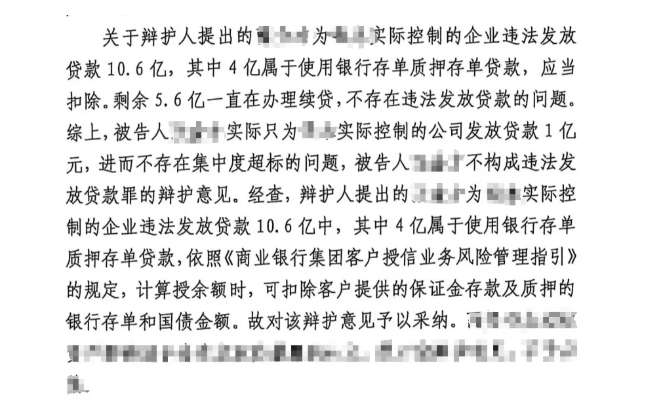
The first-instance judgment reduced the amount of illegal loans by 400 million yuan
V. A Tug-of-War Lasting Over a Year:
Investigation and Evidence Collection, Motions to Exclude Irrelevant Evidence, and Regrets from the First Instance
Over the next year or so, the team conducted extensive investigative work centered on the main defense strategy. In cases of official misconduct handled by the Supervisory Commission, defense attorneys face risks and resistance far greater than those in ordinary criminal cases—since the Supervisory Commission’s investigative conclusions have already been finalized, attorneys who attempt to investigate and verify facts with key witnesses, such as bribe givers, must take on immense professional risks. However, to uncover the truth, Attorney Liu Lijie did not back down: The team contacted the relevant bribe-givers individually and, while strictly ensuring legality and compliance, investigated and verified the facts of the case with them. They produced synchronized audio-visual recordings and investigation transcripts, fully documenting the bribe-givers’ statements regarding key facts such as the timing of the bribery during the funeral; They also compared the bribe-giver’s inconsistent statements—made during the Commission’s investigation phase versus the lawyers’ investigation phase—analyzed the reasons behind these discrepancies, and applied to the court for verification in accordance with the law, thereby providing crucial reference material for the court’s review of the authenticity of the oral evidence on record.

Attorney Liu Lijie’s team verifying case details with the bribe-giver
It is particularly worth noting that the bribe-giver testified in court and retracted his previous statements on the spot—a circumstance that is extremely rare in official misconduct cases investigated by the Commission for Discipline Inspection. Although the defense arguments regarding the bribery allegations were ultimately not adopted by the court of first instance, the team’s efforts to investigate and gather evidence in accordance with the law, as well as to secure the witness’s court appearance, preserved a complete factual record for the appeal and any subsequent petitions. This professional commitment—acting in the client’s best interests, undaunted by difficulties or risks, upholding principles and ethical standards, and insisting on uncovering the truth—is particularly commendable in the defense of official misconduct cases.
Building on this foundation, Attorney Liu Lijie continued to supplement the evidence and filed a motion to exclude illegally obtained evidence in accordance with the law. At the same time, he maintained in-depth communication with the procuratorate and the court, and also engaged in necessary discussions with the supervisory authorities regarding evidentiary issues in the case.
The first-instance judgment ultimately partially adopted Attorney Liu Lijie’s defense arguments: in addition to reducing the amount involved in the crime of illegally issuing loans by 400 million yuan, the first-instance court recognized that after the client was placed under detention by the Supervisory Commission, he truthfully confessed to certain facts regarding bribery offenses that the supervisory authorities had not yet uncovered, and accordingly imposed a mitigated sentence for the bribery offense. However, due to various factors—particularly the pressure on the Supervisory Commission to resolve the case—the court of first instance did not adopt the team’s core defense arguments regarding contradictions in the statements made during the funeral, the determination of the embezzlement amount, and the exclusion of illegally obtained evidence. Although the first-instance outcome was not entirely satisfactory, the work over the past year was by no means in vain: doubts regarding the facts of the case were brought to light one by one, cracks in the evidence structure have become apparent, and the significant reduction in the amount of the illegal loan disbursement further demonstrated the professional weight of the defense arguments, laying a solid foundation for the tough battle ahead in the second-instance trial.
VI. Facing Challenges Head-On:
Persisting with the Appeal: A Meticulous Defense Strategy Unfolds in the Second Instance
Following the first-instance verdict, the defendant insisted on appealing and refused to back down. Attorney Liu Lijie continued to supplement and refine the evidentiary materials, mounting a comprehensive defense centered on three dimensions: facts, evidence, and procedure.
(1) Revealing Contradictions in the Statement of Circumstances Through a Comparison of the Case Timeline
During the second-instance proceedings, the supervisory authority issued a statement regarding whether the defendant had voluntarily surrendered, claiming that it had already been aware of some of the defendant’s criminal acts—including accepting bribes and illegally issuing loans—at the time of his detention. However, the case file materials show that the defendant was the first to confess to these facts, and the supervisory authority was not aware of them at the time of detention—this statement also contradicted the supervisory authority’s own indictment.
To present this contradiction clearly before the court, the defense team undertook a painstaking task: they meticulously extracted the dates of the first statements made by all individuals involved in the case, and conducted a comprehensive statistical analysis and tabular comparison of the timing of the defendant’s confessions regarding relevant facts versus the timing of the bribe-givers’ statements regarding those same facts. The timeline became immediately clear: the earlier statements preceded the later “explanation,” and the objective data powerfully demonstrated that the explanatory statement was fundamentally at odds with the evidence on record.
(2) Undermining the Financial Basis of the Embezzlement Charge Through a System of Multiple Doubts
Centering on the alleged embezzlement amount of 3 million yuan, the team constructed a multi-layered system of doubts:
First, the evolution of the statements was anomalous. The defendant’s statements regarding the embezzlement amount were inconsistent: initially, he claimed there was no embezzlement; then he admitted to embezzling 1 million yuan; and later, he revised his statement to 3 million yuan. The statements exhibited a “gradual escalation” pattern, with the final figure landing precisely at the threshold for a ten-year prison sentence—this pattern of evolution itself constitutes a major point of doubt.
Second, there was a complete lack of objective evidence. The prosecution alleged that the defendant embezzled public funds and appropriated them for personal use by issuing fraudulent invoices to record expenses in the accounts; however, the relevant reimbursement forms and receipts could no longer be located. The alleged amount appropriated for personal use lacked objective documentation to corroborate it, and aside from the defendant’s confession, there was only circumstantial evidence.
Third, the amount defies common sense. Business expense reimbursements should naturally include both whole numbers and fractions. The cumulative total of reimbursements over several years “coincidentally” amounts to exactly 3 million yuan, which does not conform to the common-sense patterns of financial activity—it could have been less than 3 million yuan or more than 3 million yuan; the fact that it “coincidentally” lands on the threshold for a harsher sentencing category makes it difficult to believe this occurred naturally.
Fourth, the figures throughout the case are contradictory and do not align. The body of evidence confirmed by a final judgment in a separate case shows that the defendant and others jointly embezzled a total of more than 8.47 million yuan from the organization through write-offs; witness testimony, however, states that the defendant embezzled 5.15 million yuan; the defendant’s confessions fluctuated from 0 to 1 million yuan and then to 3 million yuan; the prosecution alleges that the defendant personally embezzled 3 million yuan—8.47 million, 5.15 million, 0, 1 million, and 3 million. These five figures contradict one another and cannot be reconciled, undermining the very foundation of the determination of the embezzlement amount.
Taking into account the inconsistencies in the confession and the lack of objective evidence, the defense team explicitly argued that the evidence supporting the finding of 3 million yuan in embezzlement consists solely of the defendant’s inconsistent confessions—which not only constitute isolated evidence but are also merely verbal testimony, lacking corroboration from other evidence. In accordance with the basic principles of the Criminal Procedure Law—“emphasizing evidence, emphasizing investigation and research, and not placing undue reliance on confessions”—and the principle that any reasonable doubt must be resolved in favor of the defendant, the alleged embezzlement amount of 3 million yuan is factually unclear and lacks sufficient evidence.
(3) Motions to Exclude Illegally Obtained Evidence Filed Throughout Both Trials
Attorney Liu Lijie filed motions to exclude illegally obtained evidence in accordance with the law during both the first-instance and second-instance proceedings. He requested the production of synchronized audio-visual recordings and consistently challenged the legality of the confessions’ acquisition. At the same time, he maintained constructive communication with the Commission for Discipline Inspection, the procuratorate, and the court at all times, combining litigation with dialogue to ensure that his arguments were reasonable, well-founded, and measured.
VII. Multi-Channel Communication: Over Ten Exchanges of Views; Submission of Arguments to the Supervisory Commission in Both Instances
During the first-instance proceedings, Attorney Liu Lijie immediately communicated with the supervisory authorities regarding issues related to the case evidence. The second-instance proceedings lasted nearly a year; during this period, the court convened a collegiate panel to hear the case, and Attorney Liu Lijie engaged in more than ten in-depth discussions with the judges, thoroughly exchanging views on the determination of facts, the admission of evidence, and the application of the law. Under the attorney’s guidance, the family members also submitted their opinions to the relevant judicial authorities in accordance with the law.
Particularly noteworthy is that, to break through the impasse of “no channel for communication” often encountered in official misconduct cases, Attorney Liu Lijie went beyond conventional procedures during the second-instance proceedings. He personally visited the local supervisory authority to discuss the case details and present defense arguments face-to-face with relevant leaders—with a single objective: to ensure the case was properly handled within the legal framework and to achieve a harmonious balance of legal, social, and political outcomes.
Initial communications were very smooth, and there was hope that plea bargain negotiations would resume. However, 2025 coincided with an exceptionally severe anti-corruption crackdown in the financial sector, causing the second-instance sentencing to be postponed once again, with multiple delays.
VIII. Second-Instance Outcome: Both the Amount of Embezzlement and the Sentence Were Reduced; the Aggregate Sentence for Multiple Offenses Was Lowered
After a lengthy trial and period of waiting, the second-instance court, following deliberation by the Judicial Committee, issued its final judgment:
— It accepted part of the defense counsel’s arguments regarding the determination of the embezzlement amount. The appellate court explicitly ruled that the evidence supporting the original verdict’s finding of 3 million yuan in embezzlement was not yet conclusive or sufficient. In accordance with the principle of favoring the defendant, it determined that an embezzlement amount of 1 million yuan was more appropriate and accepted the portions of the appeal grounds and defense arguments pertaining to the determination of the amount;
— The amount involved in the embezzlement offense was reduced from 3 million yuan to 1 million yuan; the prison term was reduced from ten years to five years; and the fine was reduced from 500,000 yuan to 250,000 yuan;
— The amount of illicit gains to be confiscated was reduced from over 7 million yuan to over 3 million yuan.
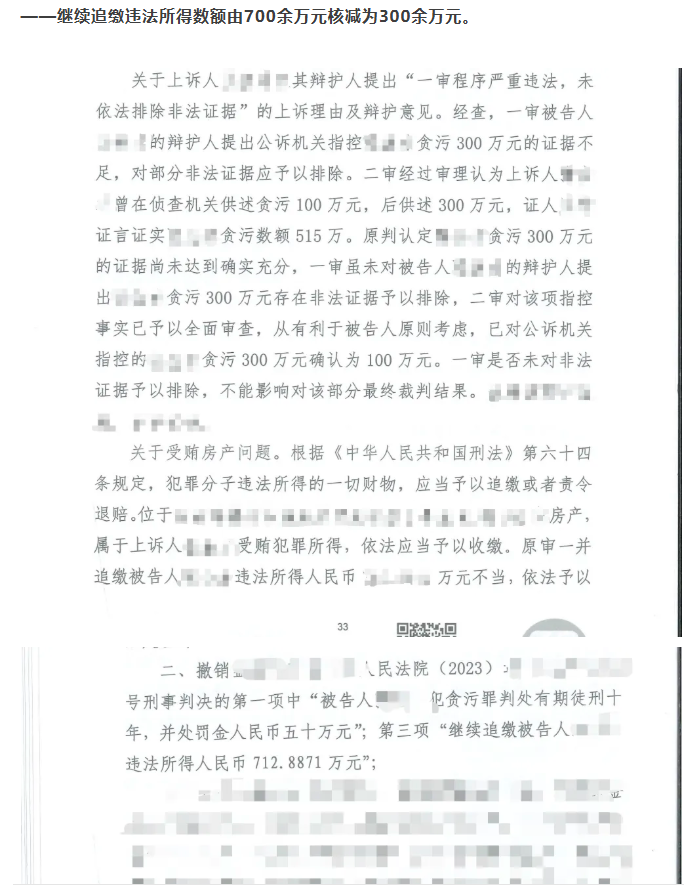
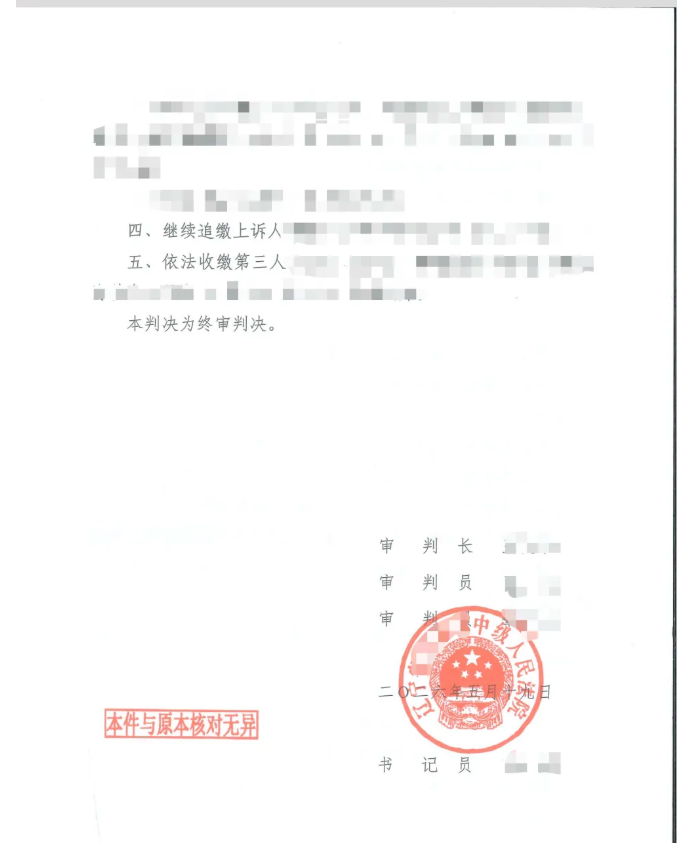
Given the reality that it is difficult to exclude evidence and overturn convictions in cases of official misconduct, the fact that the appellate court was able to substantially overturn the embezzlement charges resulting from the Commission for Discipline Inspection’s investigation—directly reducing the alleged amount by two-thirds in accordance with evidentiary standards and the principle of resolving reasonable doubt in favor of the defendant—demonstrates the appellate process’s adherence to the principle of adjudication based on evidence and confirms the professional weight of the defense counsel’s arguments.
Regrettably, some issues remain: the amount involved in the embezzlement charge is still in doubt; the original verdicts on the charges of bribery and illegal issuance of loans were upheld; and the defense arguments regarding the motion to exclude illegally obtained evidence and the special circumstances of voluntary surrender were not supported—which is precisely why the legal team continues to represent the client in the appeal process.
IX. The Defense Continues: The Appeal Process Proceeds
Following the second-instance verdict, the client, his family, and the defense attorneys did not stop there. After communicating with the presiding judge and the vice president in charge, all parties acknowledged that the case was highly contentious. Based on a comprehensive analysis of the facts, evidence, and legal application, the client and his family remained dissatisfied with the outcome but maintained full confidence in the defense team and have retained them to file a petition for review. Currently, the petition process is proceeding in an orderly manner.
X. Beyond This Individual Case: Common Challenges in Defending Against Official Misconduct Cases and Calls from the Legal Profession
A single case demonstrates professionalism; a single case builds a reputation. The handling of this case, which spanned more than two years, not only reflects the team’s diligent performance of duties, attention to detail, and determination in the face of difficulties, but also highlights prominent, common issues in the current handling of official misconduct cases that urgently require attention from the legal profession and society:
First, the right to legal assistance during the supervisory investigation phase needs to be addressed. Under the current system, lawyers are unable to meet with or intervene on behalf of clients during detention, yet the most critical confessions are precisely formed during this completely closed-off phase. By the time defense counsel becomes involved, the confession framework has long been solidified, leaving the defense with little choice but to “correct errors after the fact”; there is a clear lack of safeguards at the source to ensure the voluntariness and truthfulness of confessions. The “gradual escalation” in the confessions regarding embezzlement in this case is a direct reflection of this systemic shortcoming.
Second, the criteria for determining voluntary surrender urgently need to be standardized. In practice, the determination of voluntary surrender in official corruption cases deviates significantly from the provisions of Article 67, Paragraphs 1 and 2 of the Criminal Law; the assessment of whether “investigating authorities have already obtained” the information is highly arbitrary, as exemplified by the contradiction between the “Statement of Circumstances” in this case and the evidence on file. The court of first instance found that after the defendant was placed under detention by the Supervisory Commission, he truthfully confessed to facts regarding bribery offenses that the supervisory authorities had not yet uncovered, and accordingly imposed a discretionary lighter sentence for the bribery offense—yet this same truthful confession did not qualify for the statutory recognition of voluntary surrender (including special voluntary surrender). This gradual narrowing from “statutory leniency” to “discretionary leniency” serves as a practical illustration of the need to further unify understanding and strictly adhere to the law regarding the standards for recognizing voluntary surrender.
Third, the exclusionary rule for illegally obtained evidence still needs to be fully implemented. The difficulty in excluding illegal evidence is particularly pronounced in cases involving official misconduct. During the two-instance proceedings of this case, the defense team lawfully filed motions to exclude illegal evidence and requested access to synchronized audio-visual recordings; although these requests were not granted, the appellate court ultimately issued a substantive reversal regarding the amount of embezzlement on the grounds that “the evidence was not yet conclusive and sufficient”—this illustrates, from one perspective, that doubts regarding the legality and authenticity of confessions can be effectively addressed through evidence review standards; It also indicates that there is still a long way to go before the exclusion procedure is formally and rigorously initiated in cases of official misconduct.
Fourth, the mechanism for obtaining synchronized audio-visual recordings needs to be made more binding. Since the revised “Implementation Regulations of the Supervision Law” took effect on June 1, 2025, the situation has improved somewhat; however, in practice, a large number of full-length synchronized audio-visual recordings still cannot be obtained. Furthermore, there are no corresponding legal liabilities to hold supervisory authorities accountable when they refuse to provide such recordings. Simultaneous audio-visual recordings are the most direct evidence for verifying the legality of confessions; without a binding mechanism for their retrieval, the review to exclude extraneous evidence is easily rendered ineffective.
Fifth, the appearance of witnesses in court and the substantive review of testimonial evidence need to be strengthened. Bribery cases are characterized by a distinct “one-on-one” dynamic between the bribe-giver and the bribe-taker; the rate of witness appearances in court has long been low, and written testimonies are often accepted at face value. In this case, it was precisely the bribe-giver’s testimony at the retrial—explaining the circumstances leading to the fabrication of false statements—that thoroughly exposed the contradictions in the confessions of both the bribe-giver and the bribe-taker. This clearly demonstrates that having witnesses appear in court to be cross-examined is an irreplaceable procedural mechanism for verifying the authenticity of verbal evidence; it should be fully utilized rather than rendered ineffective.
Sixth, the relationship between oversight, procuratorial, and judicial authorities—specifically their checks and balances and cooperation—urgently needs to be clarified. The emerging trend of “oversight centralization” in practice warrants vigilance: when courts intend to alter the factual findings in cases transferred by the Supervisory Commission, they often need to “consult” with the Commission first; this practice is inconsistent with the spirit of the rule of law, which emphasizes judicial independence and mutual checks and balances. Relevant performance evaluation mechanisms should also be reviewed and adjusted accordingly.
Seventh, we must guard against the “exclusively verbal evidence” approach in the determination of official misconduct. In cases involving bribery, accepting bribes, and even embezzlement, relying solely on verbal evidence to establish the facts of the crime and the amount involved—without the support of objective evidence—harbors significant risks. In this case, four bribe-givers made identical errors regarding the date at different times and in different contexts; the embezzled amount was exactly 3 million yuan; and all reimbursement vouchers were lost—these are all real-world examples illustrating the risks of the “exclusively verbal evidence” approach. Testimony should serve as the starting point for evidence review, not the final basis for a verdict.
I raise these issues not to exaggerate the difficulties of defending against official misconduct charges, but based on a simple conviction: acknowledging problems is the prerequisite for solving them. As defense attorneys, we have a clear and objective understanding of the challenges involved in defending against official misconduct charges—these stem from the demands of the anti-corruption campaign, from the ongoing adjustments in the integration of the supervision system with the criminal procedure system, and from the gradual implementation of evidentiary rules in this specific category of cases. Precisely for this reason, lawyers should ground their practice in professionalism and adopt a rational approach, serving as responsible members of the legal profession: presenting the full scope of the facts, substantiating the evidence, and thoroughly explaining the legal principles, so that adjudicators can accept and apply them. We firmly believe that as long as the defense can comprehensively present the facts, evidence, and legal arguments, and through the joint efforts of the prosecution, the defense, and the court, trials for official misconduct cases can be conducted in a manner that fully adheres to the rule of law and established procedures, and can certainly achieve fair and just outcomes.
Conclusion
From accepting the case at the eleventh hour as the first-instance verdict loomed, to successfully securing a retrial; from the professional analysis that reduced the amount of illegally issued loans by 400 million yuan, to nearly a year of investigation, evidence collection, and motions to exclude irrelevant evidence; from the “double reduction” of the embezzlement amount and sentence in the second-instance trial to the overall reduction in the cumulative sentence for multiple offenses—every step forward in this case stemmed from repeated study of the case files, persistent scrutiny of details, and a relentless commitment to procedural integrity, and would not have been possible without the trust and entrustment of the client and their family from start to finish.
Faced with the practical challenges of defending against official misconduct charges, what lawyers can do is, first, to advocate, and second, to persevere. In the recently popular legal drama *The Heavy Weapon*, a father tells his son, who is also pursuing a career in law: “There are many things where, even after you’ve done your utmost, you still cannot find a definitive answer. Precisely because of this, even when you know it may be impossible, you must still act—I will search high and low. Strive to increase the number of correct answers; that is what makes it truly valuable.” Answers do not come on their own; therefore, we must “clarify the law through argument, uphold justice with integrity, and never cease our efforts.”
This is precisely the true reflection of this case and also the professional destiny of criminal defense attorneys: Progress in the rule of law is never achieved overnight, but is built upon the accumulation of steadfast commitment in each individual case. The diligent handling of every case contributes professional strength toward increasing the number of “correct answers.” We firmly believe that through the long-term, unremitting efforts of the legal profession as a whole, individual cases will ultimately return to the path of the rule of law, and rules will eventually gain firmness through practice.