

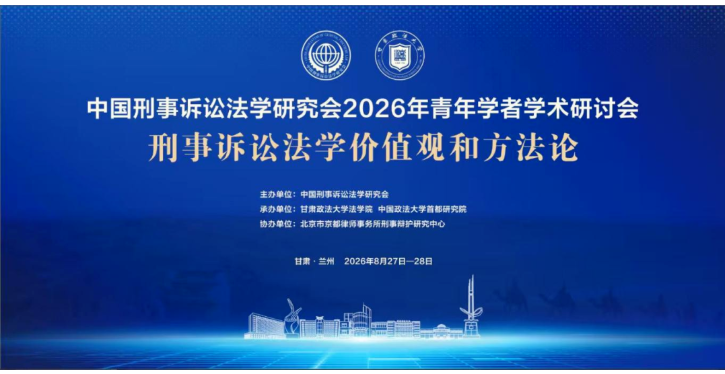
On August 27–28, 2026, the 2026 Academic Symposium for Young Scholars of the Chinese Society of Criminal Procedure Law was grandly held at Gansu University of Politics and Law. The conference was organized by the Chinese Society of Criminal Procedure Law and hosted by the School of Law at Gansu University of Politics and Law and the Capital Research Institute of China University of Political Science and Law, with the co-organization of the King&Capital Criminal Defense Research Center. Centered on the theme of “Values and Methodology in Criminal Procedure Law,” the conference brought together over 200 experts and scholars from 27 provinces and more than 60 universities and research institutions across the country. Participants engaged in in-depth discussions on topics including the core values of modern Chinese criminal procedure law, the development of an independent knowledge system, innovation in legal research methods, and the adoption of international experiences. Attorney Liang Yali—a council member of the Chinese Society of Criminal Procedure Law, senior partner at Beijing King&Capital Law Firm, and director of the King&Capital Criminal Defense Research Center—attended the opening ceremony on behalf of the co-organizer and delivered a speech. Drawing on her three decades of practical experience on the front lines of criminal defense, she advocated for mutual empowerment between academia and the legal profession to jointly advance the construction of China’s independent knowledge system in criminal procedure law.
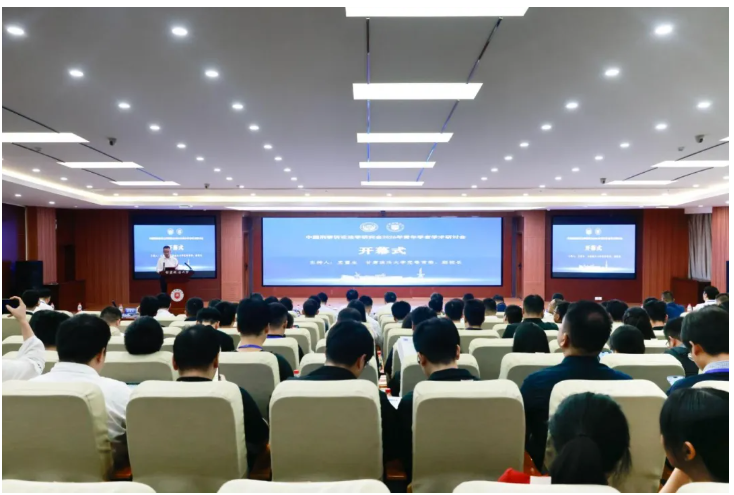
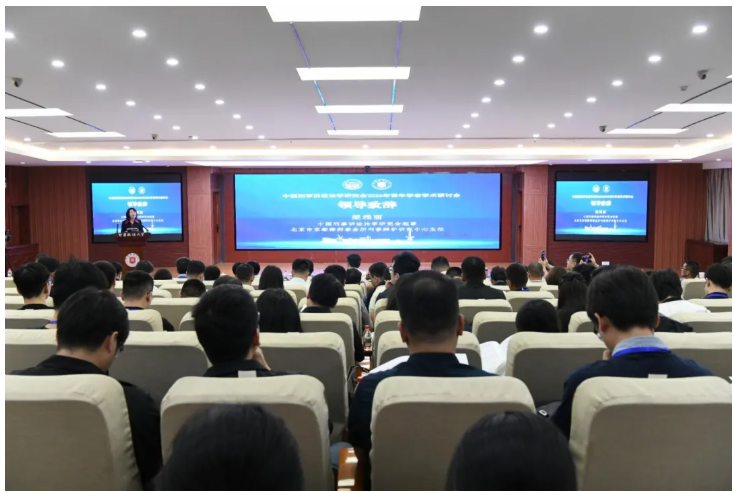
Scene from the opening ceremony
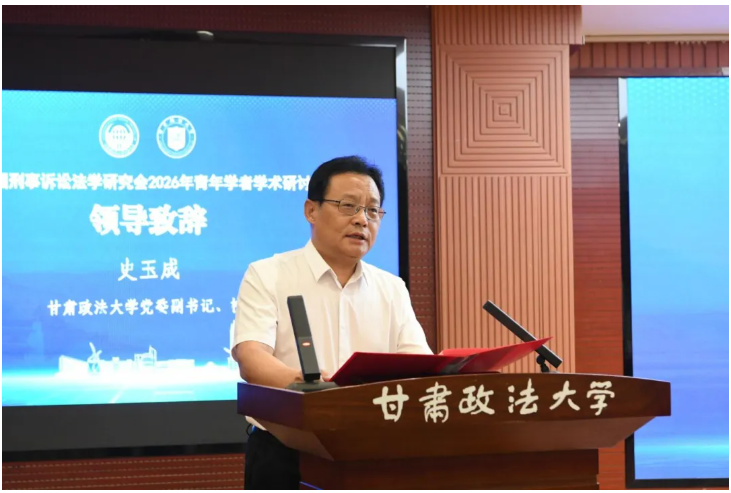
Shi Yucheng, President and Deputy Secretary of the Party Committee of Gansu University of Politics and Law, delivering a speech
Shi Yucheng, President and Deputy Secretary of the Party Committee of Gansu University of Politics and Law, delivered a speech on behalf of the host institution. He introduced the university’s historical development and educational mission to the attendees and expressed his earnest hopes that young scholars would maintain a firm political compass, ground themselves in practical experience, and deepen collaborative innovation.
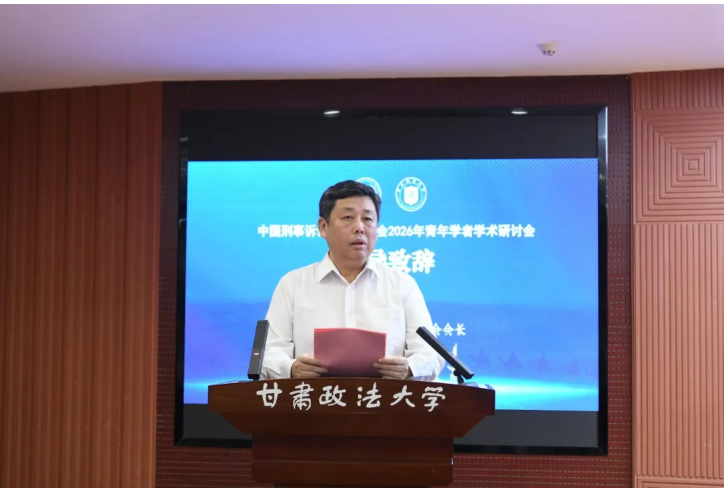
Address by Jing Dali, President of the Chinese Society of Criminal Procedure Law
Jing Dali, President of the Chinese Society of Criminal Procedure Law, delivered a speech on behalf of the organizers. He urged young scholars to uphold firm political convictions, value systems, and the rule of law, to keep the “greater good of the nation” in mind, and to closely align their personal academic interests with the nation’s needs for the rule of law.
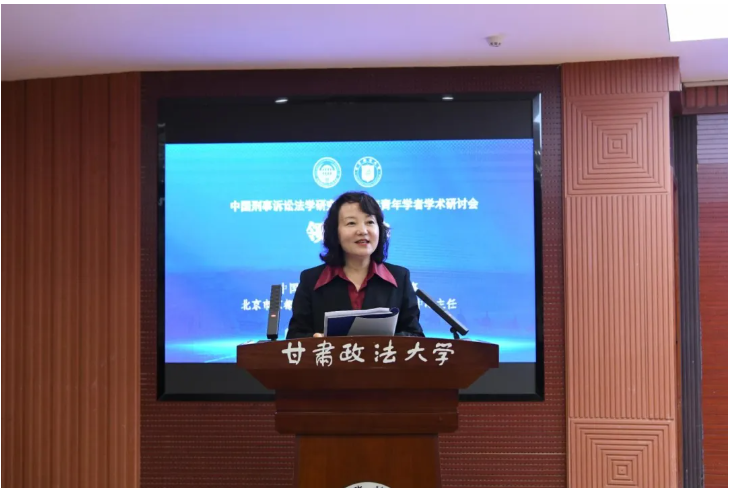
Address by Attorney Liang Yali, Director of the King&Capital Criminal Defense Research Center
Attorney Liang Yali, representing the co-organizers, delivered a speech at the opening ceremony. She extended warm congratulations on the grand convening of the annual conference, paid high tribute to the Chinese Society of Criminal Procedure Law and the experts who have long cared for and supported the growth of young legal scholars, and offered best wishes to the young scholars who had traveled from afar.
Academic Research and Defense Practice Form an Indivisible Community
In her address, Attorney Liang Yali noted that this year’s annual conference, themed “Values and Methodology in Criminal Procedure Law,” is far-reaching in its intent and cuts to the heart of the matter. By addressing the two dimensions of values and methodology—returning to fundamentals while upholding integrity and fostering innovation—we can collectively advance the construction of China’s independent knowledge system in criminal procedure law. Only then can reforms to the criminal procedure system proceed steadily and sustainably, and only then can we better respond to the new issues and challenges continually raised by judicial practice in the new era.
As a practitioner with extensive experience on the front lines of criminal defense, she put forward a core concept: academic research in criminal procedure and the practical work of legal defense have always been a single, inseparable community, sharing a common lineage.
She shared the practical approach taken by the Kyoto Criminal Defense Research Center in recent years: the Center has consistently upheld an academic foundation, continuously building bridges for communication and dialogue between the academic community and the criminal defense practice sector, and actively participating in various academic seminars on criminal law and the rule of law. Beyond handling cases, the Center has consistently distilled genuine issues from real-world cases, bringing procedural dilemmas and challenges in safeguarding rights encountered on the front lines to academic forums; at the same time, it has proactively absorbed cutting-edge academic findings, transforming mature theoretical perspectives into practical solutions for individual case defense and legal remedies, striving to advance theoretical achievements from conference halls to courtrooms.
“Years of practice have taught us that for legal practice to go deeper and further, it cannot do without the guidance of core values or the direction of a scientific methodology; defense work divorced from a foundation of values and methodological awareness easily falls into the trap of being merely a technical challenge,” she emphasized, noting that this is precisely why the theme of this year’s annual conference—“Values and Methodology”—resonates so strongly with the legal community.
Rooted in China: Bridging the Gap Between Theory and Practice
In her opening remarks, Attorney Liang Yali expressed high hopes for young scholars. She noted that young scholars represent the future of legal research and are the driving force behind the sustained development of China’s criminal procedure system. The Association’s decision to organize a dedicated annual academic conference for young scholars—providing them with a high-level platform for exchange and presentation—fully demonstrates its deep concern for the growth of young legal talent and its long-term strategic vision. Young scholars, with their active minds, broad perspectives, critical spirit, and innovative vitality, represent the most valuable force in building an independent Chinese knowledge system of criminal procedure law.
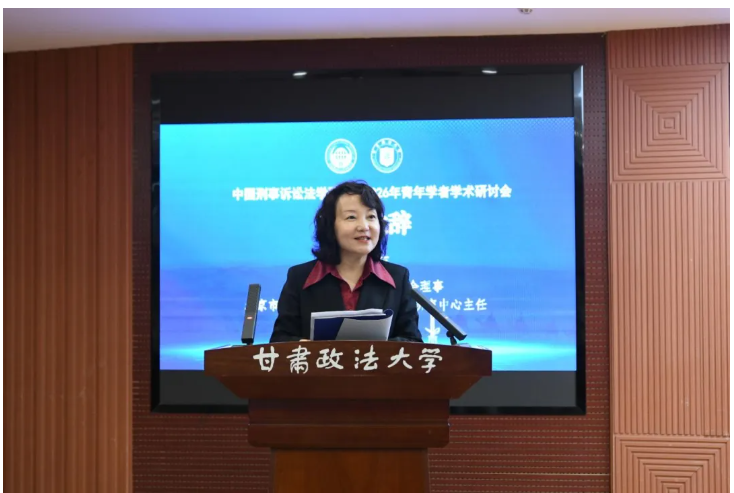
She expressed her hope that the young scholars present would seize the opportunity presented by this annual conference to uphold the value stance of criminal procedure under socialism with Chinese characteristics, ground their work in the soil of China’s judicial practice, make effective use of diverse and scientific research methods, and produce more outstanding research outcomes that are in-depth, down-to-earth, and capable of addressing the practical needs of the rule of law; She also hopes that young scholars will engage more deeply with legal practice, observe individual cases, strengthen dialogue and exchange with practitioners such as lawyers, and bridge the gap between theoretical research and judicial practice, so that research in criminal procedure law can truly take root in China and address China’s challenges.
Passing the Torch: Building an Academic High Ground
This symposium represents a significant initiative by the Chinese Society of Criminal Procedure Law to demonstrate its ongoing commitment to supporting the growth of young scholars. During the event, relevant officials from the Society explained the rationale behind drafting the “Opinions on Encouraging and Supporting the Growth of Young Scholars (Draft for Public Comment),” which aims to provide greater institutional support and safeguards for the development of young scholars.
The symposium featured a rich program of academic exchanges: two senior scholars born in the 1970s were invited to deliver keynote presentations—Professor Sun Yuan from the School of Law at the University of Chinese Academy of Social Sciences and Professor Wan Yi from the School of Law at Sichuan University—to pass on the torch of academic knowledge to young scholars; In the keynote session, four young scholars born in the 1980s—Professor Zheng Xi from the School of Law at Beijing Foreign Studies University, Professor Pei Wei from the School of Law at Beihang University, Professor Zheng Fei from the Institute of Evidence Science at China University of Political Science and Law, and Professor Wu Hongqi from the School of Law at Peking University—shared their experiences, while three young scholars born in the 1990s delivered plenary presentations, showcasing the intergenerational continuity and vibrant vitality of research in criminal procedure law.
During the breakout sessions, 48 young scholars presented on six major themes: “Interpretation and Application of Values in Chinese Criminal Procedure Law,” “Exploration of an Independent Methodology for Chinese Criminal Procedure Law,” “ A Chinese Perspective on Research in Criminal Evidence Law,” “Value Adjustments and Methodological Transformation in Criminal Procedure Law Research in the Digital and Intelligent Era,” “Foreign Resources and Local Adaptation in Chinese Criminal Procedure Law Research,” and “Research Pathways in Criminal Procedure Law from Diverse Perspectives.” Twenty-four experts provided critiques of the presentations, fostering a high-quality, intensive academic dialogue.
At the closing ceremony, Guo Shuo, Deputy Secretary-General of the Society, summarized the conference and reported on the discussion regarding the “Opinions on Encouraging and Supporting the Growth of Young Scholars (Draft for Public Comment).” Professor Zhang Jianwei of Tsinghua University Law School, Vice President of the Chinese Society of Criminal Procedure Law, delivered closing remarks on behalf of the organizers, while Professor Liu Renqi, Dean of the School of Public Security (School of Public Safety Law) at Northwest University of Political Science and Law, spoke on behalf of the next host institution.
King&Capital Criminal Defense Continues to Promote the Integration of Theory and Practice
As a co-organizer of this symposium, the King&Capital Criminal Defense Research Center has long been committed to building a bridge between academia and the legal profession. Under the leadership of Director Liang Yali, the Center has consistently adhered to the development philosophy of “using practice to enrich theory and using theory to guide practice.” On the one hand, it distills genuinely significant theoretical questions from a large number of complex and challenging cases, providing vivid practical material for academic research; on the other hand, it actively incorporates cutting-edge research findings from academia, transforming them into specific strategies and solutions for individual defense cases, thereby propelling theoretical achievements from the study to the courtroom and from conference halls into practical application.
Co-hosting this academic symposium for young scholars and delivering the opening address not only serves as a significant demonstration of the King&Capital Criminal Defense Research Center’s academic influence but also reflects its commitment to actively nurturing young legal talent and promoting the flourishing development of criminal procedure law research.
In the future, Attorney Liang Yali will continue to lead the Kyoto Criminal Defense Research Center in deepening exchanges and cooperation with the academic community, continuously promoting the mutual enrichment of criminal defense practice and the theory of criminal procedure law, and contributing more professional expertise to the construction of an independent Chinese knowledge system of criminal procedure law and the advancement of the modernization of the rule of law in criminal procedure in the Chinese context.
Translated with DeepL.com (free version)