

On September 8, 2026, the 22nd installment of the “Criminal Case Debate Forum,” co-hosted by the Third Criminal Law Department of Beijing King&Capital Law Firm and the King&Capital Research Center for Environmental, Food, Drug, and Intellectual Property Law, was successfully held.
Under the theme “Approaches and Methods for Effective Defense in Organized Crime Cases from the Perspective of Integrated Criminal Justice,” the event focused on practical issues in defending organized crime cases. Centered on the main thread of effective defense from an integrated criminal justice perspective, the seminar featured in-depth discussions across three dimensions: substantive characterization, evidence review, and procedural responses. Topics covered frequently occurring high-risk areas such as illegal lending, protection of property rights, cases involving pornography, cybercrime, and extortion through online public opinion manipulation. The event was moderated by attorneys Zhang Yongfu and Chen Sainan of King&Capital Law Firm. Zhu Yonghui, Director of King&Capital Law Firm, attended the event and delivered opening remarks. Seven attorneys—Wang Zhiqiang, An Zhijun, Tang Jianbin, Lü Yan, Zhang Sijia, Xu Wei, and Li Mingzhen—delivered keynote presentations in succession. Attorneys from King&Capital Law Firm, along with numerous legal professionals participating both in person and online, attended the entire event.
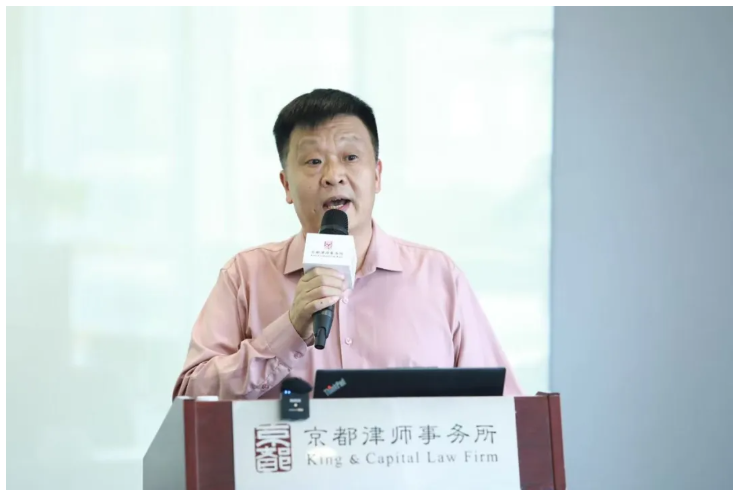
Attorney Zhang Yongfu, moderator, opens the event
At the start of the event, Attorney Zhang Yongfu, Deputy Director of the King&Capital Law Firm’s Environmental, Food, Drug, and Intellectual Property Law Research Center, introduced the event’s theme and agenda. He noted that the seminar’s content was drawn entirely from real-world cases and practical experience, covering multiple stages of case handling—including reviewing case files, questioning, cross-examination, and plea bargaining—with the aim of providing attendees with concrete and actionable strategies for handling cases.

Director Zhu Yonghui Delivers Opening Remarks
In his opening remarks, Zhu Yonghui, Director of King&Capital Law Firm, stated that integrated criminal legal services represent a key direction in today’s legal practice. Criminal defense attorneys must not only focus on criminal procedure law but also possess a comprehensive legal perspective encompassing civil and administrative law. Only by adopting such a holistic approach can they effectively deliver core defense services.
He pointed out that as the campaign against organized crime and evil forces has transitioned from a three-year special campaign to a routine effort—and has expanded from offline to online and shifted from overt violence to covert violence—it can be described as leaving “no blind spots in the fight against organized crime.” Criminal defense attorneys should closely monitor national judicial trends and consider how to contribute to this campaign from a defense perspective. He emphasized that handling cases in accordance with the law and political correctness are not opposing concepts—meticulously analyzing cases and promoting the proper implementation of the law is, in itself, the greatest form of political correctness.
He commended the firm’s young core members for taking the stage to share their case handling experiences, noting that this demonstrated King&Capital Law Firm’s vitality and long-term potential.
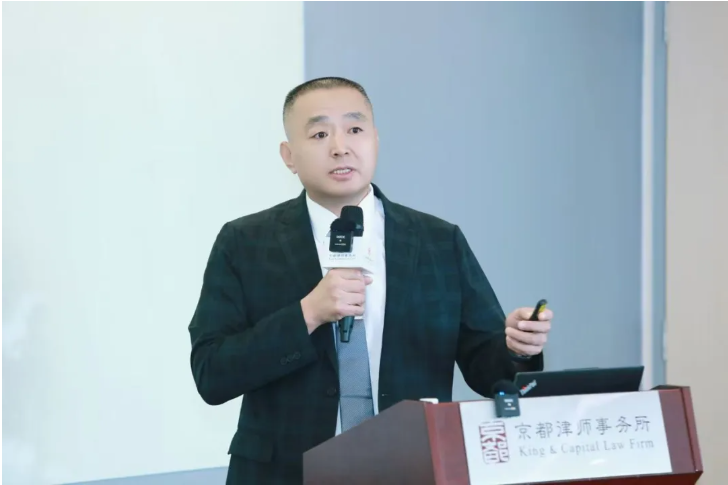
Attorney Wang Zhiqiang’s Keynote Presentation
The keynote session began with a presentation by Attorney Wang Zhiqiang, Deputy Director of the King&Capital Law Firm’s Environmental, Food, Drug, and Intellectual Property Law Research Center. Drawing on cases entered into the People’s Court database, he delivered a presentation titled “A Brief Analysis of the Issue of Narrowing the Definition of Organized Crime from the Perspective of Database Cases.” He cited the latest case handling data released by the Supreme People’s Procuratorate to analyze the new trends and policy changes emerging in this round of the special campaign against organized crime.
Attorney Wang Zhiqiang pointed out that the new round of the special campaign faces three risks of overreach: first, the expansion of “soft violence,” where the line between legitimate online negative reviews, complaints, and reports, on one hand, and extortion through public opinion manipulation and malicious claims, on the other, must be carefully discerned on a case-by-case basis; second, the “six types of tyrants” labeling, where once a policy label is applied, it may trigger a “domino effect,” and the crucial mission of defense attorneys is to exhaust all legal means and wisdom to “remove such labels”; third, “campaign-style” case handling and the overbroad application of “seizing assets to cut off funding,” which must be strictly prevented to avoid “collective punishment”-style confiscation of lawful property and excessive seizures. Subsequently, drawing on multiple cases in the database, he systematically analyzed the core characteristic of “committing unlawful acts and oppressing the people” from eight dimensions—subjective intent, modus operandi, causality, organizational structure, frequency of offenses, harmful consequences, involvement of minors, and assessment of soft violence— systematically dissected the review methodology for the core characteristic of “committing acts of lawlessness and oppressing the people,” proposing the restrictive conclusion that “purely profit-driven behavior does not constitute a ‘malicious force’; actions with justifiable causes do not constitute a ‘malicious force’; temporary gatherings do not constitute a ‘malicious force’; persistent behavior merely to meet numerical thresholds does not constitute a ‘malicious force’; and cases where the impact has not spread do not constitute a ‘malicious force.’” He emphasized that defense counsel should effectively utilize the policy statement “if any one of the criteria for a ‘criminal gang’ is missing, it does not constitute a ‘malicious force’” to prevent the overbroad classification of “malicious forces.”
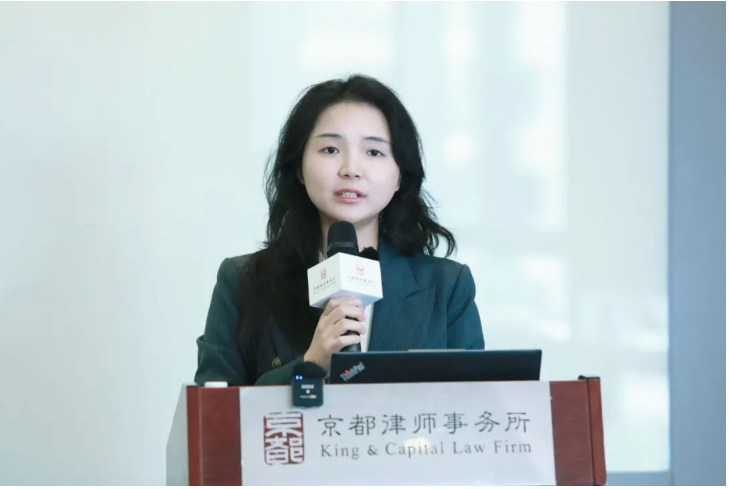
Moderator: Attorney Chen Sainan

Attorney An Zhijun’s Keynote Presentation
Attorney An Zhijun, Senior Partner in the Rights Protection Practice at Beijing Yinghe Law Firm, began with cases he personally handled and delivered a keynote presentation titled “The Battle to Protect Assets in Joint Ventures.”
Attorney An Zhijun reviewed the process of gradual refinement in legislation and judicial interpretations across successive rounds of the campaign against organized crime and evil forces. He pointed out that, against the policy backdrop of this special campaign, the difficulty of characterization defense has increased; once the characterization is compromised, lawful property faces “collective liability”-style confiscation. Therefore, property defense must proceed in tandem with characterization defense, and intervention should occur as early as possible during the investigation stage. He systematically reviewed the adjudication rules established by Article 64 of the Criminal Law, the “Opinions on Several Issues Concerning the Disposal of Property in Criminal Cases Involving Organized Crime,” the “Law of the People’s Republic of China on Combating Organized Crime,” and relevant guiding cases from the Supreme People’s Court. He specifically pointed out that the burden of proof for phrases such as “the portion actually used to support the organization’s activities” should not fall on the defense.
Addressing practical challenges, he summarized property defense in corporate cases as a “three-step approach”: proving the legality of capital sources, severing business ties, and applying for the identification and judicial audit of commingled assets; he also provided specific operational strategies for scenarios such as joint equity holdings, fixed assets, acquisition in good faith, and commingled assets. He also noted that property defense must span the three stages of investigation, prosecution review, and trial; during the trial stage, defense counsel should apply to appear in court and coordinate arguments with the client’s representative. He emphasized that handling cases in accordance with the law is not at odds with political correctness, and that no matter how difficult the circumstances, criminal defense attorneys should still give their all.
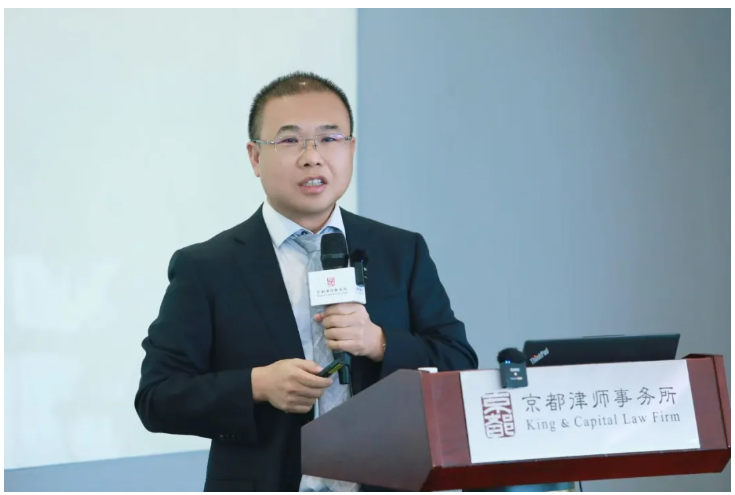
Attorney Tang Jianbin’s Keynote Presentation
Attorney Tang Jianbin, Senior Partner at King&Capital Law Firm and Director of the Kyoto Research Center for Environmental, Food, Drug, and Intellectual Property Law, delivered a presentation titled “Risks of Being Classified as Organized Crime in Illegal Lending Cases and Defense Strategies,” drawing on his personal experience handling an illegal lending case in Guizhou. He analyzed the reasons why illegal lending cases are often escalated to be classified as organized crime or “evil forces” cases: organized group operations, the use of soft violence in debt collection, multiple victims filing reports, and cross-regional operations. These outward characteristics highly overlap with the formal requirements for “evil forces,” easily leading to a “path dependence” toward harsher punishment.
He provided a detailed account of the defense process over more than two years in the case he personally handled: during the investigation phase, he successfully refuted the charges of “predatory lending” and the designation as a “malicious force”; during the prosecution review phase, he successfully dismissed two related charges—picking quarrels and provoking trouble, and collecting illegal debts—and ruled out the “malicious force” designation, ultimately securing a conviction on a single charge of illegal business operations; Through multi-faceted sentencing arguments—including a comparison of the maximum penalties for the crime of usurious lending and challenging the admissibility of the “Review Opinion” regarding the loan amount—he secured a relatively lenient prison term and fine for his client.
He also cautioned that when enforcement efforts are overly focused on debt collection activities by lenders, the true source of credit default may be overlooked—if the loan funds are confiscated, the debt may actually become unrecoverable, and the ultimate beneficiaries may be those who default on their debts. Therefore, the principle of restraint in criminal law must be upheld.
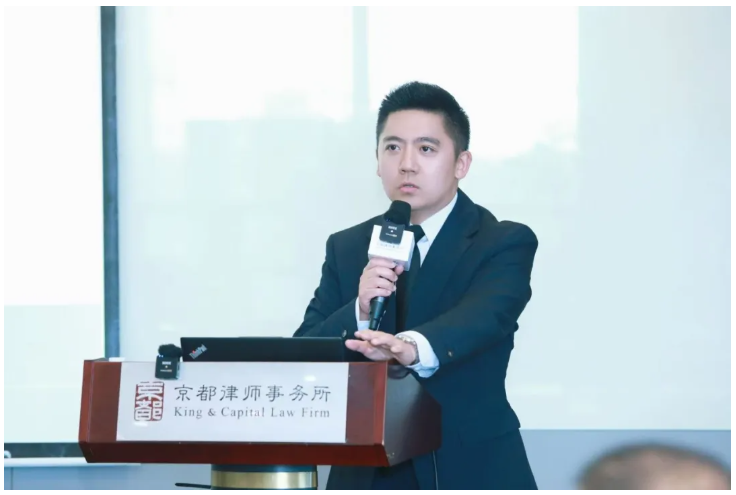
Attorney Lü Yan’s Keynote Presentation
Attorney Lü Yan, a partner at King&Capital Law Firm and Deputy Director of the Kyoto Research Center for Environmental, Food, Drug, and Intellectual Property Law, began his presentation on the crime of bid-rigging with a discussion titled “Key Points for Evidence Review and Defense Against Organized Crime Charges in Bid-Rigging Cases.” Drawing on his experience handling dozens of bid-rigging cases, he outlined new trends in this field, such as retroactive investigations spanning multiple years, the use of big data to identify cases, and the introduction of third-party audits during the public security investigation phase. He also identified five pathways through which bid-rigging can be escalated to the level of organized crime: conflicts at construction sites being classified as acts of violence or “soft violence”; long-term, repeated bid-rigging being characterized as organized criminal activity; the practice of “using criminal proceeds to sustain criminal activities” meeting economic criteria; the interweaving of multiple criminal charges; and the establishment of industry monopolies.
He proposed that defense strategies should be based on a risk map covering the entire bidding process, systematically examining and severing the chain of escalation from four aspects: organizational characteristics, economic characteristics, behavioral characteristics, and characteristics of harm. Drawing on his case handling experience, he also noted that while it is difficult to “remove the label,” it is equally challenging for victims to file complaints against organized crime groups to have them “labeled” as such. Against the backdrop of the early identification of generalized risks, criminal defense attorneys should focus on preventing clients from being prematurely labeled as members of organized crime groups, striving to ensure they are “not labeled” in the first place rather than having to “remove the label” afterward.
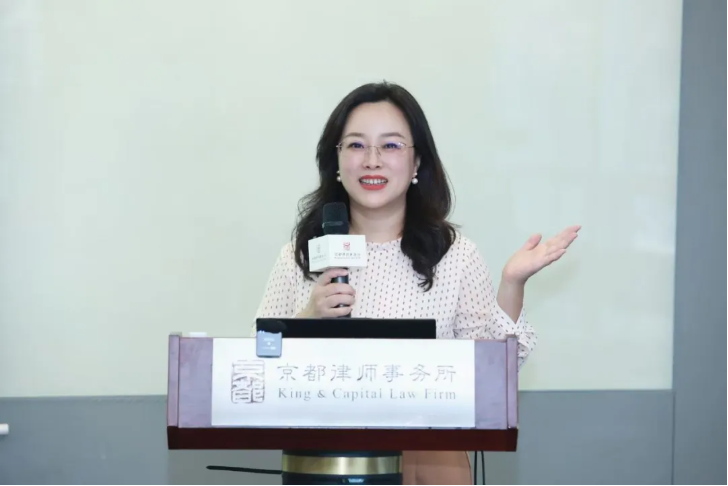
Attorney Zhang Sijia’s Keynote Presentation
Attorney Zhang Sijia, Deputy Director and Secretary-General of the Kyoto Environmental, Food, Drug, and Intellectual Property Law Research Center, delivered a presentation titled “Reflections on Distinguishing Between Ordinary Joint Crimes and Criminal Gangs: The Risk of Overbroad Classification of Criminal Gangs in Obscenity-Related Cases and Defense Strategies,” using a case involving 20 defendants (including 10 minors) charged with obscenity-related offenses as an example. She analyzed that crimes such as forced prostitution and procuring prostitution inherently involve large numbers of participants, repeated offenses, and the use of violence—characteristics that highly overlap with the formal requirements for “criminal gangs,” making such cases a major area prone to over-classification as criminal gang activity. In this case, the defense counsel, through a detailed review of the case’s timeline and a visual analysis of the organizational structure, demonstrated that the individuals involved were classmates and friends who had gathered temporarily—“coming together when needed and dispersing when not”—that their targets were specific, and that they had not established regional or industry-wide influence. Ultimately, this persuaded the procuratorate to accept the defense’s arguments, remove the “criminal syndicate” label, and convict the defendants of ordinary joint criminal offenses. She summarized a four-step defense methodology: visualizing the factual timeline, systematically reviewing each statutory element, distinguishing the substantive nature of the case, and raising legal objections to property disposition. She emphasized the need to guard against the risk of “treating individuals as members of a ‘malicious force’ while failing to seize their assets in accordance with the legal standards for organized crime cases.”
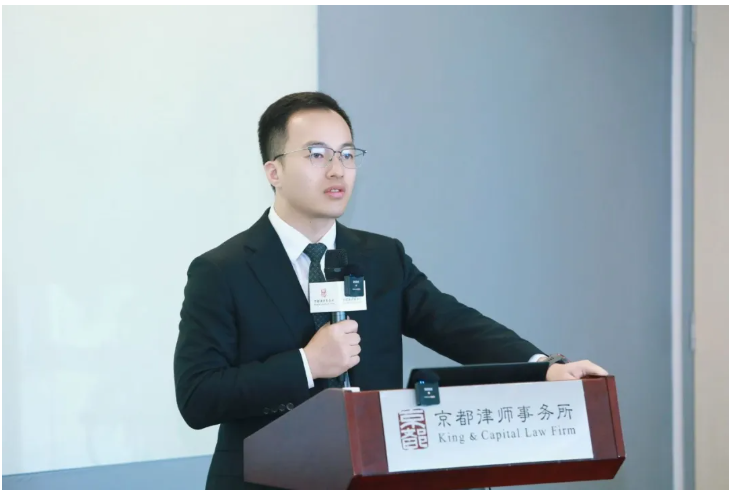
Attorney Xu Wei’s Keynote Presentation
Attorney Xu Wei, a partner at Beijing King&Capital Law Firm and a researcher at the King&Capital Environmental, Food, Drug, and Intellectual Property Law Research Center, opened his presentation titled “In Which Industries Might New Types of Internet-Related Criminal Gangs Exist” with a personal account of harassment from debt collection calls. He posed the following question: At what point does a legitimate company—one with a business license that pays monthly salaries—become a criminal gang? He categorized high-risk internet-related industries into four major categories and eight sub-sectors: in the financial sector, loan facilitation, outsourced debt collection, and rights protection agency services; in the traffic sector, public opinion management and online public relations, live streaming, and online dating; in the consumer sector, e-commerce claims and online-to-offline consumer traffic diversion; and in the labor sector, recruitment services.
For each category, he compared normal business practices with their distorted forms—such as legitimate loan facilitation versus “empty loans,” legitimate debt collection versus “telephone bombardment,” legitimate professional fraud investigation versus malicious claims, and legitimate public opinion management versus paid post removal—and used typical cases from various regions to illustrate the key factors distinguishing their legal characterizations. He proposed three review criteria: organizational characteristics (reasons for establishment and objectives), behavioral characteristics (whether purely online, internal, or external), and harm characteristics (whether constituting “significant impact”)—as the three key review criteria, emphasizing that neither the number of victims nor the amount involved can directly establish the nature of organized crime. He specifically pointed out that the best defense occurs before a case arises: when a company implements proper compliance measures and maintains a complete audit trail, these become the most compelling defense materials after a case occurs.
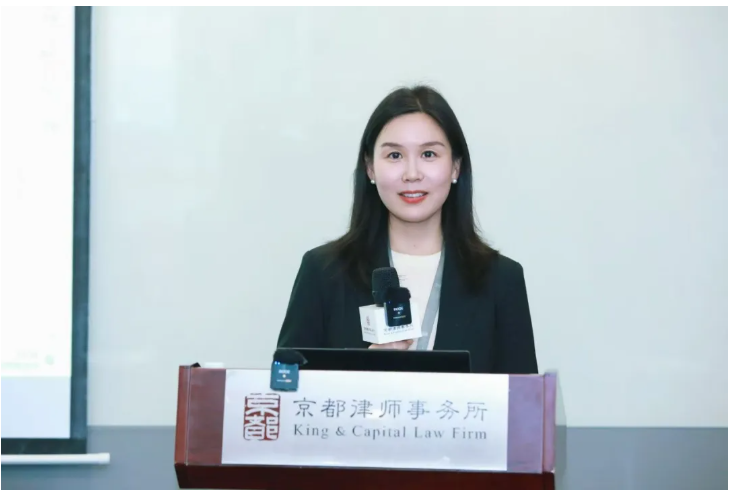
Keynote Presentation by Attorney Li Mingzhen
Attorney Li Mingzhen, a researcher at the Kyoto Environmental, Food, Drug, and Intellectual Property Law Research Center and a Ph.D. candidate in law at China University of Political Science and Law, focused on “The Rules for Determining and Compliance Boundaries of Soft Violence in the Form of Public Opinion Extortion Amid the Deepening Campaign to Combat Organized Crime and Evil Forces.” She outlined the complete chain of conduct in public opinion blackmail—“fabricating negative information—issuing threats—amplifying pressure—demanding money or property.” Drawing on the Supreme People’s Procuratorate’s 2024 typical cases of punishing news blackmail and a recent case in Hangzhou—the nation’s first public opinion blackmail case carried out under the guise of “protecting a TV series”—she clarified the three essential elements of the offense (control over information, threats, and the outcome of extorting money or property), four key assessment criteria—that the authenticity of the information does not affect the legal characterization, that coercion is objectively defined by psychological compulsion, and the intent to unlawfully appropriate property (as evidenced by active fabrication, conditional exchange, lack of substantive consideration, and repeated commission)—among other core rules.
She also clarified the criteria for distinguishing between extortion and coercive transactions. From the perspectives of self-media practitioners, public relations agencies, victimized enterprises, rights advocates, and legal representatives, she proposed a four-pronged compliance review framework—examining “whether an exchange of conditions exists, whether the agreed-upon consideration is genuine, whether a legal basis for the claim is established, and whether the means and purposes are proportionate”—and warned that “organization, persistence, and industry-wide nature” are red-line terms that can elevate the severity of the offense.

The “Criminal Case Debate Forum” series is a special initiative established by the Third Criminal Law Department of King&Capital Law Firm to strengthen internal communication, enhance attorneys’ practical criminal defense skills, and boost the firm’s reputation in criminal defense. It aims to promote exchange and cooperation among King&Capital’s main office and branch offices, between in-house and external experts and scholars, and among the firm’s internal departments. This installment of the series focuses on new issues arising in practice regarding the traditional offense of rape, conducting an in-depth discussion from the dual perspectives of intoxication-related and violent cases, thereby providing valuable insights for criminal defense practice. Each event features presentations and discussions by industry professionals; we welcome everyone to stay tuned and actively participate.