

On the afternoon of September 9, 2026, the King&Capital Research Center for Defense in Official Duty Crimes successfully hosted a special seminar titled “Effective Defense Strategies for Assets Involved in Official Duty Crime Cases.” The event focused on property defense issues in official misconduct cases. Deng Changzhi, a financial analysis expert from the Ministry of Public Security, was invited to deliver an on-site lecture. Attorney Zhu Yonghui, Director of King&Capital Law Firm, delivered opening remarks, and Attorney Xia Jun, Director of the King&Capital Research Center for Defense in Official Misconduct Cases, gave the opening address. Deputy Directors Weng Xiaoping and Meng Fen, Deputy Secretaries-General Cong Zhuoyi and Xu Wei, Qu Kaijun, and Zheng Xuan—shared insights based on their case handling experience, while Secretary-General Zhang Pengpeng served as the event’s moderator. The event attracted over 1,400 participants both in person and online.

Attorney Zhu Yonghui, Director of King&Capital Law Firm, first extended a warm welcome and expressed gratitude to the guests in attendance, legal colleagues participating online, and the guest lecturers. He also affirmed and expressed support for the Kyoto Research Center for Defense Against Official Misconduct in actively organizing such seminar activities.
Focusing on the theme of the seminar, Attorney Zhu Yonghui drew upon his more than twenty years of experience in defense work to point out that the issue of property defense in official misconduct cases warrants further study. He shared three key observations: First, current legislation is insufficient; provisions for the protection of assets belonging to parties involved in and unrelated to official duty crime cases were originally scarce, and although they have increased in recent years, they remain inadequate. Second, judicial attention is insufficient; the focus is often on conviction, sentencing, and fines, while the seizure, confiscation, and scope of assets involved in the case are often glossed over in judgments, leading to chaotic enforcement in practice. Third, lawyers have historically paid insufficient attention to asset defense due to a lack of legal grounds to rely on. Attorney Zhu Yonghui noted that the King&Capital Center for the Defense of Official Misconduct’s selection of “Effective Defense Regarding Assets Involved in Cases” as the theme of this seminar demonstrates a commitment to “tackling key challenges and pain points,” holding both practical significance and professional value. He expressed hope that this seminar would provide valuable insights for fellow attorneys.

Attorney Xia Jun, Director of the King&Capital Center for the Defense of Official Misconduct, delivered the opening remarks for this seminar. Attorney Xia Jun pointed out that for a long time, the field of defense against official misconduct has generally suffered from a structural shortcoming of “prioritizing personal liberty over property rights.” She stated that, in fact, clients’ concerns have never been limited to personal liberty; property rights are equally a core and critical focus. Objectively speaking, in practice, the identification and definition of case-related property, the boundaries of asset recovery, and remedies for rights have suffered from insufficient attention and inadequate effort.
She explained that with the implementation of the new regulations, the rules and review standards for the disposal of assets involved in cases will be further refined and improved. This seminar specially invited Mr. Deng Changzhi, a financial analysis expert from the Ministry of Public Security, to deliver a lecture. In property defense work for official corruption cases, financial analysis and verification serve as the “foundation” and “bedrock” of property defense. She also noted that numerous senior attorneys from the Center will take turns sharing insights on topics of significant practical concern, including the scope of confiscation of illicit gains, the boundaries of liability, and the protection and remedies regarding assets of third parties and family members involved in the cases.
She concluded that this seminar serves not only as a comprehensive review of the current pain points and challenges in asset defense but also as a systematic梳理 of defense approaches and strategies under the new regulations. Finally, Attorney Xia Jun stated that the King&Capital Research Center for Defense in Official Duty Crimes will use professional research to empower defense practice and continue to promote the high-quality, standardized, and professional development of defense in official duty crimes.
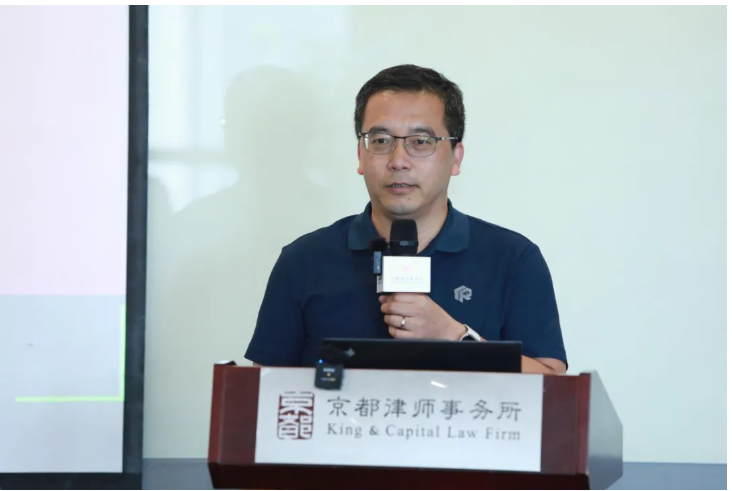
Deng Changzhi, a funds analysis expert from the Ministry of Public Security, shared insights on the practical aspects of funds analysis in official duty crimes. Using a simulated case as a main thread, he explained practical methods for constructing a complete chain of evidence based on abnormal transaction flows. Deng Changzhi emphasized that financial analysis must not stop at merely mapping fund flows; it must sequentially address five key issues: identifying the parties involved, tracing the source of funds, piercing through intermediary accounts, locating the ultimate assets, and establishing evidence correspondence—thereby achieving a closed-loop correspondence between transactions, conduct, and evidence. He outlined the three primary objectives of financial analysis—qualitative assessment, quantitative analysis, and asset recovery—highlighted four common pitfalls in practice, and emphasized that transaction records alone cannot prove the purpose of a payment, and that each transaction node must correspond to an original supporting document.
He then introduced a five-step analytical method covering data collection, cleaning and standardization, entity tracing, and path reconstruction, culminating in four standardized deliverables: a fund flow chart, a dual-track timeline of official duties and funds, a transaction-by-transaction correspondence table, and a list of assets involved in the case. At the conclusion of his presentation, Deng Changzhi reiterated that the ultimate goal of fund analysis is not a complex relationship diagram, but rather a system of facts with a legitimate source, transparent methodology, and the ability to be recalculated and corroborated by other evidence.
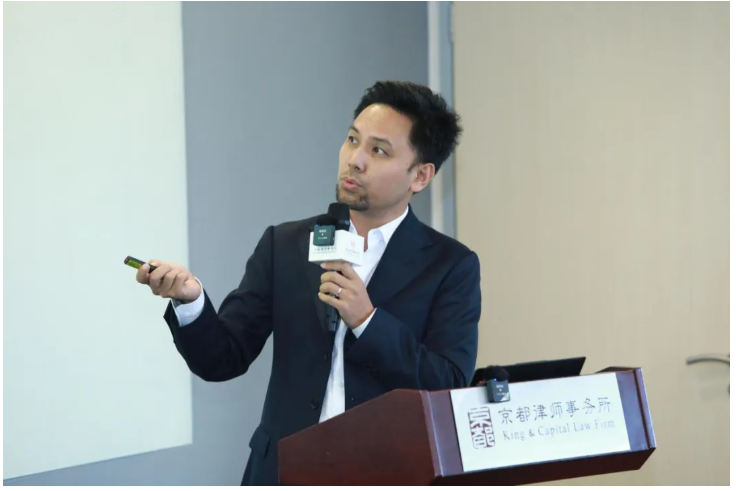
Attorney Weng Xiaoping, Deputy Director of the King&Capital Research Center for Defense Against Official Misconduct, focused on the scope of confiscation of illicit gains from official misconduct and the determination of bona fide third parties. He began his presentation by discussing an appeal case he handled involving the confiscation of 10 billion in equity shares as “illicit gains” from corporate bribery.
Attorney Weng Xiaoping argued that, in accordance with legal provisions and the legal framework, the confiscation of illicit gains from official misconduct must adhere to the principles of causal connection, non-overreach, and proportionality between crime, culpability, and punishment. Confiscation should be limited to property causally linked to the crime and must not extend to lawful property. In this case, Group B followed proper transaction procedures—including due diligence and notarization—when acquiring the equity, paid reasonable consideration, and was neither aware of nor involved in the criminal conduct at issue. As Group B acted in good faith when acquiring the equity, it should be classified as a bona fide third party, and the doctrine of bona fide acquisition should take precedence over criminal forfeiture. However, this case involves a “triple expansion” of the scope of forfeiture; the confiscation of Group B’s equity interests acquired in good faith and their accrued income clearly violates the aforementioned boundaries and should not be subject to forfeiture. Attorney Weng Xiaoping emphasized that forfeiture in official duty crime cases must adhere to established boundaries, and the lawful property of bona fide third parties must never become a victim of profit-driven law enforcement.

Attorney Meng Fen, Deputy Director of the King&Capital Defense Research Center for Official Duty Crimes, focused on the issue of property belonging to a specific category of “third parties” in official duty crime cases—namely, applications for the release of assets held by family members involved in the case and related remedies—and shared a case she successfully handled involving the release of eight apartments.
Attorney Meng Fen pointed out that, according to Article 64 of the Criminal Law, property involved in a case is limited to illicit gains, contraband, and property belonging to the “offender” used in the commission of the crime; the lawful property of others is not included in the category of property involved in the case, and family members, as third parties, are legally entitled to apply for the lifting of asset freezes and seek legal remedies. In this case, all eight properties in the home of a suspect accused of bribery and bribery through the use of influence were frozen; even the properties of the suspect’s sister-in-law and brother-in-law were implicated due to a transfer of ownership. Through persistent advocacy across the four stages—supervisory investigation, review and prosecution, trial, and enforcement—and by selecting the appropriate procedures, the team adhered to the principle that “evidence is king” when asserting rights, proving the lawful ownership of the properties and the legitimate sources of funds. Ultimately, they successfully had the eight properties unfrozen and returned.
Through this real-life case, Attorney Meng Fen highlights that the relief procedures for third parties regarding assets involved in official duty crimes are fragmented, involve numerous stages, and have short windows of opportunity. Family members and attorneys must have a clear understanding of the rights and pathways at each stage and use the most appropriate procedures at the most opportune moments to safeguard their lawful property.

Cong Zhuoyi, Advisor and Deputy Secretary-General of the King&Capital Research Center for Defense Against Official Misconduct, shared insights on the criteria for determining and the principles for confiscating “expected-return bribery”—one of the new forms of covert bribery. He pointed out that the type of proceeds in such bribery cases is limited to expected returns generated by stocks and equity interests; determining whether a case constitutes “expected-return bribery” requires the fulfillment of both objective and subjective conditions: objectively, the stocks or equity interests received must possess a high degree of certainty of appreciation, high profitability, and scarcity; subjectively, both the bribe-taker and the bribe-giver must have a mutual understanding that the expected returns from the stocks or equity interests constitute a bribe.
He emphasized that regarding the determination of the amount of the bribe, where actual profits have been realized, the amount of the bribe is determined based on the actual profit amount at the time the case came to light; where actual profits have not yet been realized, the amount is generally determined based on the premium between the market price of the assets involved and the payment price at the time the case came to light. Furthermore, since the expected returns had not actually been obtained at the time the case came to light, such cases should be classified as attempted “expected-return” bribery offenses. He explained that where there is no premium between the market price of the assets in question and the payment price at the time of the incident, the case should not be classified as a bribery offense involving expected returns, as it does not meet the objective criteria of high certainty of appreciation and high profitability required for such offenses.
He further clarified that the confiscation of property involved in such cases should, in principle, be based on the recovery of the original assets. For stocks and equity interests that had not yet been sold or generated actual profits at the time of the incident, the stocks and equity interests themselves should be directly confiscated. If the difference between the price of the stocks or equity interests at the time of subsequent liquidation and the payment price is lower than the difference between the price of the stocks or equity interests at the time of the incident and the payment price, the difference should not be recovered from the bribe recipient.
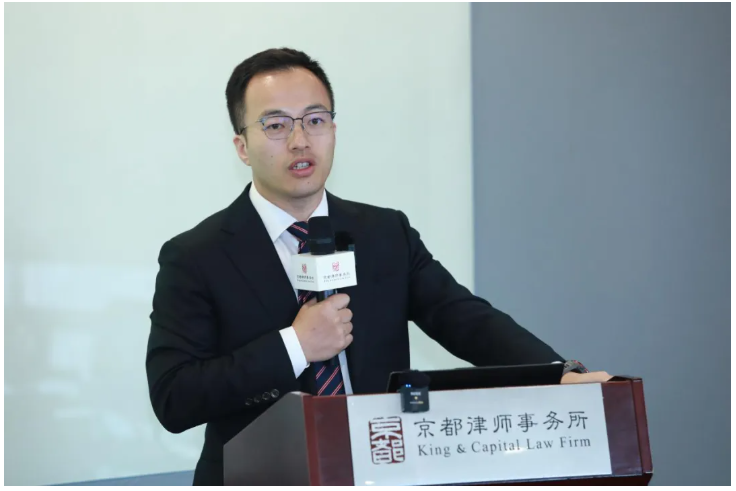
Attorney Xu Wei, Deputy Secretary-General of the King&Capital Research Center for Defense in Official Duty Crimes, analyzed and broke down common questions regarding the defense of the amount involved in official duty crimes in a question-and-answer format. Focusing on Articles 11 and 12 of the “Interpretation on Embezzlement and Bribery (II),” he addressed specific legal issues one by one, including the timing and standards for calculating the amount of bribery and the scope of application of the expected return rule: The amount of a bribe is generally calculated based on the value of the property at the time of receipt. Only when the special rules for expected returns on stocks and equity interests apply does the calculation shift to the actual profit or unrealized premium at the time the case came to light. Regarding USDT, it cannot be included under the rules for expected returns on stocks and equity interests merely because it possesses property value or is subject to price fluctuations.
Regarding the standard for “at the time the case came to light,” Attorney Xu Wei pointed out that in *Understanding and Application*, “at the time the case came to light” is interpreted as the date on which a formal investigation was initiated; however, since this document is not an official legal interpretation, its legal effect still needs to be clarified. Subsequently, Attorney Xu Wei cited several typical cases and pointed out that different transaction structures cannot be combined into a single universal formula. For specific cases, one must first identify the recipient, then determine the quid pro quo between power and money and the realization of benefits, before comparing theoretical arguments with judicial rulings.

Attorney Qu Kaijun, Deputy Secretary-General of the King&Capital Research Center for Defense in Official Duty Crimes, argued that property defense constitutes the third front in defending against official duty crimes. He focused his presentation on the procedural coordination between disciplinary confiscation and criminal recovery, as well as the handling of discrepancies between the two. Attorney Qu Kaijun first clarified the differences in nature and legal consequences among the five concepts of confiscation, forfeiture, recovery, orders to return ill-gotten gains, and transfer with the case. He specifically analyzed the differences between “supervisory recovery” and “criminal recovery” in terms of regulations, subjects, consequences, and remedies, emphasizing that the two should not be conflated.
Subsequently, Attorney Qu Kaijun focused on analyzing the procedural disconnects and controversies between disciplinary confiscation and criminal recovery—specifically, the distinction that returns made prior to case transfer are deemed proceeds from disciplinary violations, whereas those made after transfer are considered criminal restitution. Addressing this, Attorney Qu Kaijun argued from three perspectives—the lack of legal basis, the violation of legislative intent, and the fact that the new rules adopt a “substantive” standard—that this temporal distinction is an erroneous approach. Regarding the handling of discrepancies, he noted that such discrepancies encompass three aspects: differences arising from the separation of commingled assets, differences due to changes in value, and discrepancies between amounts already paid and those ordered by the judgment. He advised defense attorneys to ensure that asset separation is subject to cross-examination, to adhere to the principle of proportionality, to treat bona fide acquisition as a valid defense, and to closely monitor the reference point for valuation.
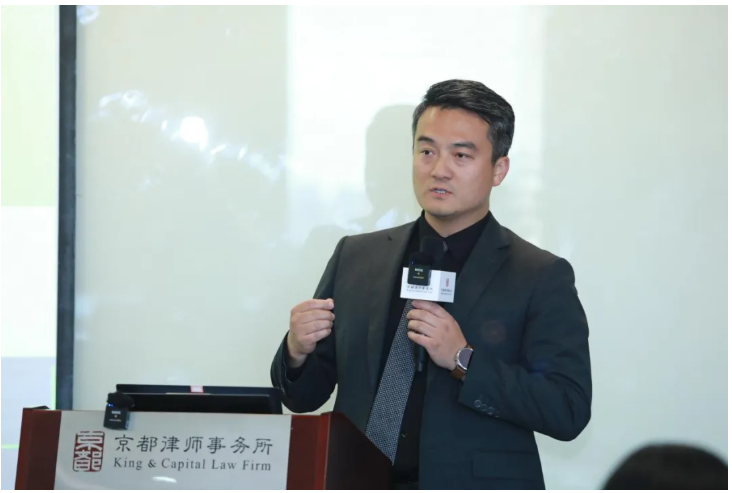
Attorney Zheng Xuan, Deputy Secretary-General of the King&Capital Research Center for Defense in Official Duty Crimes, shared insights on the “personal exclusivity” and “spousal status” regarding the pretrial recovery of illicit gains from official duty crimes. Attorney Zheng Xuan began by addressing the questions most frequently asked by family members—“How much money will have to be returned?” and “Will this implicate my spouse or children?”—and first clarified the legal basis for pre-trial recovery: the pre-trial “recovery” by the Commission for Discipline Inspection constitutes “temporary recovery” resulting from the combined effects of three factors—temporary control, the duty to recover ill-gotten gains and mitigate losses, and the acceptance of voluntary compliance—and does not constitute a criminal recovery authority. Furthermore, two red lines must be strictly observed: returning ill-gotten gains does not equate to an admission of guilt, and there is a cap on the amount to be returned. Attorney Zheng Xuan then focused on analyzing the crux of the “targeting only the spouse” issue in practice—the misalignment among the beneficiary, the third party holding the ill-gotten gains, and the spouse, which causes the spouse to become the focal point for all costs.
However, he explained that according to legal provisions, when the spouse is unaware of the circumstances, the recovery efforts are directed at the individual themselves or the third party holding the ill-gotten gains; there are no provisions for targeting the spouse. He then offered the following legal advice: Make case-by-case decisions based on three roles, three sets of variables, and five considerations; use “separation of lawful consideration” as the benchmark to address the three key questions regarding restitution—“who should return the assets, what should be returned, and how much should be returned”—and ensure that every restitution is documented in writing and supported by evidence.
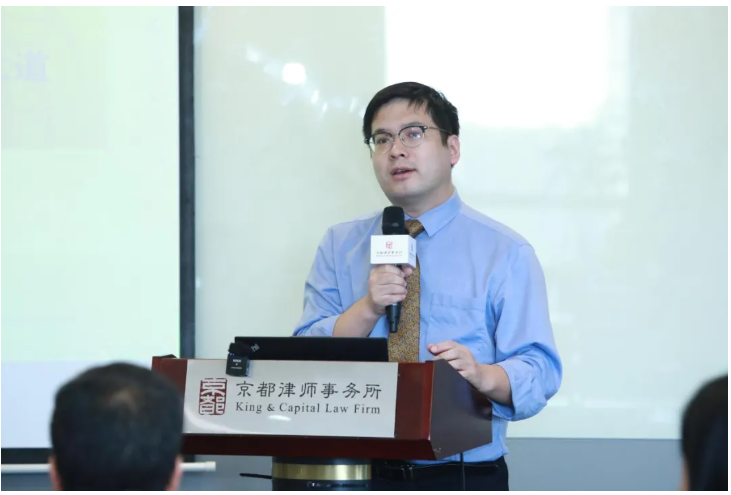
During the event, Attorney Zhang Pengpeng, Secretary-General of the King&Capital Research Center for Defense in Official Duty Crimes, summarized the insights shared by the guest speakers. Attorney Zhang pointed out that, given the strong probative value of financial analysis reports, defense attorneys must understand how financial data is aggregated, “cleansed,” and classified in practice in order to mount a targeted defense regarding assets involved in official duty crimes.
He also noted that the “expected returns” type of bribery defined in the “Second Interpretation on Embezzlement and Bribery” does not alter the provisions regarding bribery involving equity interests in previous judicial interpretations; rather, it merely serves as a supplement to the “last-minute equity investment” type of bribery. Given its very limited scope of application, there remains some room for defense in cases involving “expected returns” bribery.
Regarding the procedural coordination of disciplinary proceeds, illegal proceeds, and criminal proceeds in official duty crimes, he reminded lawyers to carefully review the lists of case-related funds and property transferred by supervisory authorities when examining case files, and to maintain effective communication with the procuratorate and the courts on issues such as the scope of recovery and transfer.
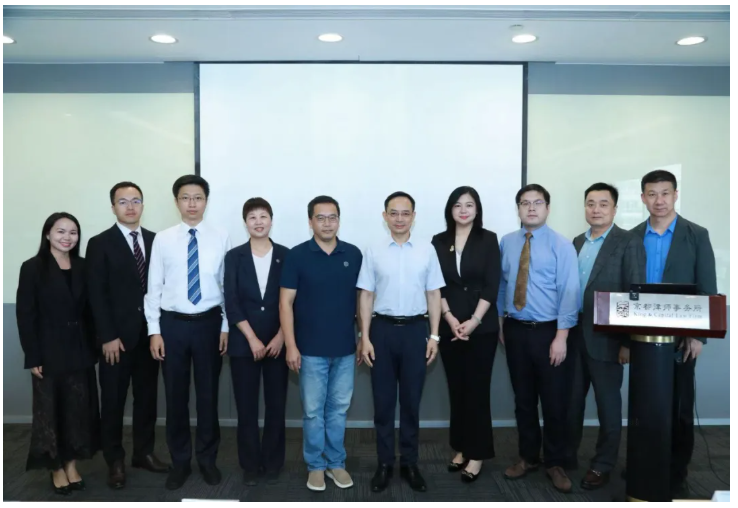
This seminar was a professional event focused on effective defense strategies regarding assets involved in official duty crimes, combining theoretical depth with practical value. It fully demonstrated the professional expertise and forward-looking dedication of King&Capital Law Firm and the Kyoto Research Center for Defense in Official Duty Crimes in the field of defense against such crimes. Moving forward, the King&Capital Center for the Defense of Official Misconduct will continue to organize professional seminars, continuously refine case-handling experience, optimize defense strategies, safeguard the legitimate rights and interests of clients in accordance with the law, and persistently promote the professionalization and high-quality development of the field of official misconduct defense.