

Recently, the inaugural forum of the “Xinhuo Criminal Defense Lecture Series” was held at the Lawyers’ Museum on the third floor of the Beijing International Hotel. Under the theme “The Debate on Evidence: Evidence Analysis in the Digital and Intelligent Era,” the event brought together renowned scholars from universities such as Tsinghua University and Peking University, as well as prominent criminal defense attorneys from law firms across the country, for in-depth discussions. Attorney Zang Desheng, Senior Partner at Beijing King&Capital Law Firm and Director of the King&Capital Research Center for Complex Criminal Cases, delivered a keynote presentation titled “Approaches and Methods for Effective Cross-Examination.” Drawing on practical case examples, he elucidated the key practical principles of criminal cross-examination in the context of trial-centered litigation reform.

Attorney Zang Desheng, drawing on the reform of the trial-centered litigation system, pointed out that cross-examination in court represents a deep integration of the principle of substantive trials and the principle of adjudication based on evidence. He noted that the primary audience for cross-examination in court is the judge. Given the limited time available during a trial, cross-examination arguments serve as key guidance for judges to quickly pinpoint the focal points of dispute in a case. A high-quality cross-examination argument should be incisive, well-reasoned, focused on key points, and immediately actionable; the ultimate goal is for such arguments to directly serve as the basis for the judge’s ruling.
He clarified the methodological logic of cross-examination: The “three qualities” of evidence—legality, authenticity, and relevance—are primarily used to reveal defects in the evidence; however, cross-examination ultimately hinges on the “two powers”: admissibility and probative value. He stated that the defense cannot merely make general claims that evidence is problematic; instead, it must follow the path of “identifying defects in the three qualities → arguing their substantive impact on the two powers,” and thereby request the court to exclude the evidence or lower its probative evaluation.
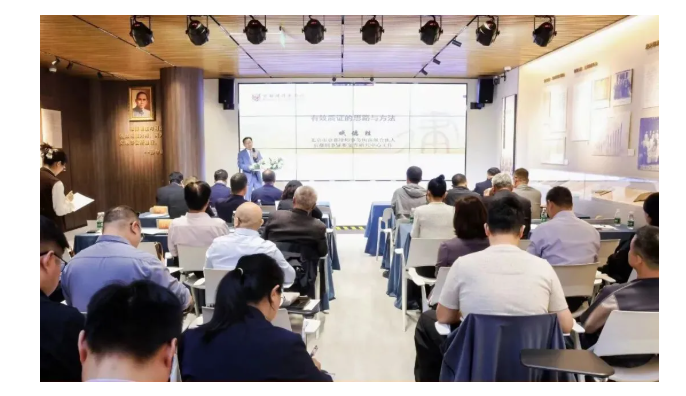
Attorney Zang Desheng conducted a practical demonstration using typical cases. In the section on cross-examination of traditional testimonial evidence, he used witness testimony and identification records from a case where the second-instance ruling overturned the original verdict as examples to explain how to uncover internal contradictions in the evidence. He combined this with the objective laws of human memory decay, cited judicial interpretations, and simultaneously applied procedural rules regarding the appearance of key witnesses in court to weaken the evidentiary weight of the evidence. Addressing the challenges of handling electronic data in the digital age, Attorney Zang Desheng used printed screenshots of WeChat chats—submitted unilaterally by an interested party—as a case study. He clarified the distinction between electronic data and documentary evidence, conducting cross-examination from the dual perspectives of admissibility and probative value. He emphasized that screenshots lacking the original storage medium carry risks of editing or tampering and cannot be directly used as the basis for a ruling.
Attorney Zang Desheng’s presentation was closely grounded in frontline case practice, offering practical and replicable cross-examination methods that showcased the professional image of King&Capital Law Firm.