

On October 30, 2026, the 23rd installment of the “Criminal Case Debate Forum,” jointly organized by the Third Criminal Law Department of King&Capital Law Firm and the Kyoto Research Center for Fraud Crime Defense, was successfully held. The event centered on the theme of “The Boundaries Between Criminal and Administrative Liability in Medical Insurance Fraud Crimes and Refined Defense Strategies,” focusing on practical controversies such as the presumption of intent to illegally appropriate funds and corporate-level medical insurance fraud for public benefit.
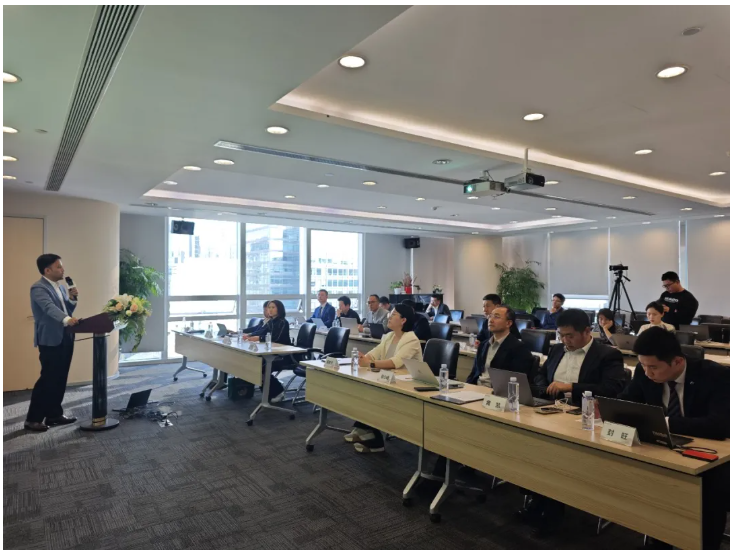

Moderator Luan Cunzhu, attorney at King&Capital Law Firm and researcher at the King&Capital Research Center for Fraud Crime Defense
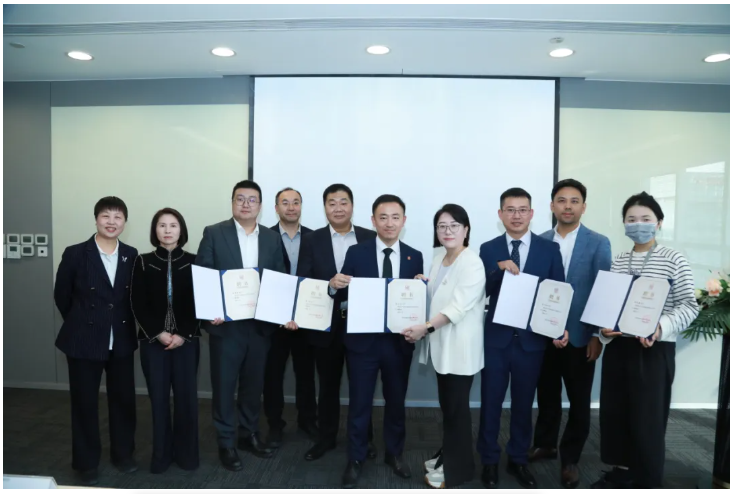
The event was moderated by Luan Cunzhu, an attorney at King&Capital Law Firm. Zhu Yonghui, Managing Partner of King&Capital Law Firm, attended the event and delivered closing remarks. Nie Sufang, Head of the Third Criminal Law Department at King&Capital Law Firm and Director of the King&Capital Research Center for Fraud Crime Defense, delivered opening remarks. Attorneys Weng Xiaoping, Zhou Wenda, Meng Fen, Ma Lixi, Qi Xiaoling, Wang Siyu, Zhang Xiaofeng, Zhang Deshan, Huang Kai, Zheng Xuan, Feng Wang, and Yang Ye, among others, delivered thematic presentations and participated in panel discussions. Attorneys from King&Capital Law Firm, along with numerous legal professionals both online and on-site, participated throughout the event. A ceremony was also held to appoint researchers, during which five attorneys—Zhou Wenda, Li Mingzhen, Huang Kai, Duan Zeyu, and Luan Cunzhu—were appointed as researchers at the King&Capital Fraud Crime Defense Research Center.
Remarks by Nie Sufang
A Crackdown Is the Overarching Theme, but It Does Not Mean Lowering Standards

Nie Sufang, Senior Partner at Beijing King&Capital Law Firm and Director of the King&Capital Research Center for Defense Against Fraud-Related Crimes
In her address, Attorney Nie Sufang—Head of the Third Criminal Law Department at King&Capital Law Firm and Director of the King&Capital Research Center for Defense Against Fraud-Related Crimes—stated that medical insurance funds are the “life-saving money” of the people and have been a key focus of criminal justice crackdowns in recent years. She noted that in September of this year, the Supreme People’s Procuratorate released six guiding cases involving medical insurance fraud, in which the ringleader—who defrauded over 12 million yuan—was sentenced to life imprisonment. This sent a clear signal of a full-chain crackdown, and this set of cases served as the direct impetus for the topic of this session: From the comprehensive crackdown across the entire chain to the investigative authorities continuing to uncover additional perpetrators and prosecute relevant medical personnel even after indictment, the signal is crystal clear—there is currently a strict crackdown on medical insurance fraud cases.
Attorney Nie Sufang also cautioned, “A strict crackdown is the underlying tone, but it does not mean lowering standards, nor does it imply blurring the boundaries between criminal and administrative law.” She summarized that the harsh sentences in such cases stem, on the one hand, from the low thresholds for initiating and escalating penalties in fraud-related crimes, coupled with severe statutory penalties; on the other hand, they involve the public welfare sector and concern the security of medical insurance funds. She noted that precisely for this reason, issues such as the boundary between overmedicalization and fraud, the determination of intent to illegally appropriate funds, the assessment of the amount involved in the crime, and the evaluation of corporate conduct warrant further in-depth study.
Six Thematic Discussion Sessions
The six topics covered in this symposium comprehensively addressed the core practical controversies currently facing the field of medical insurance fraud. The following summarizes the key insights from each session.
(1) Medical Insurance Fraud Involving Recycled Medications: A Four-Tiered, Refined Defense System

Weng Xiaoping, Senior Partner at Beijing King&Capital Law Firm; Ph.D. in Criminal Law from Beijing Normal University
Taking the Supreme People’s Procuratorate’s landmark case “Chen Moulian et al. Case of Fraud, Concealment, and Obstruction of Criminal Proceeds” as a starting point (involving 1.4 million yuan in fraud and 15 million yuan in downstream concealment and obstruction of criminal proceeds), Attorney Weng Xiaoping proposed a four-tier progressive defense framework: The first tier focuses on the characterization of the offense, with the core issue being whether the perpetrator participated in the “fraud” phase—those who instigate or abet insured individuals to seek false medical treatment and obtain prescriptions, and then purchase and sell the drugs, are charged with fraud; those who merely purchase and sell drugs knowing they were obtained through insurance fraud are charged with concealing or disguising the proceeds of crime. The sentencing differences between the two offenses are significant (10 years or more versus 3 to 7 years); The second tier focused on the amount in dispute, distinguishing between medications for personal use and those obtained through insurance fraud, deducting amounts already recovered prior to the case’s discovery, and questioning the reliability of the medical insurance data model—the prosecution had previously used a data model to screen and compare over 360 abnormal accounts and 270,000 settlement records; each allegation required mutual corroboration from prescriptions, surveillance footage, and financial transaction records; The third layer involves the defense regarding status and role: looking beyond formal job titles to conduct a substantive review across four dimensions—initiation of criminal intent, control of resources, distribution of benefits, and substitution of actions—and designing a “pyramid-style” allocation of responsibility; The fourth layer involves the defense regarding procedural and policy considerations: seizing the right timing for plea bargaining and restitution, and effectively utilizing the hearing process to seek a decision not to prosecute.

Zhou Wenda, Partner at Beijing King&Capital Law Firm and Deputy Secretary-General of the King&Capital Research Center for Corporate Crime Defense and Prevention
Panelist Attorney Zhou Wenda cautioned against “position determinism”: one cannot automatically classify a person as a fraudster simply because they are upstream in the chain, or as an accomplice in concealment because they are downstream; the key is to examine whether there was prior collusion and to determine the specific details of what was known. At the same time, he emphasized the following point: Illegal profit-seeking in administrative violations cannot automatically be elevated to illegal possession in criminal fraud cases. He explained that for perpetrators whose actions constitute only administrative violations, the defense objective should not be limited to securing a lesser charge; rather, through the reverse linkage between administrative and criminal proceedings, the case should be steered toward the administrative penalty track.
(II) Establishing and Dismissing Criminal Liability: Insurance Fraud Involving Impersonation—Settlement Records Do Not Equate to the Entire Truth

Meng Fen, Partner at Beijing King&Capital Law Firm and Deputy Director of the King&Capital Research Center for Defense Against Fraud-Related Crimes
Starting from the perspective of clues for establishing criminal liability and considerations for dismissing it, Attorney Meng Fen pointed out five characteristics that distinguish medical insurance fraud from general fraud: A structured, end-to-end chain (where drug suppliers, insured individuals, and drug-receiving institutions are interlinked); a unique causal chain (payments are triggered by system approval rather than by “deceiving” specific individuals); a blend of truth and falsehood (the most difficult cases to assess involve falsely prescribing certain medications within genuine medical treatments); an industrialized supply chain; and the fact that many cases originate from unannounced inspections by medical insurance authorities. Based on this, she proposed a “three-step test” for fraudulent conduct: First, examine the underlying facts—did the false medical treatment or fraudulent conduct result in fund disbursement? Second, examine the causal relationship—is there a causal link between the fund disbursement and the fraudulent act? Third, distinguish between completed and attempted offenses—given the time lag in fund disbursement, determine whether the alleged amount was actually disbursed. She noted that four points must be considered regarding the intent to illegally appropriate funds: whether the intent was to defraud the fund or merely to evade regulation; whether the fabrication went beyond the core facts of medical treatment; whether the business model had evolved into a profession centered on insurance fraud; and whether the funds were directed toward actual treatment.

Ma Lixi, Partner at Beijing King&Capital Law Firm and Deputy Secretary-General of the King&Capital Research Center for Defense Against Fraud-Related Crimes
Panelist Ma Lixi, drawing on a case she personally handled that resulted in a sentence reduced “from over ten years to probation” (in which the defendant used multiple medical insurance credentials belonging to others to purchase medications worth over 520,000 yuan under a false identity; through effective defense, the amount was reduced to under 500,000 yuan, and the defendant was ultimately sentenced to probation), broke down the key points for reviewing evidence in medical insurance fraud cases involving the “misuse of medical insurance credentials under a false identity”: Medical insurance credentials come in various forms; in addition to social security cards, there are electronic medical insurance credentials, identity documents, and others. In cases where the cardholder sought medical treatment or purchased medication using identity documents or other credentials during the period the card was lost, it is impossible to conclusively prove that the defendant personally collected all the medications after obtaining the relevant medical insurance credentials; the “time the cardholder lost the card” does not necessarily correspond to the “time the defendant found the card,” leaving room for defense arguments regarding the determination of the starting point for calculating the involved amount; The “convergence” in the types of medications purchased, or the fact that certain medications were not required by the cardholder, does not necessarily lead to the conclusion that the defendant obtained them; after a lost old card is replaced with a new one, there remains controversy regarding whether old and new medical insurance credentials can be used simultaneously for certain special populations. In such cases, it is at least impossible to prove that all medications obtained after the new card was issued were collected by the defendant. He stated that even a chain of evidence for the charges that appears to be a closed loop, upon item-by-item dissection and substantive review, still reveals numerous grounds for acquittal as well as room for leniency in sentencing.
(3) Medical Insurance Eligibility Fraud: The Boundaries of Criminal Liability in the AstraZeneca Insurance Fraud Case

Qi Xiaoling, Senior Partner at Beijing King&Capital Law Firm, Ph.D. in Criminal Law from Renmin University of China
Attorney Qi Xiaoling conducted an in-depth analysis using the AstraZeneca medical insurance fraud case as a case study. She pointed out that the boundary between administrative violations and criminal fraud in medical insurance fraud cases is often blurred. In some cases, medical test documents are forged or altered to fraudulently obtain medical insurance reimbursement; it is therefore necessary to strictly examine whether the perpetrator subjectively intended to unlawfully appropriate funds, thereby distinguishing between administrative violations involving mere eligibility deficiencies and criminal fraud. At the same time, she emphasized that the “amount defense” is also central to the defense in such cases. The amount claimed from medical insurance cannot be simply equated with the amount of fraud; instead, the defense should focus on verifying key facts such as whether the patient had a genuine need for the medication, the authenticity of the medical treatment, and compliance with medical insurance reimbursement criteria. Even if medical test documents are found to be forged, it is still necessary to examine whether actual losses to the medical insurance fund have occurred, and to exclude duplicated or inflated amounts in accordance with the law. Attorney Qi Xiaoling concluded by stressing that the mere fact that the guiding opinions list the forgery of medical documents as an act constituting fraud should not be used to directly establish the crime of fraud; instead, it is essential to uphold the unity of subjective and objective elements and strictly adhere to the criminal standard of proof. Her remarks provided practical defense strategies for attorneys handling medical insurance fraud cases.

Wang Siyu, Attorney at Beijing King&Capital Law Firm; Secretary and Researcher at the King&Capital Research Center for the Defense of Fraud-Related Crimes
Attorney Wang Siyu introduced a new perspective by examining the choice of criminal charges: Why is medical insurance fraud charged as “fraud” rather than “insurance fraud”? He answered that commercial insurance involves “transactional” fraud, whereas medical insurance is essentially “subsidy-based” fraud—the state provides benefits unilaterally without seeking consideration, and the essence of the fraud lies in the failure to achieve the intended social purpose. He argued that in the AstraZeneca case, those who truly needed the medication received it, and thus the social purpose of the medical insurance system was not thwarted; this perspective on legal interests can provide support for the defense regarding the intent to unlawfully appropriate property.
(IV) Overmedicalization and Fraud: Where Is the Line?

Zhang Xiaofeng, Senior Partner at Beijing King&Capital Law Firm and Deputy Director of the King&Capital Research Center for the Defense of Fraud-Related Crimes
Attorney Zhang Xiaofeng outlined typical violations involving overmedicalization and the legal basis for civil and administrative liability (Article 1227 of the Civil Code explicitly prohibits unnecessary examinations; Article 38 of the Regulations on the Supervision and Administration of the Use of Medical Security Funds stipulates administrative liabilities such as refunds, formal interviews, and fines). He also proposed five criteria for determining whether overmedicalization constitutes an administrative violation or criminal fraud: whether the funds were used for public purposes or embezzled for private gain; whether the diagnosis is genuine; whether there are acts such as overprescribing medications with the intent to illegally appropriate funds; whether the charges far exceed the cost price; and whether service items were fabricated with the intent to illegally appropriate funds. He proposed that where genuine and fraudulent elements are intermingled and the amount cannot be separated, the act should not be recognized as a violation in accordance with the principle of favoring the defendant.

Zhang Deshan, Attorney at Beijing King&Capital Law Firm; Secretary and Researcher at the King&Capital Research Center for Defense Against Fraud-Related Crimes
Attorney Zhang Deshan argues that in cases of excessive medical treatment where there is a genuine medical condition and legitimate diagnosis and treatment—and where fund expenditures correspond to actual medical services—the hospital has violated medical standards and professional ethics. This is analogous to a salesperson excessively recommending a 20,000-yuan computer when a 5,000-yuan model would suffice; such deceptive over-recommendations are merely intended to close a sale and thus constitute issues of good faith and civil law. In accordance with the principle of restraint in criminal law, he argues that criminal measures should not be resorted to lightly when issues can be resolved through civil or administrative means; most cases of excessive medical treatment do not constitute criminal offenses.
(5) Intent to Illegally Appropriate: Rejecting “Objective Attribution of Guilt”

Huang Kai, attorney at Beijing King&Capital Law Firm and former police officer with the Beijing Municipal Public Security Bureau
Attorney Huang Kai pointed out a current tendency in case handling: treating the violations listed in the guiding opinions as prima facie evidence of intent to unlawfully appropriate property, using the facts of the violations to bypass an independent review of the intent to appropriate, and thereby distorting a violation of public order into a property offense. He stated that a defense should proceed in four progressive stages: First, determine whether there was a genuine basis of medical services, distinguishing between “completely fabricated” cases and “genuine services combined with settlement violations”; Second, examine the flow and disposition of funds: funds that are reinvested into hospital operations or voluntarily returned for rectification are fundamentally different from those cashed out, embezzled, or squandered—merely profiting from regulatory violations does not equate to unlawful possession; third, distinguish between “knowing medical insurance policies” and “knowing one is defrauding property”; fourth, distinguish between organizational intent and individual subjective intent, and advocate for non-prosecution or reduced administrative penalties for frontline medical staff who were merely fulfilling their duties according to performance-based schemes.

Zheng Xuan, Partner at Beijing King&Capital Law Firm and Researcher at the King&Capital Research Center for Defense Against Fraud-Related Crimes
Attorney Zheng Xuan supplemented the approach to “separation of liability”: Drawing on cases involving departmental contracting and fraud in private hospitals, he pointed out that in determining the intent to illegally appropriate property, emphasis should be placed on separating liability. It is necessary to examine whether the perpetrator participated in decision-making, controlled funds, or received a share of the embezzled funds. Objective evidence such as meeting minutes, dividend records, and fund flow records can be used to distinguish between organizers and actual controllers on one hand, and nominal supervisors and neutral personnel performing their duties on the other, thereby narrowing the scope of prosecution.
(6) Insurance Fraud Committed Using Organizational Resources: Why It Cannot Be Classified as an Organizational Crime

Feng Wang, Attorney at Beijing King&Capital Law Firm; Secretary and Researcher at the King&Capital Research Center for the Defense Against Fraud-Related Crimes
Attorney Feng Wang raised a topic with a strong “problem-oriented” perspective: Why are medical institutions’ acts of insurance fraud—committed in the institution’s name, carried out according to the institution’s will, and benefiting the institution (Article 5 of the “Opinions on Insurance Fraud”)—not treated as corporate crimes? He further explained that the reasons are multifaceted: first, the crime of fraud does not recognize corporate liability; second, since medical insurance service agreements are classified as administrative agreements, the avenue for contract fraud has also been blocked. Together, these factors prevent the leniency benefits associated with corporate liability from being realized. Furthermore, he noted that there is a trend toward harmonizing sentencing standards for corporate and individual crimes; however, corporate conduct still serves the purpose of narrowing the scope of criminal liability. By referring to the standards for directly responsible individuals, the scope of accountability for “those who organize, plan, and carry out the offense” can be limited.

Yang Ye, Attorney at Beijing King&Capital Law Firm; Secretary and Researcher at the King&Capital Research Center for Defense Against Fraud-Related Crimes
Attorney Yang Ye added that in the Supreme People’s Court’s case involving Ye et al., although the hospital used the more than 390,000 yuan it defrauded to cover patients’ hospitalization fees and pay salaries, the court still convicted them of fraud. However, after distinguishing between principal and accessory offenders, the court imposed suspended sentences on all five—the corporate factor does not automatically warrant leniency, but it can certainly be incorporated into the sentencing evaluation through an independent review of an individual’s intent, specific role, and scope of responsibility in each case.
The vitality of criminal defense lies in questioning the conclusions
In her concluding remarks, Attorney Nie Sufang noted that the twelve presenters shared their most profound insights from practice, and the entire seminar was a “down-to-earth, practical learning experience.” Drawing specifically on cases she had handled, she emphasized two points: first, timing the return of ill-gotten gains and restitution—precisely timing these actions does indeed help maximize the client’s interests; second, the value of a defense based on minimal social harm—“Although individuals who did not meet medical insurance eligibility criteria received reimbursement, the social purpose of the medical insurance system was not undermined.” This perspective—that the social harm is minimal—is often overlooked in practice but can frequently yield unexpected results.

Zhu Yonghui, Director of Beijing King&Capital Law Firm
Zhu Yonghui, Director of King&Capital Law Firm, summarized that medical insurance fraud has become increasingly prevalent in recent years, to the extent that it has prompted legislative and judicial authorities to issue successive interpretations. He stated that this event closely aligned with current social and judicial issues, distilling practical experience and refining defense arguments from legal practice. It embodied King&Capital’s tradition of a love for learning and research, as well as its commitment to professionalism and teamwork—having senior attorneys from the three criminal law departments engage in joint research and discussion with young attorneys and PhD candidates is an excellent initiative to enhance the quality of defense. Zhu Yonghui also expressed his hope that such sharing and exchange activities, which combine legal theory with academic expertise, would become more frequent and continue to improve.