

Recently, the 15th International Academic Conference of the China-Korea Criminal Procedure Law Society was held in Shanghai. With the theme “Allocation of Investigative Powers and Standardization of Investigative Procedures,” the conference was co-hosted by the China Criminal Procedure Law Society and the Korea Criminal Procedure Law Society, and organized by East China University of Political Science and Law. Professor Ye Qing, Vice President of the Chinese Society of Criminal Procedure Law and a faculty member at the School of Criminal Law at East China University of Political Science and Law, presided over the opening ceremony. Chen Weidong, Executive Vice President of the Chinese Society of Criminal Procedure Law and a National First-Class Professor at Renmin University of China; Professor Lee Geun-woo of Kajeon University, President of the Korean Society of Criminal Procedure Law; Ding Xiongshi, President of the Korean Institute of Criminal Justice Policy; and Professor Xiao Kai, Deputy Secretary of the Party Committee and President of East China University of Political Science and Law, delivered opening remarks. Professor Xiong Qiuhong, Vice President and Secretary-General of the Chinese Society of Criminal Procedure Law and Honorary Dean of the Institute of Procedural Law at China University of Political Science and Law, delivered the academic summary at the closing ceremony.
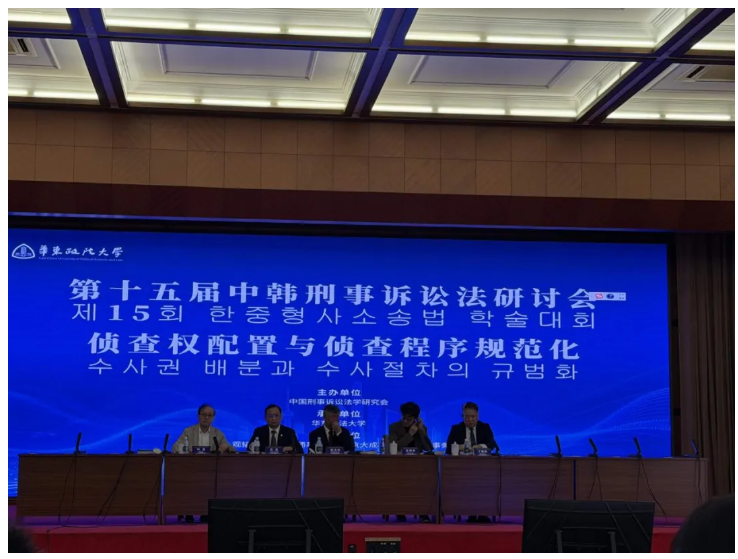
This symposium was divided into four sessions, focusing respectively on the allocation of investigative powers and their historical evolution; the relationship between prosecutorial and investigative powers; the development of investigative practices and responses in the digital age; and the regulation of investigative practices and remedies for unlawful investigative actions. More than 50 experts, scholars, and practitioners from universities, research institutions, and the legal profession in both China and South Korea attended the conference.

Attorney Wang Jiaming, a partner at Beijing King&Capital Law Firm, was invited to participate in this academic conference and served as a discussant. From a comparative law perspective, she provided a legislative analysis and institutional summary of the remedies for unlawful investigative acts in both China and South Korea.

Attorney Wang Jiaming noted that remedies for unlawful investigative conduct under South Korean law have two notable characteristics: first, the avenues and methods for seeking remedies are relatively comprehensive; second, there are significant differences in the effectiveness of the various methods. She explained that the criminal procedural laws of China and South Korea differ in several aspects—including whether unlawful investigative conduct is reflected in the judgment, the legal consequences of entrapment, and the investigative powers of the procuratorate—which reflect the two countries’ differing approaches to substantive and procedural remedies for unlawful investigative conduct. She noted that South Korean law establishes a multi-layered framework combining judicial review by the courts with internal oversight and disciplinary mechanisms within investigative agencies. This system is characterized by providing parties with a direct avenue to raise objections before a neutral adjudicator while retaining internal oversight within the agencies. In contrast, China primarily relies on procedural mechanisms—such as the procuratorate’s legal supervision of investigative activities and the exclusionary rule for illegal evidence—to impose constraints, which differs from South Korea’s structure where ex post facto judicial review and internal agency oversight operate in parallel. She emphasized that the purpose of the comparison is not to determine which system is superior, but to understand where the initiators of remedies, the reviewers, and the legal consequences fall under different configurations of power, as well as the resulting differences in behavioral patterns.
Attorney Wang Jiaming further pointed out that remedies for unlawful investigations should, to what extent, rely on the establishment of additional remedial procedures, and to what extent they should return to the legitimizing structure of the investigative procedure itself. She noted that while refining remedial procedures is certainly important, ex post remedies also have inherent limitations. If the investigative process itself lacks effective constraints on power and safeguards for rights, the burden and difficulty of ex post remedies will inevitably increase. For both China and South Korea, this issue is not merely a matter of legislative technique.
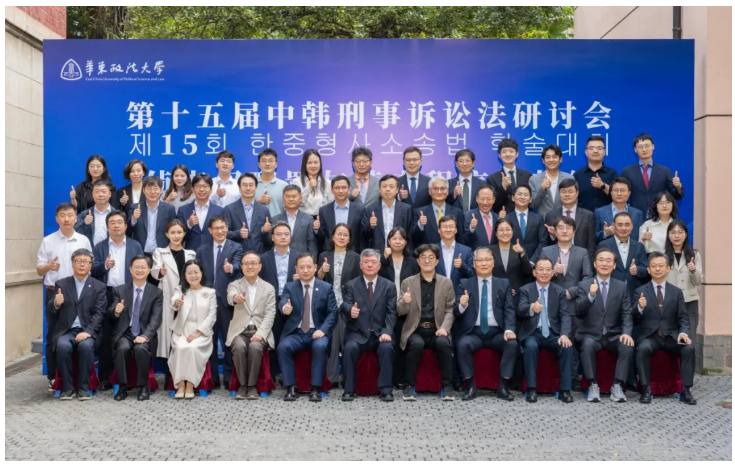
The China-South Korea Symposium on Criminal Procedure Law, first held in 2008, has become a symbol of exchange and friendship between the criminal procedure law communities of the two countries. The research findings from the symposium have provided valuable references and insights for the development of criminal procedure law theory and legal practice in both nations.