

On the morning of May 29, 2026, Beijing King&Capital (Shanghai) Law Firm hosted a professional forum and business exchange meeting. The event was moderated by Senior Partner Jiang Yongqian. Senior Partner Yang Bailin delivered a keynote speech titled “Subjective Disassociation: The ‘Subjectivity’ of Conduct and the ‘Subjectivity’ of Property Consequences—Practical Insights on Economic Crime Defense.” Senior Partners Zhang Qingsheng and Lu Xianghui, along with Attorney Li Teng, participated in the panel discussion, while attorneys Du Jiang, Ba Bo, and others attended and contributed remarks. The meeting centered on two main topics: defense strategies for criminal cases involving entrepreneurs and the development of professional organizational structures.
I. Professional Seminar:
The Normative Distinction Between the Subjective Aspect of Conduct and the “Subjective” Aspect of Property Consequences
Currently, criminal cases involving entrepreneurs are on the rise. The overlap between criminal and civil law, the ambiguity in determining subjective intent, and the overuse of presumptions have become prominent challenges in defense practice. This seminar focused on the defense strategy of “subjective separation,” which involves strictly distinguishing between the “intent behind the act” and the “subjective aspect of the financial consequences.” This approach prevents the direct equating of the factual consequence of non-recoverable assets with the factual outcome of a crime, thereby safeguarding the boundaries between criminal and non-criminal acts, as well as between different criminal offenses.
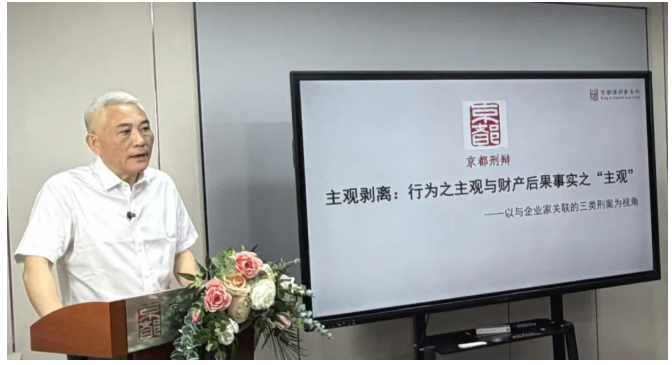
Drawing on his years of practical experience, Attorney Yang Bailin conducted an in-depth analysis through three typical case types.
(1) Distinguishing Between Commercial Lease Disputes and Contract Fraud
In a commercial real estate project, a developer proceeded with the development of shops in a commercial street and began leasing them without obtaining the necessary administrative approvals. The developer signed lease contracts with a large number of merchants, using the collected rent primarily for shop construction. Later, because the merchants were unable to complete the procedures required to open their businesses, the case came to light, and the public security authorities filed a case for contract fraud.
Attorney Yang Bailin pointed out that the defense in such cases should focus on a two-pronged separation at the factual level:
Analysis at the behavioral level. The perpetrator invested tens of millions of yuan of their own funds to construct the shops. The collection of rent served a substantive business purpose and involved the exchange of consideration—merchants paid rent in exchange for the right to use physical shops (though not yet delivered), rather than an empty promise. This differs fundamentally from the typical fraud scenario of “voluntary delivery of property without consideration.” The perpetrator was still communicating with local authorities such as the Construction Commission and Commerce Bureau regarding approval matters, and the project itself possessed authenticity and enforceability.
Analysis at the Consequence Level. The direct cause of the inability to refund rent is administrative approval obstacles, not fraudulent conduct. After collecting rent, the perpetrator allocated the majority of the funds to project construction; a portion has been refunded to investors, and civil disputes are currently pending in litigation. Equating the “inability to refund rent” directly with the “outcome of a fraud crime” blurs the regulatory boundaries between civil breach of contract and criminal fraud.
Refined Defense Strategy. Separate the complete operational chain of “construction—leasing—rent collection—maintenance” from the objective obstacle of “subsequent inability to fulfill obligations,” and argue point by point that each stage of the process does not constitute a criminal offense. Supplement the case with evidence such as records of communications with administrative departments and official correspondence to demonstrate that the approval process was in a state of uncertainty, thereby creating a reasonable doubt in the judge’s mind between “the possibility of becoming a legitimate project” and “inevitably constituting fraud.”
(2) Common Challenges in Loan-Related Cases and Defense Strategies
Loan fraud and loan solicitation cases represent the most prevalent criminal offenses among entrepreneurs facing criminal charges. Attorney Yang Bailin points out that such cases share certain common characteristics: The materials used when applying for loans contain some degree of inaccuracy (such as inflated financial figures or overvalued asset appraisals), which is relatively common in the business financing sector. However, once the inability to repay the funds becomes a reality, the aforementioned “fraudulent” elements are deliberately magnified and used as a basis for initiating criminal prosecution, elevating “civil fraud” to “criminal fraud.” This is the primary crux of the overlap between criminal and civil law.
The normative distinction between “facts of financial consequences” and “facts of criminal consequences.” A common line of reasoning in judicial practice is: inability to repay → use of fraudulent means → presumption of intent to illegally appropriate property → constituting fraud. However, this chain of reasoning contains a fundamental flaw: the inability to repay may stem from various causes, such as market fluctuations, policy adjustments, changes in market conditions, the burden of litigation, or being defrauded by others. These factors do not have a causal relationship under criminal law with the subjective intent at the time of the loan. Whether “facts regarding property consequences” constitute “facts regarding criminal consequences” is precisely the core of the judicial authorities’ statutory duty to provide criminal proof. Both the existence and non-existence of such a connection must be proven. Treating “facts regarding property consequences” as “facts regarding criminal consequences” without criminal proof objectively amounts to prejudgment.
Specific defense strategies. First, subjective separation: Clearly distinguish between the “purpose of using the loan for production and operations” and the “subsequent inability to repay” as two distinct subjective states. The former pertains to the enterprise’s operational objectives, while the latter, if constituting a crime, requires the fulfillment of a subjective criminal motive or intent; the two must not be conflated. Second, factual separation: There are various methods available. One can cite the Supreme People’s Court’s judicial interpretations regarding the provisions that “funds used in a significant proportion for production and operations shall not be deemed criminal” and those concerning “funds’ intended use.” By combining this with evidence such as corporate procurement contracts, payroll records, and payment vouchers for raw materials, one can demonstrate the actual flow of funds. Third, utilize defense strategies based on value substitution and value conversion: Even if funds were not entirely used for contractually agreed-upon purposes, as long as the remaining assets continue to exist in other forms and are enforceable, they can effectively counter the presumption of “illegal possession.”
Attorney Yang Bailin points out that the standard for determining the “proportion of funds used” in such cases is ambiguous—the judicial interpretation merely refers to a “substantial proportion,” and judicial practices vary across regions, lacking a unified standard and leaving room for arbitrariness. Where regulations are vague, that is precisely where the defense should focus its efforts.
(3) Review of the Fact of Possession in Cases Involving Trading Platforms
A member company of a mineral resources exchange was charged with the crime of illegal business operations; the procuratorate filed an appeal arguing that the offense should be classified as fraud. The company had employees assume different identities and use sales pitches to solicit investors to participate in standardized contract trading for crude oil, asphalt, and other commodities, charging transaction fees based on the trade amount. A small number of investors made profits, while the majority suffered losses, leading to a subsequent police report.
Attorney Yang Bailin, starting from the elements of the crime of fraud, identified several key defense points in this case:
The nature of the object of profit. The company’s revenue came from transaction fees (charged at 0.02% of the transaction amount), not from the principal investment. Investors’ funds were deposited directly into the exchange’s electronic platform; they were not delivered to the defendant. There was no act of delivery, nor was there any object of delivery, thus the core logic of fraud—“voluntary delivery → possession by the other party”—does not apply.
The source of trading information. Quotations were uniformly provided by the Mineral Exchange and were not fabricated by the defendant; prices fluctuated wildly within a single trading day, which the defendant could not control. Approximately 30%–40% of investors made profits. Trading losses resulting from dynamic information beyond the defendant’s control cannot constitute the concept of “possession” under criminal law.
Non-attributability of the causes of losses. The facts are unclear: What is the primary cause of the investors’ financial losses? This has not been ascertained in this case; it remains unascertained how much of the investors’ financial losses stemmed from accumulated transaction fees resulting from frequent trading or market operation risks associated with buying high and selling low; it remains unascertained how much of the funds lost by investors were “possessed” by the defendant. In fact, the investment funds were lost in transactions on the trading platform, and there was no act of possession.
(IV) Implementation of Procedural Defense Strategies
Drawing on practical experience, Attorney Yang Bailin proposes two procedural defense methods for reference in cases involving the intersection of criminal and civil law:
Request disclosure of the process of inference. Regarding the general statement in the judgment that the defendant acted “with the intent to illegally appropriate,” the defense counsel may request in court that the prosecution disclose the factual basis, logical chain, and reasoning process underlying its inference. Although the Supreme People’s Court and the Supreme People’s Procuratorate have issued multiple judicial interpretations regarding the presumption of intent to illegally appropriate (typically listing seven to eight scenarios), their specific application still requires a point-by-point correspondence and item-by-item argumentation. Judicial authorities must concretely carry out this presumption process, and attorneys have the right to request that they disclose the presumption process, grounds, and conclusions in open court.
Establish multiple layers of defense. Drawing on the “ring defense” strategy used in U.S. criminal defense, establish multiple lines of defense around the core issues of the case. For instance, regarding the dispute over whether a skirt was “blown up by the wind” or “deliberately lifted,” defense circles can be established layer by layer across multiple dimensions—such as meteorological conditions (wind force on the day in question), object characteristics (the skirt’s material and design), and the subject’s state (the actor’s behavior at the time)—to prevent the prosecution’s singular narrative from forming a closed loop.
II. Extended Discussion from the Perspectives of Evidence Law and Procedural Law
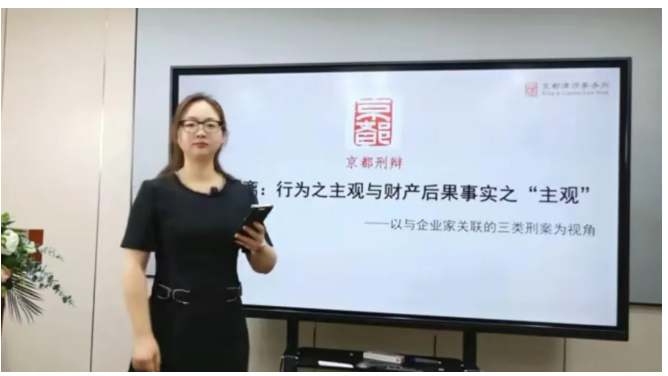
Drawing on her practical experience, Attorney Jiang Yongqian offered a two-pronged extension of the theme of “subjective detachment”:
The Dilemma from the Defense Perspective. Taking loan fraud as an example, she pointed out that it is indeed common in practice for entrepreneurs to submit false loan documents and use funds for purposes other than those agreed upon. When defending entrepreneurs in such cases, lawyers face the universal challenge of “objective facts existing but subjective intent being difficult to prove.”
The Paradox from the Prosecution Perspective. Shifting roles reveals another side of the issue: In a case where the victim filed a complaint, an entrepreneur forged sales contracts and fabricated sales lists to fraudulently obtain a 50 million yuan loan. The funds were used to roll over existing debt rather than for production and operations; however, because the guarantor repaid the loan on the entrepreneur’s behalf, the bank suffered no actual loss, and the public security authorities declined to file a case. In this scenario, proving “subjective intent” becomes exceptionally difficult.
Attorney Jiang Yongqian used this example to illustrate that, as lawyers switch between different roles, they face starkly different practical situations regarding the standards for determining “subjective intent” and the evidentiary requirements. The complexity and multifaceted nature of “subjective” issues in criminal legal services warrant in-depth attention.
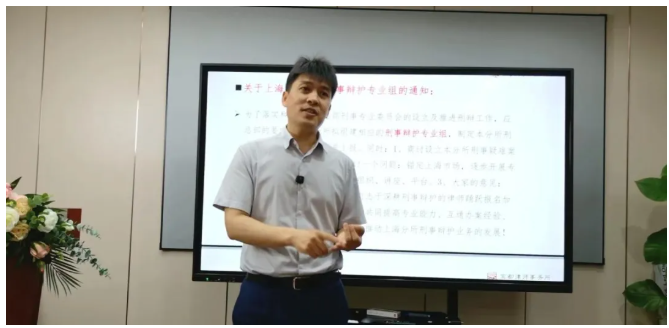
In his remarks, Attorney Lu Xianghui pointed out that a common issue across the four categories of cases mentioned above lies in the trend toward “substantive interpretation” and “piercing the corporate veil” regarding the elements of the crime of fraud in judicial practice. Drawing on a normative analysis of criminal law provisions and judicial interpretations, he highlighted the following phenomena worthy of attention:
The practical weakening of the elements of the crime of fraud. The traditional structure of fraud requires “fabricating facts, concealing the truth → the victim forming a mistaken belief → disposing of property based on that mistaken belief → property loss.” However, current judicial interpretations often list specific methods of conduct (e.g., “anyone who defrauds public or private property using the following methods shall be treated as committing fraud”), which can lead practitioners to conflate the existence of false circumstances with “fraud” itself, thereby neglecting the independent review of the victim’s belief and the disposition of property. In new types of cases such as “loan scams” and medical insurance fraud, a paradox has even emerged where fraud is still recognized even when “no one has been misled or deceived.”
The Theoretical Value of Victim Consent and Self-Induced Risk. In bank loan cases, if bank staff knowingly cooperate in issuing loans despite false documentation, the parties essentially form a “consensus.” In such cases, determining that the victim was “deceived” or that the loan was “illegally issued” presents a logical paradox. Although theories such as “victim consent” and “self-induced risk” fall under the same category of justifying grounds as self-defense and emergency avoidance, their application in the field of property crimes has not yet received sufficient attention.
A dual perspective on prosecution and defense. Attorney Lu Xianghui noted that the normative ambiguity of fraud charges poses a challenge for the defense, but may present an opportunity for those representing victims in prosecution. When switching between these roles, lawyers must accurately grasp the standards of proof and evidentiary requirements for subjective intent.
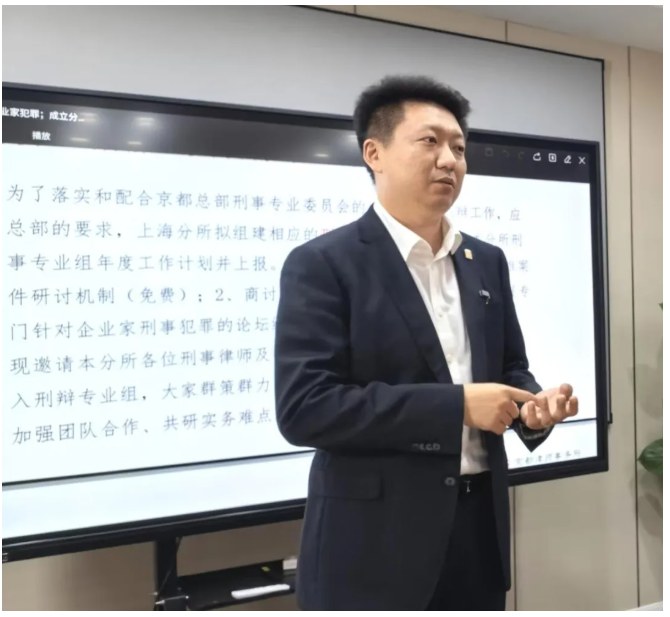
Drawing on a decade of professional experience, Attorney Li Teng shared the following practical insights:
The business value of gray areas. The gray areas between theory and practice, and the tension between legal norms and facts, are precisely where the scope for criminal defense lies. It is precisely in these “tough nuts to crack” that breakthroughs are found in a large number of cases.
Strategic Application of the “Public Presumption Process” and “Unclear Facts.” Attorney Li Teng noted that these two methods proposed by Attorney Yang Bolin hold direct practical value—the former directly targets the prosecution’s weak points in argumentation, while the latter leverages the rules governing the allocation of the burden of proof; both can create room for substantive defense at the procedural level.
A return to practical evidence collection. Addressing the conservative tendency in criminal defense to “avoid collecting or presenting evidence,” Attorney Li Teng argued that, while ensuring their own safety, defense counsel should exhaust all methods provided by law to serve their clients. The Criminal Procedure Law explicitly stipulates that defense counsel must obtain the consent of the investigating authorities to collect evidence from victims; such procedural safeguards should be fully utilized rather than avoided.
From the perspective of professional organization development, Attorney Zhang Qingsheng proposed that the Shanghai branch’s criminal practice should transcend the traditional single domain of defense and expand into areas such as criminal compliance, anti-fraud investigations, and criminal complaints, thereby forming a comprehensive criminal legal service system. Drawing on his recent handling of cases involving complex corporate governance structures, he pointed out that new issues—such as the separation of interests between nominal legal representatives and the company’s actual interests, as well as conflicts over shareholder rights—place higher demands on the professional capabilities of criminal defense attorneys.
III. Professional Organizational Development
The meeting also discussed the organizational structure and annual work plan of the Criminal Law Committee at King&Capital’s Shanghai branch. Attendees exchanged views on topics such as mechanisms for discussing complex cases, plans for professional seminars, and collaboration models between the head office and the branch. They deliberated on establishing a regular case study system and, taking into account the characteristics of criminal cases in the Shanghai region, will gradually advance the development of specialized capabilities.