

Recently, Mr. Xia Jun, a senior partner at Beijing King&Capital Law Firm, was invited to deliver a legal seminar at the headquarters of the China Development Bank. Focusing on the “Interpretation (II) on Several Issues Concerning the Application of Law in Handling Criminal Cases of Embezzlement and Bribery” (hereinafter referred to as “Interpretation (II)”), which will take effect on May 1, 2026, Mr. Xia Jun provided an in-depth analysis of the new regulations and shared his insights and reflections based on numerous practical cases.
With the continuous deepening of national anti-corruption legislation, particularly the formal implementation of the “Interpretation (II),” the legal boundaries of occupational crimes and compliance risks have attracted widespread attention from all sectors of society. As is well known, the financial sector is the lifeblood of the national economy and a core pillar industry vital to the national economy and people’s livelihoods. Clarifying the legal boundaries of occupational crimes in the financial sector and strengthening compliance defenses are not only essential requirements for maintaining financial order and preventing financial risks but also key measures for safeguarding people’s rights and interests and ensuring national economic security.
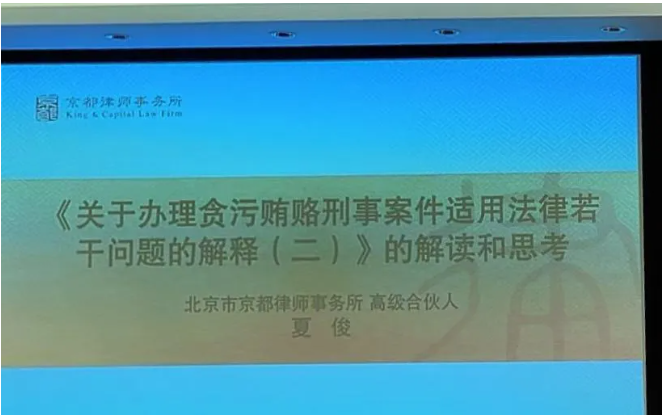
The China Development Bank is a state-owned development financial institution established with state capital, directly under the leadership of the State Council, and possessing independent legal personality. It is China’s largest bank for medium- and long-term credit and bonds, and one of the world’s largest development financial institutions. The China Development Bank attaches great importance to training on the “Interpretation (II)” and specially invited Attorney Xia Jun to deliver an on-site lecture at its headquarters. The lecture combined on-site instruction with a live online broadcast. In addition to staff from the China Development Bank’s headquarters, participants included employees from 37 branches nationwide and several subsidiaries, with nearly 1,000 people attending the training.
During the lecture, drawing on his practical experience in criminal defense and closely aligning with the characteristics of the financial industry, Attorney Xia Jun interpreted and shared insights on key legal provisions of the “Interpretation (II)” based on his extensive experience handling cases of official misconduct in the financial sector.
First, Attorney Xia Jun provided a detailed explanation of the background behind the issuance of the “Interpretation (II),” the signals it sends, and its value for the industry. Currently, crimes of embezzlement and bribery are becoming increasingly sophisticated and covert. As anti-corruption legislation continues to be refined and improved, judicial interpretations are needed to further clarify and refine the standards for applying the law. At the same time, Attorney Xia Jun pointed out three core signals sent by the “Interpretation (II)”: upholding the fundamental principle of strict punishment in accordance with the law and strictly enforcing standards for conviction and sentencing; adhering to the “Four Coordinations”; and maintaining a problem-oriented approach by clarifying relevant adjudication rules for complex and contentious issues in judicial practice. Furthermore, from a financial sector perspective, Attorney Xia Jun elaborated on the practical significance of the new regulations for the financial industry. He emphasized that systematically studying these regulations is an essential requirement for the financial sector to prevent and control financial risks, strengthen compliance management, protect state-owned assets, and purify the political environment. This will help the financial sector clarify compliance boundaries, solidify internal control responsibilities, and thereby safeguard the high-quality development of the financial industry.
Subsequently, Attorney Xia Jun provided a systematic interpretation of the “Interpretation (II)” and shared relevant insights based on his practical experience in criminal defense. The systematic interpretation focused on six key areas: First, provisions regulating new forms of hidden corruption, which refine the rules for determining bribery and mediation-related bribery, clarify the rules for determining the value of bribes involving expected returns on stocks or equity interests and specific property, and warn against various forms of disguised transfer of benefits; Second, provisions regarding bribery by entities, with a focus on distinguishing the judicial boundaries between bribery by entities and bribery by individuals; Third, an interpretation of provisions related to bribery offenses, focusing on the criteria for distinguishing between bribery by entities and bribery by individuals, as well as new sentencing regulations for the crimes of bribery by entities and bribery of entities; Fourth, clarifying the rules for determining the crime of facilitating bribery, strictly limiting the scope of its application, and clarifying the application of criminal charges in different scenarios, such as when the facilitator independently accepts property, intercepts bribes, or defrauds bribes; Fifth, new regulations on the determination of the crime of embezzlement of public funds, analyzing criminal risks in bank fund transfers by focusing on the specific determinations of “using public funds in one’s personal name for the benefit of other entities” and “embezzling a huge amount of public funds without repayment”; Sixth, the sentencing standards for the crimes of unexplained wealth of substantial value and concealment of overseas deposits clarify the state’s coordinated regulation of corruption involving both domestic and overseas assets, and remind relevant personnel to strictly adhere to asset declaration regulations. During the one-and-a-half-hour lecture, Attorney Xia Jun provided a focused and detailed interpretation and analysis of the relevant provisions of the “Interpretation (II).” During the interactive session, Attorney Xia Jun also exchanged views and discussed practical challenges with relevant leaders and staff from the head office of the China Development Bank, offering practical advice from the perspective of criminal risk prevention and control tailored to the characteristics of the financial sector.
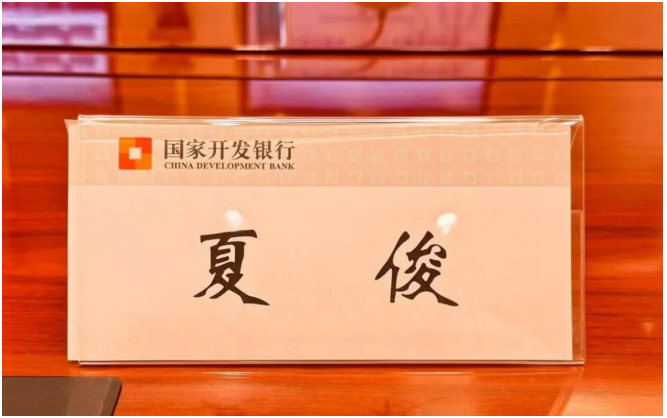
Attorney Xia Jun’s special lecture, which combined professional depth with practical value, was highly praised by attendees. The training will help the head office, branches, and subsidiaries of the China Development Bank to more accurately identify legal risks associated with various types of financial occupational crimes, continuously improve internal management systems, and promote the establishment of sound compliance and risk control mechanisms. It also fully demonstrates King&Capital Law Firm’s deep commitment to the field of financial legal services and its dedication to supporting the steady progress of the financial industry through high-quality legal services.
Translated with DeepL.com (free version)