

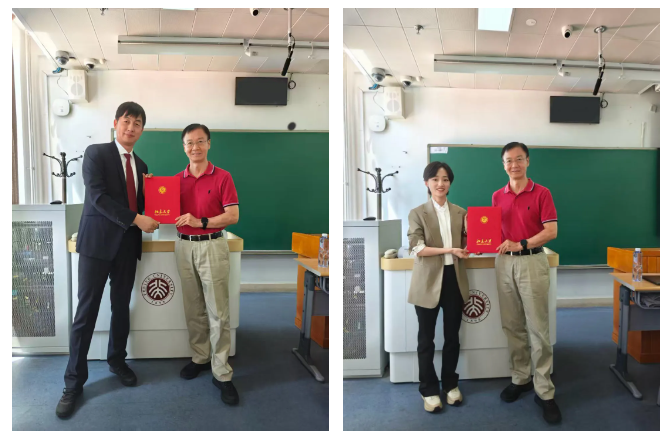
Against the backdrop of increasingly refined financial regulation and the growing specialization in the identification of securities crimes, the integration of legal theory and judicial practice is of great significance. At the invitation of Professor Wang Xin of Peking University School of Law, attorneys Zhang Qiming and Dai Shengyun of King&Capital Law Firm were appointed as external instructors for the “Financial Crimes” course during Peking University’s Spring 2026 semester. They recently delivered a specialized lecture at the Peking University School of Law, focusing on the judicial practice of insider trading crimes. The session, attended by master’s students majoring in criminal law and financial law as well as undergraduate law students, successfully bridged theory with practice and featured substantive content.
“Financial Crimes” is a signature course at Peking University Law School, designed by Professor Wang Xin to address the challenge of integrating theory with practice. Grounded in practical experience, the course regularly invites frontline judges, prosecutors, and senior practicing attorneys to teach, with students ranging from undergraduate law students to master’s candidates specializing in criminal law and financial law. To maximize the course’s value, help students build a knowledge framework, and foster an interest in securities crimes, Attorney Zhang Qiming presented the material in an accessible manner, following a logical structure of “Introduction to Capital Markets—Insights on Handling Insider Trading Cases—Analysis of Insider Trading Case Studies.”
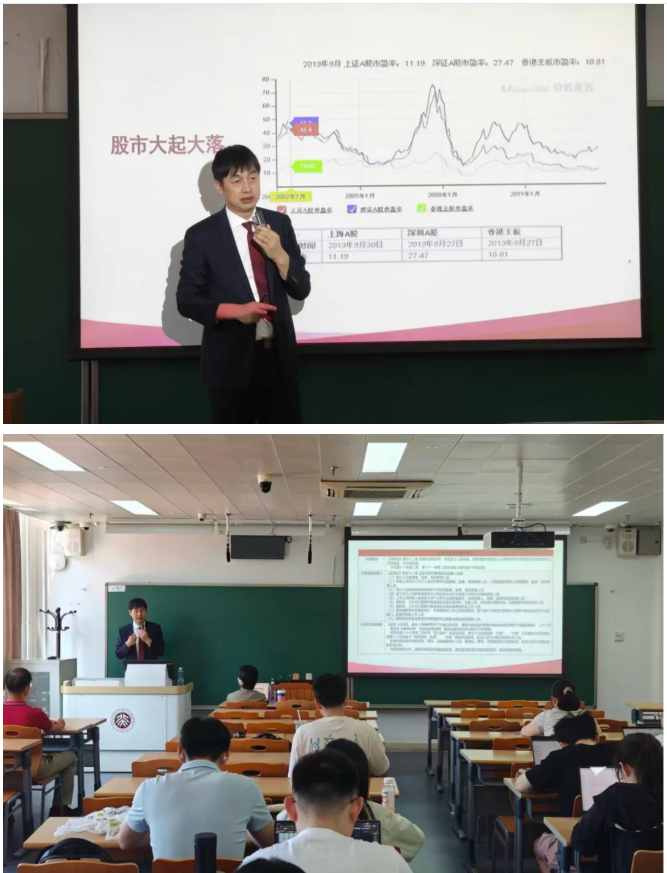
At the outset of the course, Attorney Zhang Qiming began by tracing the origins of China’s domestic securities market, outlining its developmental history. From a practical perspective, he dissected the operational rules of the capital market, helping students move beyond a purely statutory mindset to clarify the underlying logic of securities issuance and circulation, thereby establishing a foundational understanding of the capital market. After laying this groundwork, drawing on his experience representing both prosecution and defense and his extensive practical experience handling insider trading cases, Attorney Zhang shared his insights on handling such cases, guiding students to develop an intuitive understanding of the crime of insider trading. Moving into the case study segment, Attorney Zhang Qiming selected the landmark domestic cases of the Duranke insider trading case and the Huang Guangyu insider trading case as introductions, explaining foundational concepts such as insider information, the sensitive period of insider information, and persons with access to insider information.
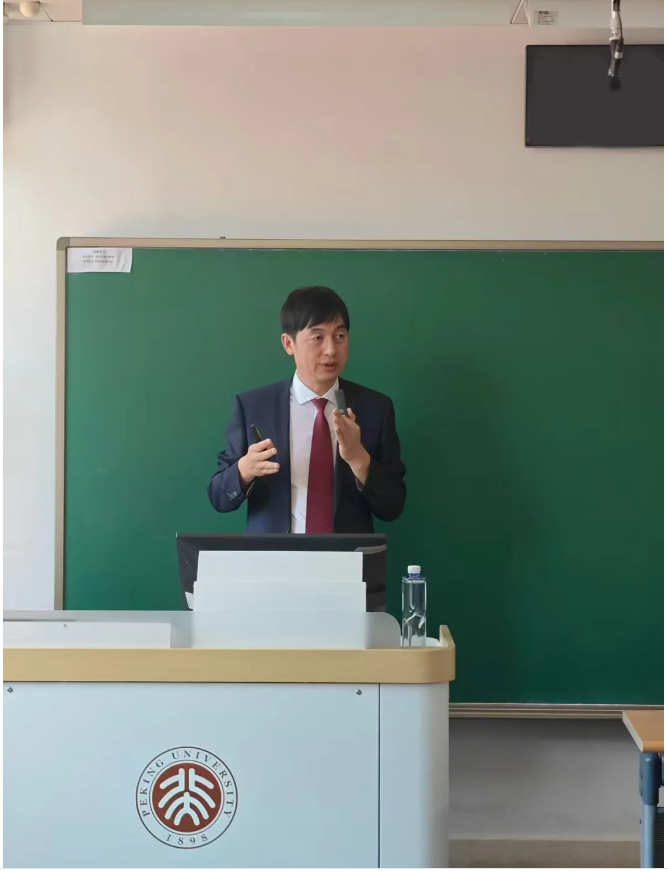
Subsequently, Attorney Zhang focused on a specific insider trading case he personally handled, providing a comprehensive account of the process of identifying the focal points of the dispute, supplementing and obtaining evidence, and breaking through during cross-examination in court. Since this case involved the presumption rule regarding “persons who unlawfully obtained insider information”—the most critical element in insider trading offenses—Attorney Zhang aimed to transform abstract legal presumptions into concrete case scenarios through this case study, thereby breaking down students’ barriers to understanding criminal presumption provisions.
Attorney Dai Shengyun further enriched the class by sharing insights from a not-guilty defense case involving insider trading in which he personally participated, focusing his explanation on the review of evidence.
Following the formal lecture, the session moved into a Q&A and discussion phase. Students actively posed questions based on what they had learned in class and their independent reading, focusing on complex issues such as conspicuously abnormal trading, reasonable grounds, evidence review, and secondary transmission. The questions demonstrated a high degree of professionalism and critical thinking. Attorney Zhang Qiming provided detailed answers grounded in legislative provisions and practical case experience, leading to multi-layered, in-depth discussions between faculty and students in a lively and interactive classroom atmosphere.
Following the session, both Professor Wang Xin and the students offered high praise for the course content and delivery format, with the class receiving unanimous recognition from both faculty and students. This lecture represents a milestone achievement in King&Capital Law Firm’s commitment to integrating legal theory with practical application. Moving forward, we will continue to deepen our collaboration with higher education institutions, consistently provide high-quality practical teaching resources, empower the cultivation of legal talent, and contribute to the development of a robust legal professional workforce.