
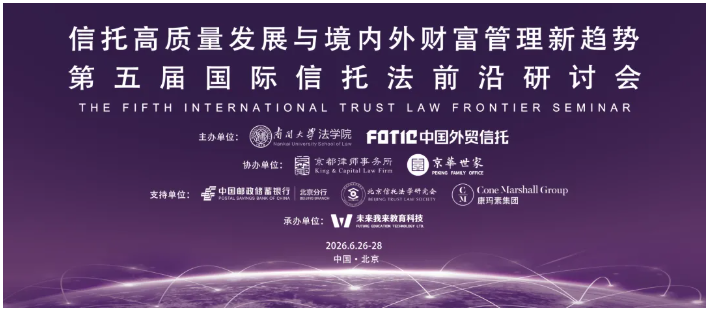
On June 28, 2026, the 5th International Symposium on Frontiers in Trust Law featured two parallel forums: Breakout Session A, “Trusts Serving the Real Economy and the People’s Better Life,” and Breakout Session B, “New Trends in Domestic and Overseas Wealth Management and Trust Disputes.”
Session A:
Trusts Serving the Real Economy and the People’s Better Life
In the “Trusts Serving the Real Economy and the People’s Better Life” session, keynote speeches and roundtable discussions were held around three themes: “Trusts Serving the Real Economy and Model Transformation,” “How Trusts Can Serve the People’s Better Life,” and “From Beijing and Shanghai to the Nation: In-Depth Analysis and Thematic Discussion of Benchmark Cases in Elderly Care Service Trusts.”
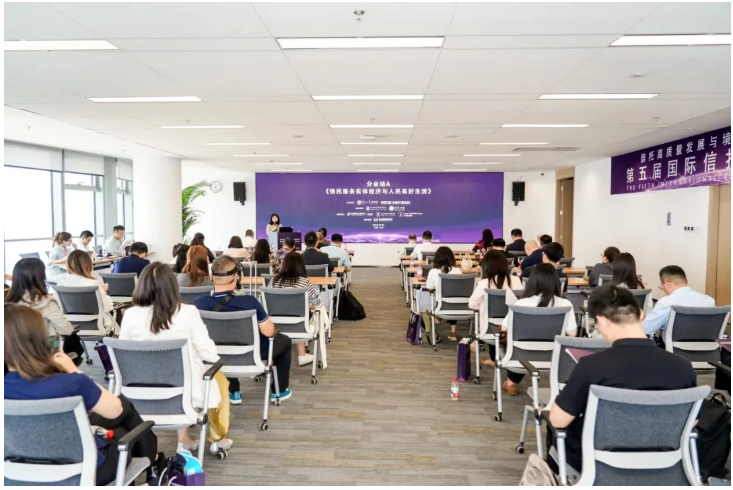
Conference Venue
Keynote Speech: Trusts Serving the Real Economy and Model Transformation
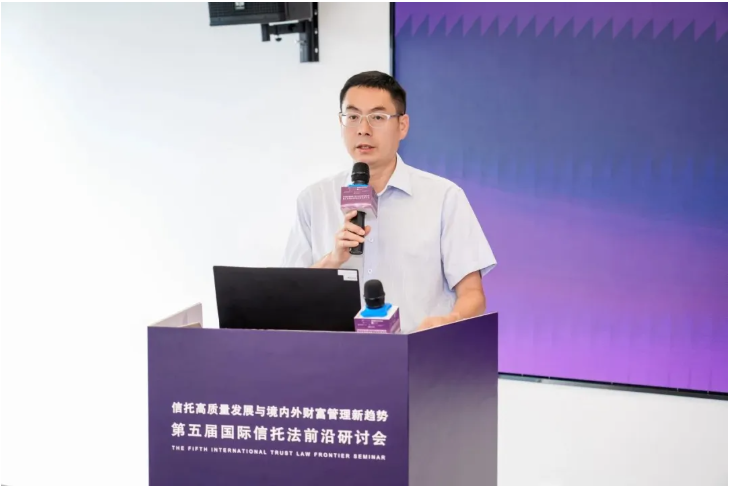
He Jin, Member of the Party Committee and Deputy General Manager of Xingbao Trust
During the morning keynote session, He Jin, Member of the Party Committee and Deputy General Manager of Xingbao Trust, served as moderator, while speakers delivered presentations on the theme “Trusts Serving the Real Economy and Model Transformation.”
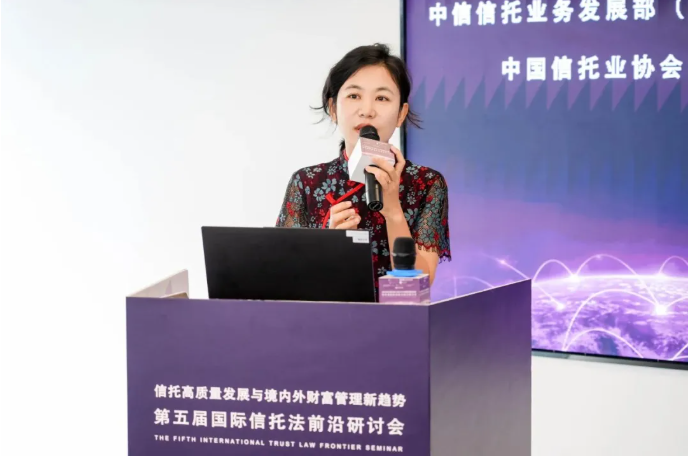
Zhou Ping
Expert, Business Development Department (Coordination Department), CITIC Trust
Lecturer at the China Trust Industry Association
Zhou Ping, an expert from the Business Development Department (Collaboration Department) at CITIC Trust and a lecturer at the China Trust Industry Association, delivered a presentation titled “Exploring Pathways for Trust Companies to Implement the ‘Five Major Initiatives’ and Practices in Serving People’s Livelihoods.” She noted that during the 14th Five-Year Plan period, the trust industry achieved steady growth in scale and in-depth structural optimization, with notable results in serving the real economy; the industry is now transitioning from scale expansion to value creation. She mentioned that looking ahead to the “15th Five-Year Plan,” trust companies will focus on differentiated positioning and non-overlapping competition, accelerate the transition to the three-category classification system, enhance professional service capabilities, and build a multi-tiered, comprehensive, and sustainable product and service system. She further explained that in the five key areas of fintech, green finance, inclusive finance, retirement finance, and digital finance, the industry has already seen a number of innovative practices emerge—such as investment-loan linkage, intellectual property securitization, carbon asset management, prepaid fund trusts, and data trusts—demonstrating strong institutional advantages and market vitality. She proposed that the industry should collectively promote the standardization of data statistics and the clarification of business boundaries across these five key areas. While adhering to risk control bottom lines, the industry should explore distinctive development paths, leverage trust services to support the real economy and foster new-quality productive forces, and jointly build a sustainable industry ecosystem.
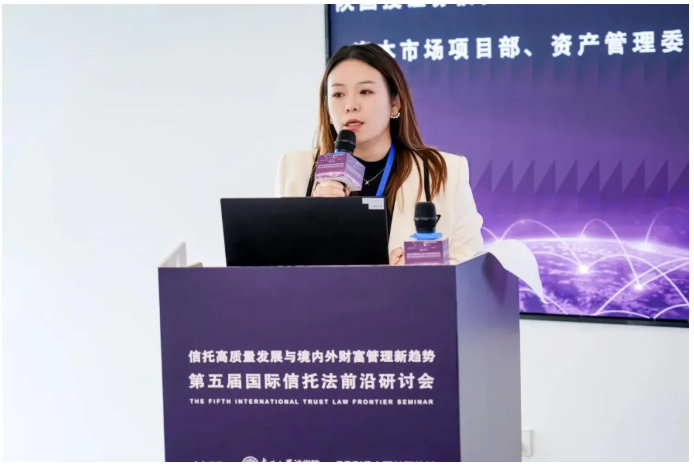
Guo Minyan
Deputy General Manager (Acting) of the Trust Business Division at Shaanxi International Trust Securities, and External General Manager of the Capital Markets Project Department and Asset Management Committee
Guo Minyan, Deputy General Manager (Acting) of the Trust Business Division at Shaanxi International Trust Securities and External General Manager of the Capital Markets Project Department and Asset Management Committee, delivered a presentation titled “Transformation of the Trust Model and High-Quality Development.” Drawing on more than a decade of practical experience serving the capital markets, she systematically elaborated on the exploratory achievements of the “Trust Investment Banking+” model in empowering listed companies and the real economy. She noted that, driven by the combined effects of the new “three-category” regulations and capital market reform policies, the trust industry is transitioning from a “financing intermediary” to a “specialized trustee, a provider of refined asset management services, and a comprehensive trust investment banking operator in the capital markets.” She explained that Shaanxi National Trust, leveraging the unique advantages of the trust system—including independent property management, flexible structures, and the ability to serve as a trustee for all asset categories—has innovatively established an integrated “Trust Investment Banking+” service system. This system uses standardized trust products as its capital foundation, asset service trusts as investment banking tools, and investment research capabilities as the basis for decision-making. Centered on the full lifecycle needs of listed companies, the system has formed five core service pathways: announcement-related services for listed companies, supporting services for share buybacks, shareholder equity services, end-to-end services for convertible bonds, and end-to-end services for exchangeable bonds. This has effectively reduced financing costs for private enterprises, optimized corporate governance structures, stabilized control rights, and achieved a differentiated profit model driven by the “dual engine” of asset management fees and investment banking service fees. She noted that in the future, as regulatory details are gradually implemented, the trust industry is expected to further leverage its institutional advantages, broaden channels for capital to flow into the real economy, support the high-quality development of listed companies, and build a sustainable industrial ecosystem.
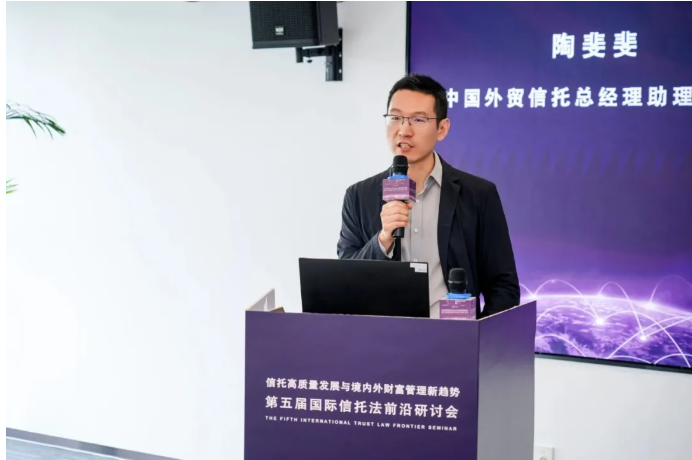
Tao Feifei
Assistant General Manager (Designate), China Foreign Trade Trust
Tao Feifei, Assistant General Manager (designate) of China Foreign Trade Trust, delivered a presentation titled “Financial Transformation in the Era of Super Intelligent Entities and the Trust Industry’s Response.” She explained that AI is accelerating the reshaping of financial development paradigms, the global adoption of financial intelligent entities is gaining momentum, and AI-native financial institutions are driving disruptive competition—all of which present new challenges and opportunities for the transformation of the trust industry. He specifically shared China Foreign Trade Trust’s digital and intelligent transformation plan. Driven by “DATA+AI,” the company is focusing on building high-quality datasets and creating an enterprise-level knowledge base. By constructing a “digital employee system” around typical scenarios, it is striving to integrate AI into business processes and organizational culture, driving the trust industry’s transition from being “labor-intensive” to being “driven by human-machine symbiosis.” At the same time, he mentioned that China Foreign Trade Trust has further intensified its innovative exploration in the field of data asset trusts. The “Data Asset Service Trust No. 1” has established a trust solution covering data rights confirmation, valuation, circulation, and value distribution, providing a replicable business model for the deep integration of digital finance and the real economy.
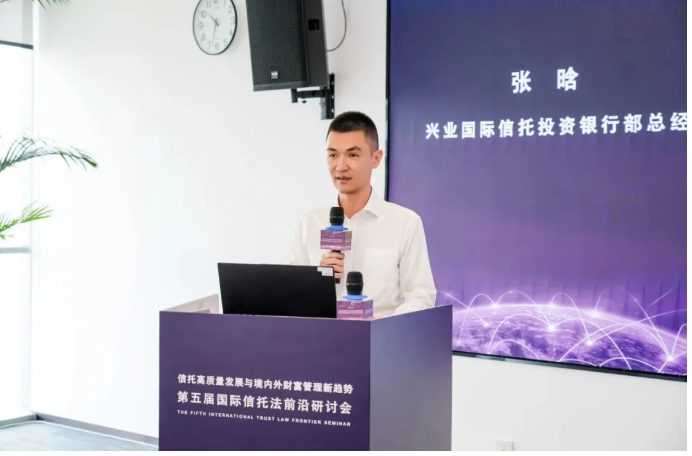
Zhang Han
General Manager, Investment Banking Department, Industrial International Trust
Zhang Han, General Manager of the Investment Banking Department at Industrial International Trust, delivered a presentation titled “Trust Companies’ Transformation Practices: Deepening Asset Securitization and Expanding into Multi-Tiered REIT Markets,” in which he introduced Industrial International Trust’s distinctive initiatives in green finance, fintech, and inclusive finance. He explained that Industrial Trust is building a complete closed-loop process of “asset trustification—asset management operations—securitization exit.” At the front end, it leverages trust structures to acquire high-quality real-economy assets; in the middle, it collaborates with the Industrial Bank Group to utilize its financial strengths for effective operations and value enhancement; and at the back end, it establishes a pathway from Pre-REITs cultivation to exit via publicly offered REITs. He stated that in the future, Industrial Trust will adhere to a “multi-asset, multi-strategy” approach, using alternative investments to address gaps in serving the real economy. This will help the company establish a differentiated competitive advantage distinct from public mutual funds and securities firms’ asset management businesses, thereby contributing the strength of the trust industry to revitalizing existing assets and serving the real economy.
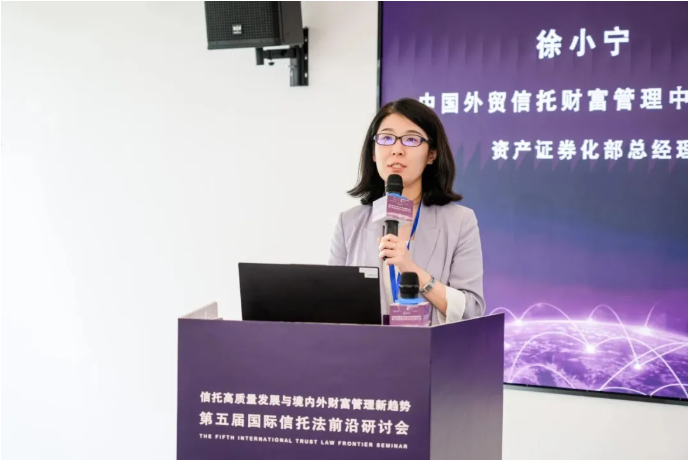
Xu Xiaoning
General Manager of the Wealth Management Center and General Manager of the Asset Securitization Department at China Foreign Trade Trust
Xu Xiaoning, General Manager of the Wealth Management Center and General Manager of the Asset Securitization Department at China Foreign Trade Trust, delivered a presentation titled “Asset Securitization Trusts Supporting Innovative Enterprises and Intellectual Property Practices.” He systematically outlined several typical models and areas of exploration for intellectual property securitization trusts and shared four cases with significant exemplary value: CNNC Factoring 2025 No. 1, the “Xinxin 2025” Chongqing Project, the Shenzhen Hetao “Dual Cross-Border” Project, and the Hefei High-Tech Zone Project, which demonstrated the innovative value of trust instruments in areas such as the commercialization of scientific and technological achievements, cross-border flows, and industrial guidance. At the same time, she noted that in the face of real-world challenges, trust companies should transition from a passive SPV role to becoming intellectual property industry financial service providers with industry insight and active management capabilities. By diversifying assets, providing full-cycle services, enhancing liquidity, and deepening cross-border collaboration, they can drive the transformation of intellectual property from a “certificate” to an “asset,” enabling the trust system to truly serve the development of new-quality productive forces and the national strategy to build China into a science and technology powerhouse.
Keynote Speech: How Trusts Can Serve the People’s Better Life
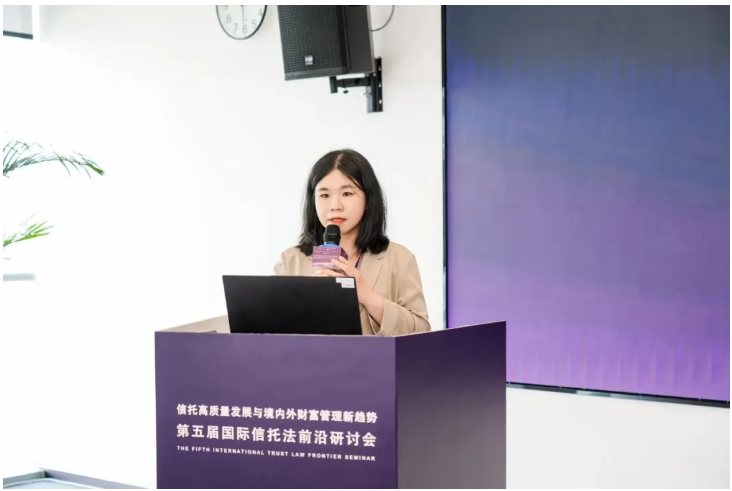
Zhang Yanfei, Partner at Beijing King&Capital Law Firm
In the afternoon at Venue A, the seminar consisted of two parts: keynote speeches and roundtable discussions. During the keynote session, Zhang Yanfei, a partner at Beijing King&Capital Law Firm, served as moderator, and speakers delivered presentations on the theme “How Trusts Can Serve the People’s Better Life.”
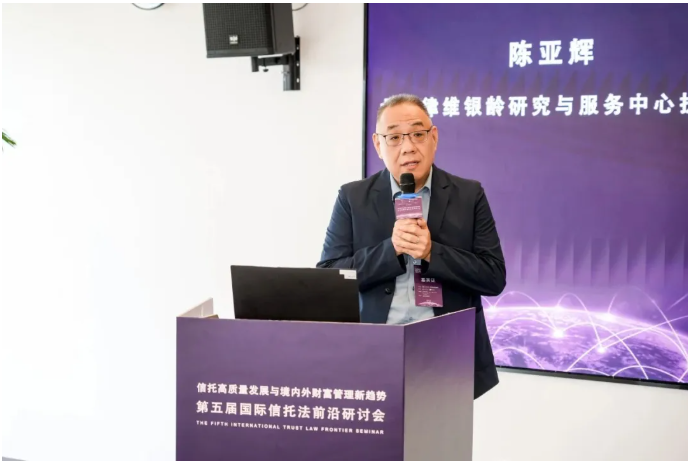
Chen Yuhui
Executive Director, Beijing Lawwei Silver Age Research and Service Center
Chen Yuhui, Executive Director of the Beijing Lawwei Silver Age Research and Service Center, delivered a presentation titled “Voluntary Guardianship for the Elderly and Case Analyses.” He noted that promoting voluntary guardianship has been listed as a priority for many local civil affairs departments this year, and that voluntary guardianship for the elderly must cover six key dimensions: daily care, asset management, medical decision-making, emergency response, rights protection, and specific civil agency. Chen Yuhui stated that guardianship and trusts are the two pillars for addressing the issue of care arrangements for the elderly; in practice, a model should be adopted that separates personal rights from property rights, with guardianship managing personal affairs and trusts managing finances. Chen Yuhui called for the establishment of a seven-pronged service ecosystem—comprising government guidance, notary services, social organizations, trusts, and insurance—to ensure that elderly individuals with dementia or disabilities can age with peace of mind, thereby addressing the public’s practical needs for a better life.
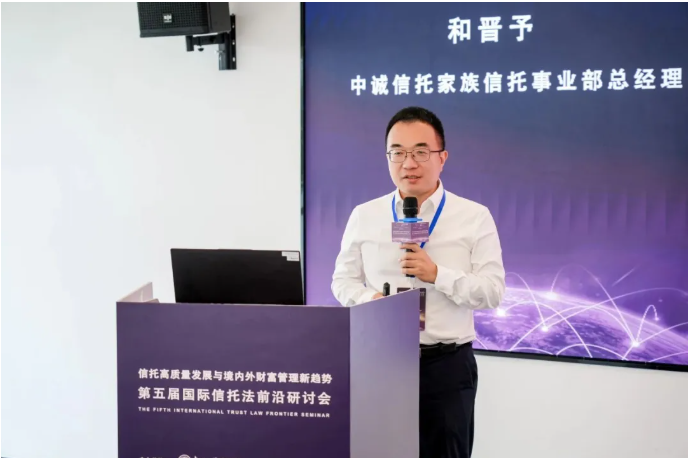
He Jinyu
General Manager, Elderly Care Finance Department / Charitable Trust Department, China Credit Trust
He Jinyu, General Manager of the Elderly Care Finance Department and Charitable Trust Department at China Credit Trust, delivered a presentation titled “Development and Innovation of Elderly Care Wealth Management Service Trusts.” He emphasized that elderly care trusts should center on asset management and play a role closely aligned with the life stages of elderly clients. He analyzed the impact of family structures on the demand for elderly care trusts, proposing that the business model for such trusts should evolve from basic asset management and utilization toward comprehensive “trust plus guardianship” services, ultimately aligning with wills to achieve integrated asset arrangements covering both the client’s lifetime and afterlife. Finally, he highlighted regulatory requirements for special-needs trusts, arrangements for trust parties, and how to implement “housing-for-pension” schemes—all of which require attention in current practice. He called on the industry to continue exploring synergistic approaches between trusts and guardianship to better serve the needs of the elderly and effectively enhance people’s well-being.
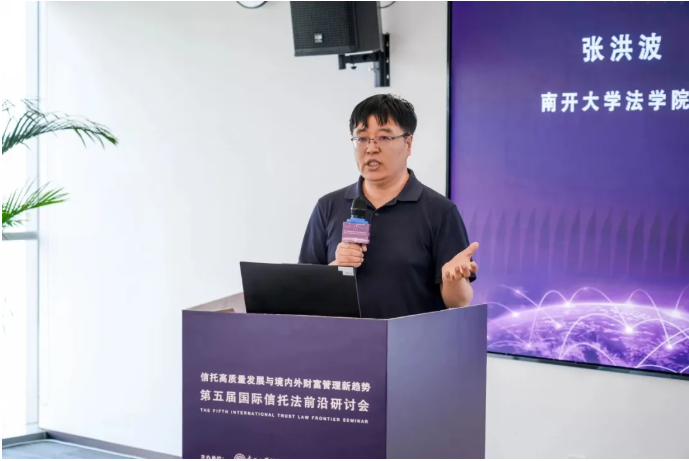
Zhang Hongbo
Professor, School of Law, Nankai University
Zhang Hongbo, Professor at the School of Law, Nankai University, delivered a speech titled “Guardianship, Inheritance, and Elderly Care Trusts,” focusing on the comparison and synergy between contractual guardianship and trusts, as well as inheritance and trust systems. He pointed out that traditional guardianship, inheritance, and trust systems each have their own strengths and weaknesses in addressing elderly care issues, and that synergy between them can better ensure elderly care security. However, he noted that the current legal system still poses certain obstacles to the integration of trusts into the elderly care sector, necessitating revisions. He further proposed that the trust industry could coordinate traditional guardianship, inheritance, and trust systems through the contractual guardianship system, but this would require simultaneously signing a trust agreement, a guardianship agreement, and an executorship agreement with the ward. Additionally, he suggested that regarding the handling of estates with no heirs or beneficiaries, the state should place such assets into charitable trusts, to be managed by trust institutions for elderly care initiatives, thereby serving the public interest through trusts.
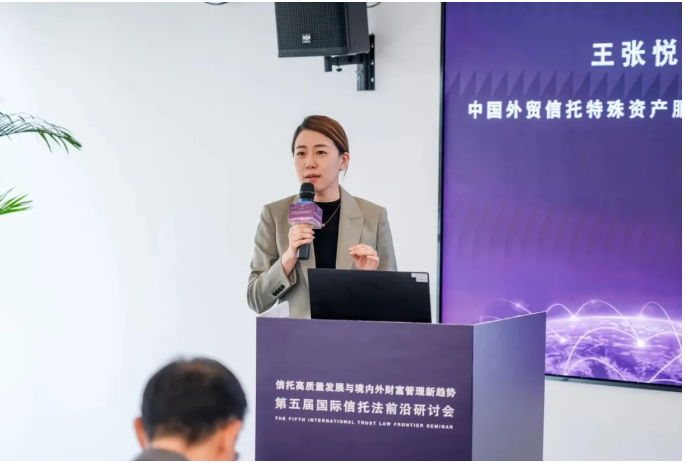
Wang Zhangyue
General Manager, Special Asset Services Trust Department, China Foreign Trade Trust
Wang Zhangyue, General Manager of the Special Asset Services Trust Department at China Foreign Trade Trust, delivered a presentation titled “The Application of the Trust System in Special Needs Scenarios: Practical Implementation of the ‘Guardianship + Trust’ Model.” She explained that China Foreign Trade Trust has already implemented special needs trusts in scenarios involving contractual guardianship, testamentary guardianship, and public guardianship. She pointed out that special needs trusts must effectively integrate with guardianship relationships. Through the use of the directive authority mechanism and succession planning within the trust structure, they should address risks such as the gap period before a court ruling and disputes between statutory guardianship and contractual guardianship. Trust companies need to prioritize advance agreements on medical directives and authority, and leverage technology to resolve issues related to the timeliness of emergency payments. Wang Zhangyue stated that while integrating special needs trusts with guardianship relationships faces numerous challenges, the value of the trust system in elderly care and social governance is becoming increasingly evident, and she looks forward to it playing a greater role in the future.
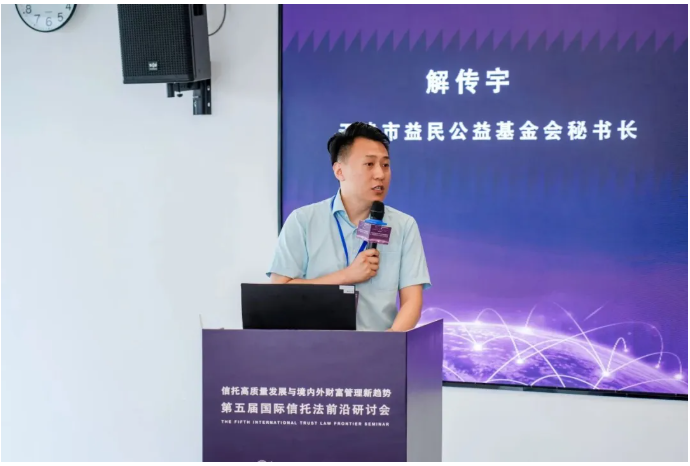
Xie Chuanyu
Secretary-General of the Tianjin Yimin Public Welfare Foundation
Xie Chuanyu, Secretary-General of the Tianjin Yimin Public Welfare Foundation, delivered a presentation titled “Discussions and Practices on Social Organizations’ Participation in Elderly Care Trusts.” He pointed out that social organizations can serve the currently largest demographic with elderly care needs—those who are neither high-net-worth individuals nor individuals in extreme poverty. Elderly care trusts should adhere to the principle of inclusivity, and social organizations can play a key role in four core areas: “identifying needs, building trust, delivering services, and establishing oversight mechanisms.” As such, they are the most advantageous partners for trust institutions. Xie Chuanyu called on trust companies to lower entry barriers and launch small-scale pilot products, enabling more seniors to access and experience elderly care service trusts. He stated that the hope for inclusive elderly care in China lies in the collaboration between trust institutions and social organizations.
Roundtable Discussion: From Beijing and Shanghai to the Nation—In-Depth Analysis and Thematic Discussion of Benchmark Cases in Elderly Care Service Trusts
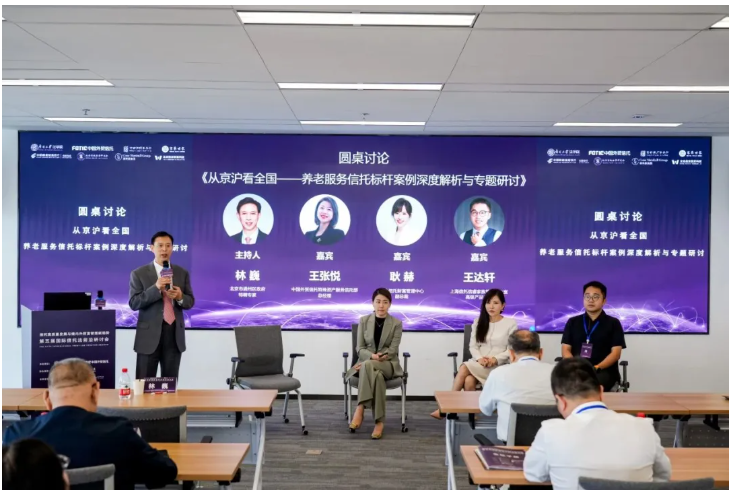
During the roundtable discussion, Lin Wei, a specially appointed expert by the Tongzhou District Government of Beijing, served as moderator. Participants included Wang Zhangyue, General Manager of the Special Assets Service Trust Department at China Foreign Trade Trust; Geng He, Vice President of the Wealth Management Center at Kunlun Trust; Wang Daxuan, Senior Product Manager at the Xinrui Family Management Office of Shanghai Trust, served as panelists to discuss the topic “Looking at the Nation Through the Lens of Beijing and Shanghai—In-Depth Analysis and Thematic Discussion of Benchmark Cases in Elderly Care Service Trusts.”
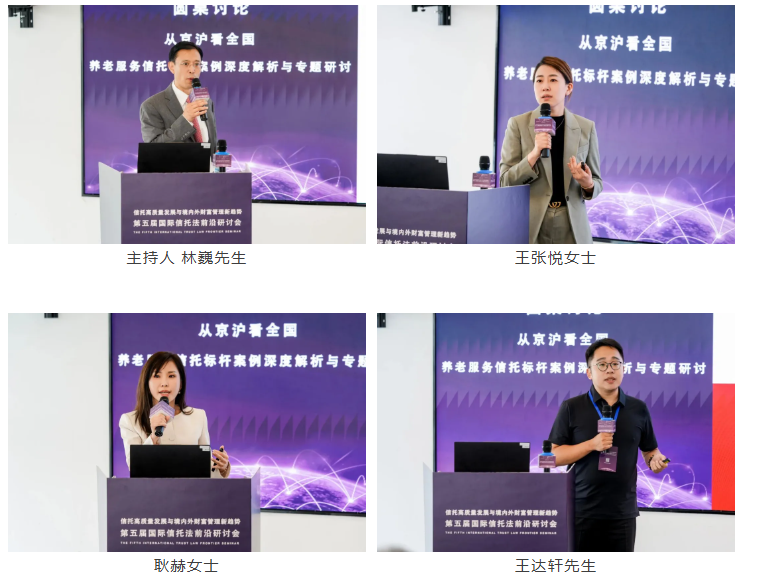
Wang Zhangyue, General Manager of the Special Assets Services Trust Department at China Foreign Trade Trust, focused her presentation on the “Tongzhou No. 2” case: This case achieves the coordinated entrustment of property and personal affairs through a combination of contractual guardianship and a special needs trust. The trust manages the assets, the guardian manages personal affairs, and the supervisor oversees the guardian. By establishing a system comprising the directive authority holder, the inspector, and the custodian, the model ensures full-lifecycle coverage, comprehensive asset transfer, and positive incentives for guardians. She noted that the Tongzhou Model has fostered a “high-speed train” ecosystem guided by the government and driven by the collaboration of multiple market participants, with the demonstration effect of individual cases driving the model’s broader adoption and evolution.
Geng He, Vice President of the Wealth Management Center at Kunlun Trust, drew on the firm’s service experience to further discuss two cases implemented by Kunlun Trust: In the Tongzhou Case No. 4, Ms. Yan, an 83-year-old woman, had an only daughter residing in Singapore, and the mother and daughter had been estranged for a long time. Kunlun Trust used designated guardianship to replace statutory guardianship, helping the elderly woman bypass the family impasse and restore control over her own eldercare arrangements. She explained that this solution established a mechanism for Ms. Yan to transfer the remaining trust assets into a charitable trust, which would be used to fund legal services for other seniors wishing to establish eldercare service trusts. This arrangement allowed the elderly woman to secure her own eldercare needs while fulfilling her wish to support social welfare and achieve a higher sense of purpose. Additionally, she mentioned that in the Tongzhou Case No. 5, Ms. Li, an 83-year-old woman whose only daughter lived far away in the United States, was provided with an integrated “trust + will + elder care” solution designed by Kunlun Trust. Under this arrangement, the daughter serves as the trust directive holder, while a direct payment channel to the elder care facility was established to ensure funds are earmarked for their intended purpose and disbursed directly on a monthly basis—providing peace of mind to the overseas daughter and ensuring the elderly woman has a secure foundation in her later years.
Wang Daxuan from Shanghai Trust’s Xinrui Family Management Office shared a case study from Huangpu District, Shanghai, involving “tiered guardianship, dual oversight, and multi-party collaboration for families caring for elderly and disabled members.” In response to the specific circumstances of the client’s family, Shanghai Trust designed a five-tiered order of priority for beneficiaries and established a dual oversight mechanism, with the neighborhood committee serving as an overseer from the outset and the notary office providing concurrent supervision. He noted that this case—through the civil affairs department setting the stage, the trust implementing the plan, the subdistrict office facilitating the process, the neighborhood committee providing oversight, the notary office supervising, the court providing legal safeguards, and think tanks offering support—saw all parties fulfilling their respective roles, joining forces to weave the city’s warmest response to people’s livelihood needs.
Lin Wei, a specially appointed expert of the Tongzhou District Government in Beijing, noted in his summary that the elderly care service trust practices in Beijing’s Tongzhou District and Shanghai’s Huangpu District each have their own distinctive features. Their commonality lies in the fact that the government has played a key guiding role in both cases, while the difference is that Beijing’s Tongzhou District, based on its positioning as a global wealth management center, is building a socialized entrustment service ecosystem—centered on professional institutions—that serves the entire country. Dr. Lin Wei further outlined the achievements of the “Tongzhou Initiative” over the past year—a socialized entrustment model centered on “trusts managing funds, guardians managing affairs, and oversight ensuring compliance”—which is blazing a trail toward institutionalized solutions for tens of millions of families nationwide facing guardianship gaps. He emphasized that during the initial phase of nationwide implementation, the government must take the initiative, lead by example, and break through institutional inertia; during the large-scale rollout phase, professional institutions must play a leading role, leveraging market mechanisms to reduce reliance on public finances; Kunlun Trust has not only successfully implemented multiple benchmark cases but has also demonstrated forward-thinking approaches to commercialization models, setting an example for the industry to follow. He called on more cities and institutions to join the exploration, so that the warmth of the trust system may illuminate the later years of every senior citizen.
With that, the agenda for Sub-forum A concluded smoothly and successfully.
Breakout Session B:
New Trends in Domestic and International Wealth Management and Trust Disputes
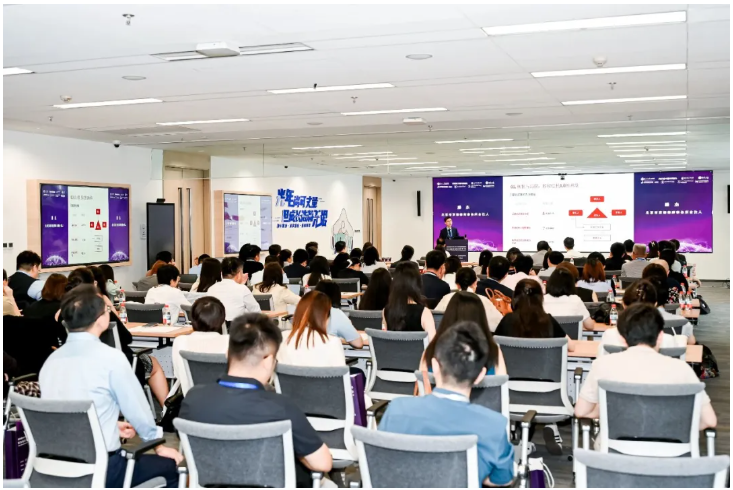
Conference Venue
The “New Trends in Domestic and International Wealth Management and Trust Disputes” breakout session featured keynote speeches and roundtable discussions centered on four topics: “New Trends in Domestic and International Wealth Management,” “Case Studies on Innovation in Wealth Management Service Trusts,” “Resolution of Trust Disputes,” and “Discussion of Trust Dispute Cases.”
Keynote Speech: New Trends in Domestic and Overseas Wealth Management
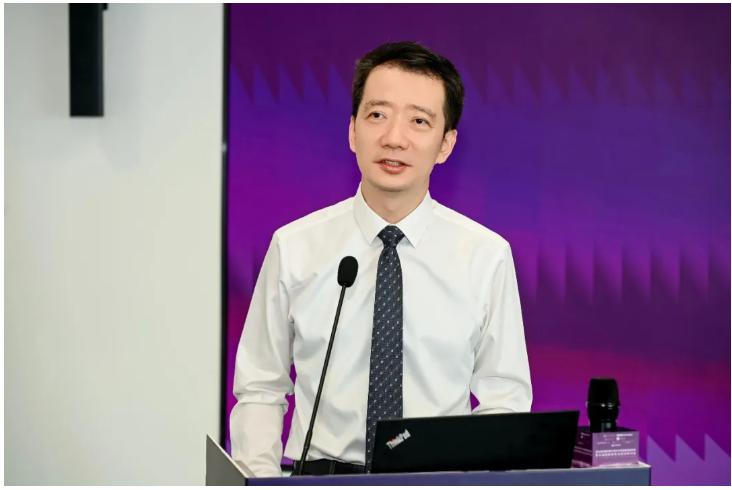
Nie Junfeng, Chairman of Jinghua Shijia Family Office
The keynote session was moderated by Nie Junfeng, Chairman of Jinghua Shijia Family Office. Three speakers outlined the current landscape of transformation in the domestic and overseas wealth management trust sector from three perspectives: industry development, Hong Kong practices, and institutional innovation.
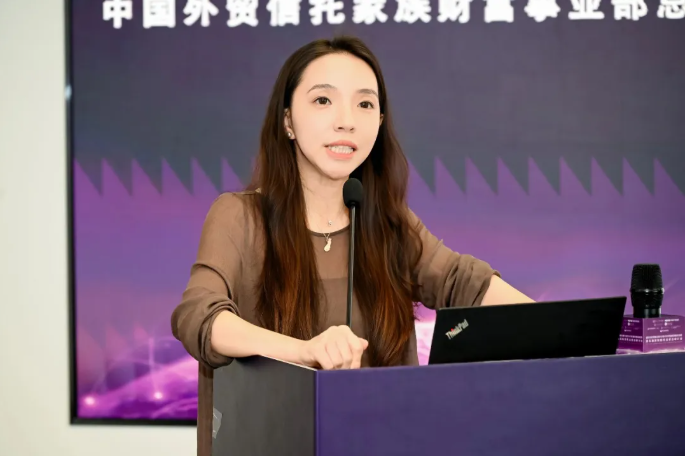
Li Shan
General Manager, Family Wealth Division, China Foreign Trade Trust
Li Shan, General Manager of the Family Wealth Division at China Foreign Trade Trust, delivered a presentation titled “Changes and Trends in Wealth Management Service Trusts.” She systematically traced the development of domestic family trusts, precisely elucidated their unique value, and comprehensively analyzed the industry’s transformation direction and future trends from four dimensions: demand, supply, policy, and capability. She proposed that the core value of family trusts in the new era is embodied in three dimensions: value creation, long-term support, and the passing down of family values. Moving beyond the scope of mere asset management, family trusts return to the essence of the trust, combining the comprehensive functions of wealth appreciation, risk isolation, and the preservation of family values. She further analyzed that, in terms of industry trends, current client needs are shifting from passive asset disposal toward proactive planning, strategic positioning, and full-cycle support. Business models are gradually evolving from single-service trusteeship to comprehensive, integrated wealth management services, with the use of composite financial instruments becoming more widespread and clients’ awareness of compliance and risk management continuing to grow. She explained that the client base is characterized by refinement, segmentation, and inclusivity: high-net-worth entrepreneurs are increasingly relying on family trusts to achieve a deep integration of family governance and corporate governance, thereby helping to isolate risks associated with family businesses and ensure the enduring success of their enterprises; For the mass-market and inclusive client segment, the low-threshold, intelligent operational model of the AI-native trust in Nevada, USA, offers a new, replicable path for reducing costs, improving efficiency, and scaling up domestic pension and family-oriented inclusive trust businesses. She noted that the successful implementation of Shanghai’s pilot program for retirement service trusts, along with Japan’s mature experience in retirement trusts and Foreign Trade Trust’s localized innovative practices, fully validate the unique advantages of the trust system in areas of public welfare such as marital property planning, elderly care, wealth succession, and health management. She added that there is vast potential for future scenario-based and public-welfare-oriented innovations. Regarding development on the supply side, she outlined future innovation directions, potential risks, and required capabilities for products across various asset classes. Finally, Li Shan emphasized that family trusts are characterized by their exceptionally long time horizons and lifelong support; practitioners must consistently adhere to the fiduciary principles of diligence, honesty, prudence, and effective management. Drawing on Foreign Trade Trust’s case studies, she vividly illustrated professional competence, a long-term perspective, and compassionate financial practices, and is vigorously committed to leveraging the trust system to enhance the quality of life.
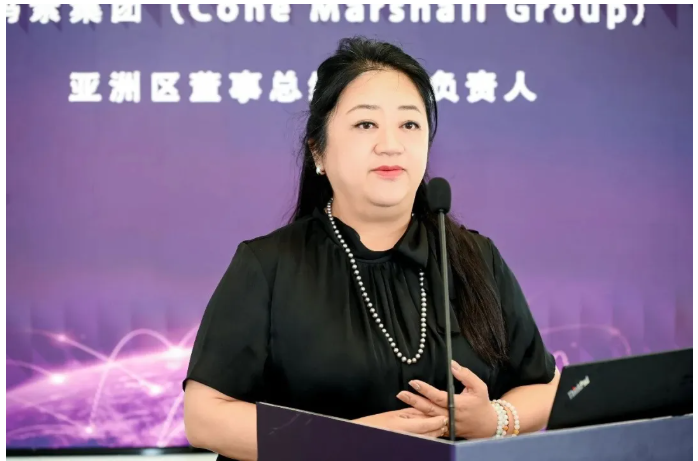
Ada Ng
Managing Director and Head of Asia, Cone Marshall Group
Ada Ng, Managing Director and Head of Asia at Cone Marshall Group, delivered a presentation titled “Changes and Trends in Hong Kong’s Wealth Management Approach.” Adopting a global perspective, she noted that according to the *World Wealth Report 2026* published by Capgemini Research Institute, by early 2026, the total wealth of high-net-worth individuals worldwide had reached 98.3 trillion U.S. dollars, and wealth management is exhibiting four major trends: geographic diversification of investments, deep AI empowerment, highly personalized client experiences, and alternative investments moving from the periphery to the core. In analyzing Hong Kong’s strengths, Ada Ng emphasized that in 2025, Hong Kong’s cross-border wealth management assets totaled approximately $2.95 trillion, slightly exceeding Switzerland’s $2.94 trillion, making it the world’s largest cross-border wealth management hub. Assets under management reached HK$35.1 trillion (approximately $4.53 trillion), with over 60% coming from global investors outside Hong Kong and mainland China. She noted that through its “interconnectivity” mechanisms (Shanghai-Hong Kong Stock Connect/Shenzhen-Hong Kong Stock Connect, Bond Connect, and Wealth Management Connect), Hong Kong has established a unique channel linking mainland China with global capital markets, positioning itself as an irreplaceable “super connector.” In comparing Hong Kong and Singapore, Wu Huishan pointed out distinct differences in their positioning: Hong Kong focuses on the Mainland China and Greater Bay Area markets, with investment priorities including stocks, IPOs, and offshore RMB products; Singapore, on the other hand, is rooted in Southeast Asia and the global market, excelling in private equity and venture capital. She explained that Hong Kong trusts can have perpetual existence, allow settlors to retain a high degree of control, and feature a streamlined setup process; Singaporean trusts, on the other hand, have a maximum term of 100 years and are subject to stricter regulation. In terms of fund vehicles, Hong Kong’s Open-Ended Fund Companies (OFCs) and Limited Partnership Funds (LPFs) connect to the mainland market through the mutual recognition mechanism for funds, while Singapore’s Variable Capital Companies (VCCs) are known for their umbrella structures and privacy protections. She further explained that in the digital asset sector, Hong Kong has been promoting Web 3.0 and the digital asset ecosystem since 2022 and has launched Asia’s first spot crypto ETFs; Singapore, meanwhile, has long served as a pioneer in fintech and maintains a leading position in institutional fintech infrastructure and green finance.
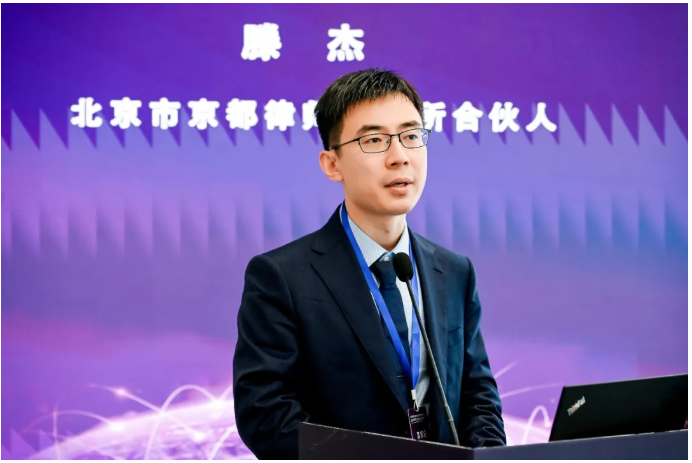
Teng Jie
Partner, Beijing King&Capital Law Firm
Teng Jie, a partner at Beijing King&Capital Law Firm, delivered a presentation titled “Equity Trust 2.0: A Paradigm Shift from Shareholding Vehicle to Wealth Succession Hub,” in which he provided an in-depth analysis of the underlying challenges and future directions of current equity trust practices. He pointed out that equity is the most central and complex type of asset for wealth succession among high-net-worth families. However, the traditional “Equity Trust 1.0” structure—where a trust company holds the limited partner (LP) interest in a special purpose vehicle (SPV) limited partnership, and the settlor serves as the general partner (GP)—poses significant risks: In the event of the settlor’s divorce, death, or subjection to compulsory enforcement, control of the company corresponding to the GP interest may be lost, rendering the equity trust a mere formality. Typical cases such as the bankruptcy liquidation of Shanshan Co., Ltd. and the succession dispute at Wahaha Group serve as cautionary tales of disorderly equity succession. To address this dilemma, Teng Jie proposed a paradigm shift toward “Equity Trust 2.0,” whose core lies in upgrading the equity trust from a simple asset holding vehicle to a comprehensive governance framework, establishing five key pillars: the risk isolation and ownership pillar, the intergenerational rule succession pillar, the family interest balancing pillar, the entrepreneurial collaborative governance pillar, and the family spirit inheritance pillar. Regarding the implementation path, Teng Jie emphasizes “four types of synergy”: internal synergy (equity trust + family governance + family philanthropy), entity synergy (multi-tiered trustee team), tool synergy (trust + foundation structure), textual synergy (comprehensive alignment of the trust agreement, articles of incorporation, family charter, and donation agreement). Among these, “tool synergy” represents a key breakthrough—by changing the top-tier holder of GP interests from an individual to a foundation, and combining this with the delegation of voting rights at both the family governance and foundation levels, it is possible to prevent the loss of control due to the settlor’s aging, illness, death, or marital changes, thereby ensuring the long-term succession of the family business. He suggested that family governance should be institutionalized through a comprehensive set of documents, including the family charter, family trust regulations, and corporate equity management regulations. Finally, he called for accelerating reforms to the tax system supporting trusts, establishing a unified national equity trust registration system, and refining legislation on the allocation of responsibilities among tiered trustees to lay a solid institutional foundation for the large-scale implementation of Equity Trust 2.0.
Roundtable Discussion: Case Studies on Innovation in Wealth Management Service Trusts
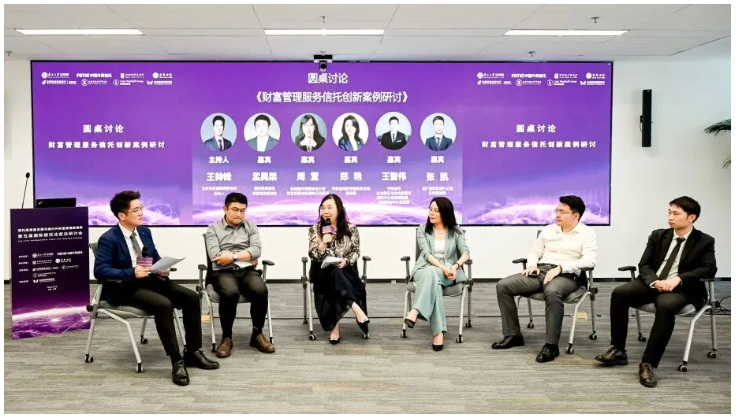
The roundtable discussion was moderated by Wang Shuaifeng, Partner at Beijing King&Capital Law Firm. Panelists included Meng Haojie, Chief Wealth Planning Officer at SDIC Taikang Trust; Zhou Xuan, Executive General Manager of the Wealth Management Business Department at CCB Trust; Zheng Yan, Vice President of the Wealth Services Division at Ping An Trust; Wang Zhiwei, Assistant General Manager of the Social Responsibility and Entrepreneurial Services Trust Center at COFCO Trust and General Manager of the Guangdong-Fujian Wealth Center; and Zhang Kai, General Manager of the Family Office at Minmetals Trust, served as panelists to discuss “Innovative Case Studies in Wealth Management Service Trusts.”
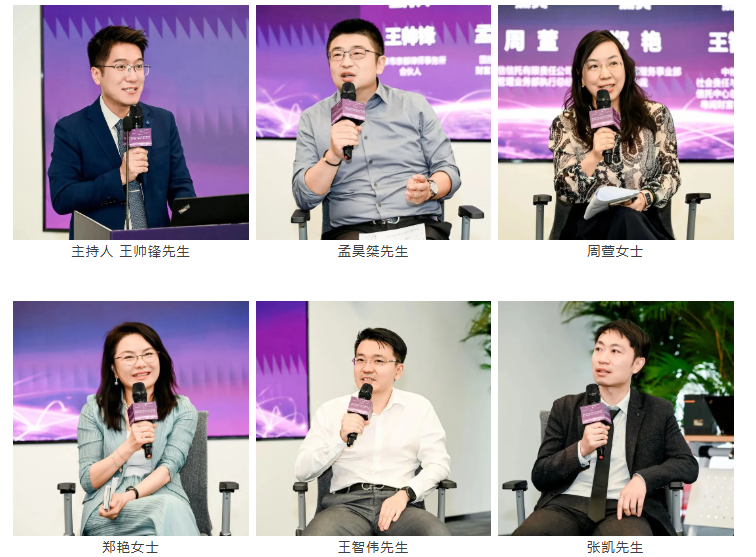
Meng Haojie, Chief Planning Officer of Wealth Management at SDIC Taikang Trust, put forward a key insight: “Innovation is not about creating something out of thin air, but rather about optimizing due diligence.” He broke down the direction for refining trust structures into three key areas—asset delivery, fiduciary management, and profit distribution—and shared policy recommendations for promoting the registration of real estate trusts under the third category of entities (trusts/financial products). He acknowledged that breakthroughs in taxation would be difficult to achieve in the short term, but noted that “grounding efforts in reality, advancing in small steps, and gradually optimizing” is a pragmatic approach.
Zheng Yan, Vice President of Ping An Trust’s Wealth Services Division, shared how Ping An Trust, leveraging Ping An Group’s “Finance + Healthcare and Wellness” ecosystem, has deeply integrated the “Super Retirement Account” system into the six major modules of Ping An Group’s “Life Dignity Protection Service Project.” By integrating the trust’s legal framework, the Group’s healthcare and wellness ecosystem, and designated guardianship arrangements into a unified solution, the trust fully leverages its strengths—strong isolation, multi-asset management, flexible disbursement, and precise succession planning to elevate retirement services to full-cycle protection of “dignity of life”—a core innovation that distinguishes Ping An’s retirement service trusts from similar industry products.
Zhou Xuan, Executive General Manager of the Wealth Management Business Department at CCB Trust, clearly stated based on practical experience that the optimal structure remains “trust + partnership SPV + target company,” coupled with the registration of LP shares as trust property. From a tax perspective, she analyzed that while a partnership is a tax-transparent entity—with dividends distributed to GPs and LPs subject to separate taxation—the tax burden on trusts acting as LPs remains unclear due to the absence of a trust tax system in China. Meanwhile, although an SPV structured as a limited liability company can enjoy tax-exempt dividends between resident enterprises on dividend income received from the target company (though capital gains from the transfer of the target company’s equity are still subject to taxation), it still fails to resolve the tax burden associated with the company distributing dividends to the trust. Furthermore, she explained that if the trust holds 100% of the shares, the LLC SPV becomes a single-member LLC, facing high compliance costs due to the reversal of the burden of proof. She specifically addressed the “Equity Trust 2.0” foundation model, noting that CCB Trust already has practical experience implementing it—under qualifying conditions, a company established under the foundation serves as the GP. This approach fully accounts for legal restrictions on foundations, such as the requirement to bear unlimited joint and several liability and the cap on the proportion of close relatives serving as trustees, while also avoiding the succession risks associated with having a natural person serve as the GP. Regarding the settlor’s retained rights and the validity of the trust, Zhou Xuan suggested distinguishing between investment management rights and the residual claim to trust benefits, seeking a balance between protecting creditors and maintaining the stability of the trust.
Wang Zhiwei, Assistant General Manager of the Social Responsibility and Entrepreneur Services Trust Center at COFCO Trust and General Manager of the Guangdong-Fujian Wealth Center, shared practical insights: compensation and benefits trusts do not serve as personal income tax planning tools and must be structured after the enterprise has paid its taxes; scheme design must prioritize compliance and feasibility, and distribution conditions cannot be set solely based on the owner’s wishes; given the large number of beneficiaries (up to 4,000 or more per project), the development of system infrastructure is critical. He concluded that while family trusts focus more on “preservation,” compensation and benefits trusts support corporate development from a “growth” perspective.
Zhang Kai, General Manager of the Family Office at Minmetals Trust, pointed out that clients’ core concerns center on situations where children are unable or unwilling to take over the business, disputes among multiple children over control, and the need to mitigate marital risks involving children. Through structural design, operational control, ownership, and profit rights can be separated, with operational control gradually transferred to professional managers or jointly managed by multiple children. However, he also acknowledged that even a theoretically perfect design may face challenges in practice, such as moral hazards among professional managers. Therefore, in actual implementation, the firm tailors the articles of association for the GP company and the distribution terms of the family trust based on the client’s specific needs, while also refining the wills of the GP company’s shareholders and assisting clients in drafting a family charter. He emphasized that while equity trusts are not a panacea, they can provide clients with new approaches to corporate succession. Additionally, he noted that equity trusts currently face challenges such as an imperfect trust tax system and the risk of potential liabilities from the underlying company’s equity being passed on to the trustee. Consequently, he suggested that the industry urgently needs further improvements to the trust tax system and legal framework.
When looking ahead at industry trends for the next 1 to 3 years, the five panelists reached several points of consensus: the trust system will continue to be optimized in tandem with the aging population, but uniform standards for the scope of trustee liability are urgently needed to avoid unsustainable “bending over to pick up pennies” style internal competition; wealth management service trusts are a “difficult yet correct” long-term endeavor that requires strategic resolve; trust assets will diversify at an accelerated pace, with the proportion of non-monetary assets—such as equity, stocks, real estate, and personal property—increasing significantly; scenario-based applications (elderly care, specialized needs, and payments) will become more widespread; and clarifying the trustee liability system is the industry’s most pressing institutional need.
Keynote Speech: Trust Dispute Resolution
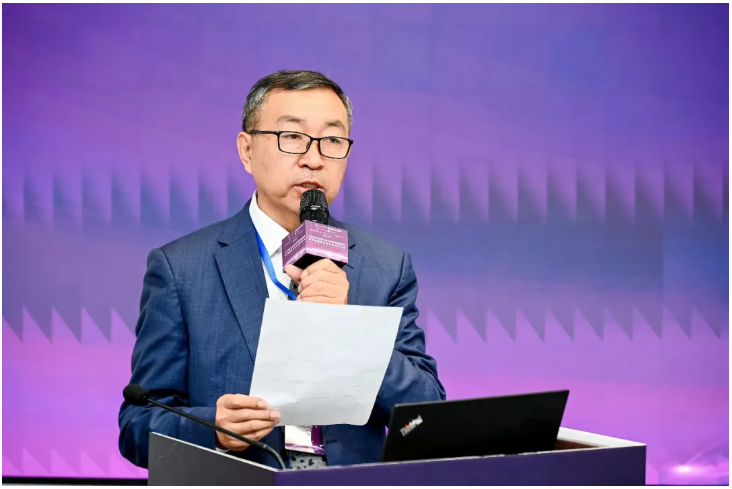
Xiao Shuwei, Senior Partner and Party Committee Secretary, Beijing King&Capital Law Firm
In the afternoon at Venue B, the seminar consisted of two parts: keynote speeches and a roundtable discussion. First, during the keynote session, Xiao Shuwei, Senior Partner and Party Committee Secretary of Beijing King&Capital Law Firm, served as moderator, with speakers delivering presentations on the topic of “Trust Dispute Resolution.”
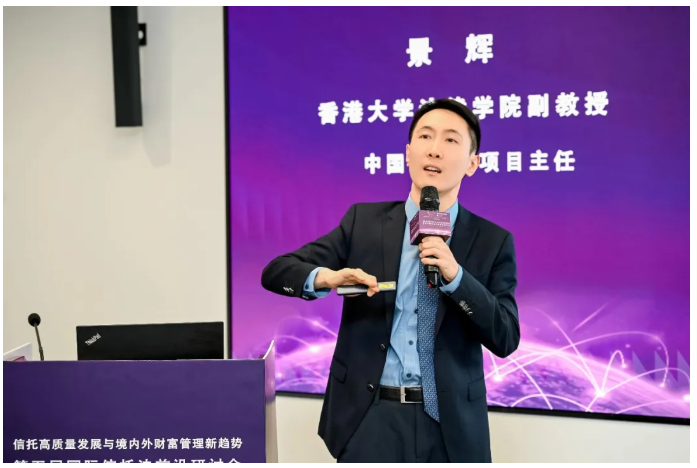
Jing Hui
Associate Professor at the Faculty of Law, The University of Hong Kong, and Director of the Master of Chinese Law Program
Jing Hui, Associate Professor at the Faculty of Law, The University of Hong Kong, and Director of the Master of Chinese Law Program, delivered a keynote speech titled “A Comparative Study of Case Law on the Settlor’s Control in the Common Law System.” He pointed out that there is no uniform standard for adjudicating settlor control within the Commonwealth legal system. He compared three authoritative precedents from the High Court of Australia, the Privy Council of the United Kingdom, and the Court of Final Appeal of Hong Kong, using a three-dimensional analytical framework to comprehensively evaluate the cases based on three dimensions: the intensity of judicial intervention, the extent of the settlor’s actual control, and the ability to derive benefit from the trust. He distinguished between three scenarios—debt recovery, division of marital property, and regulatory reporting—and categorized them into high, medium, and low levels of judicial intervention. He emphasized that control rights alone do not necessarily invalidate a trust; rather, the intensity of intervention by the relevant legal system, the extent of the settlor’s control, and the settlor’s actual ability to derive personal benefits from the trust’s assets collectively support a series of legally distinct responses ranging from weak to strong.
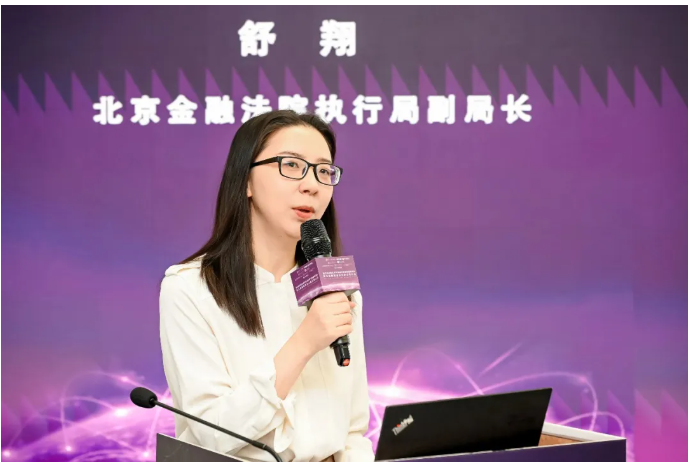
Shu Xiang, Deputy Director of the Enforcement Bureau at the Beijing Financial Court, delivered a keynote speech titled “Value Concepts and Discretionary Logic in the Adjudication of Commercial Trust Disputes.” She pointed out that the number of commercial trust disputes is currently increasing year by year, with legal relationships often involving multiple layers of nesting and multiple parties. She argued that in adjudicating such cases, it is necessary to strike a balance among four key relationships: contractual autonomy and the trustee’s fiduciary duty; investor protection and financial stability; fostering innovation and risk management; and judicial restraint and professional judgment. She shared her perspectives on identifying legal relationships, appropriately piercing through transaction structures, verifying key obligations, and establishing causation in the adjudication of such disputes. She argued that consistent judicial standards should be applied to guide trusts back to their original purpose and safeguard the healthy and stable development of the trust industry.
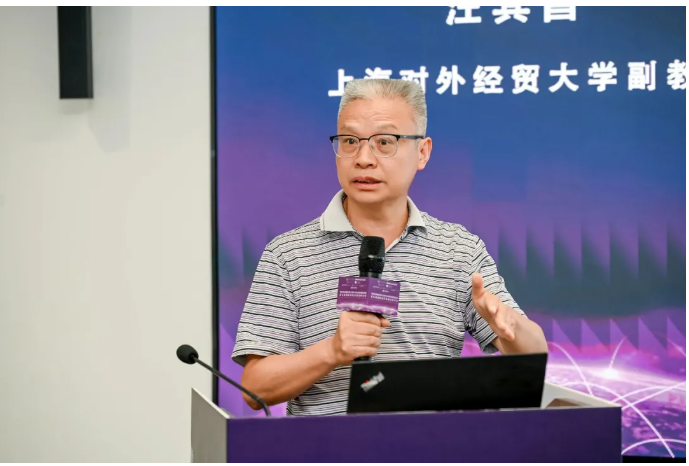
Wang Qichang
Associate Professor, Shanghai University of International Business and Economics
Wang Qichang, Associate Professor at Shanghai University of International Business and Economics, delivered a keynote speech titled “Judicial Determination of the Settlor’s Retention of Control and the Denial of Trust Property Independence in Family Trusts.” He pointed out that China’s Trust Law, constrained by historical and contemporary limitations, lacks a sufficient understanding of the relationship between Anglo-American equity law, trust property independence, and the abuse of control, making it difficult to adapt to new developments such as offshore equity trusts. Drawing on judicial precedents, he identified nine scenarios and conditions under which the independence of trust property may be denied, including situations where the settlor exercises discretionary authority, sham trusts, fraudulent transfers, tax evasion, and the failure to simultaneously transfer risk and reward. Determining whether a settlor has abused control or whether the independence of trust property should be denied cannot rely solely on written contracts; it must be assessed in conjunction with actual operational records, adhering to the principle of substance over form. He emphasized that a core tenet of trust law is the creation of a governance mechanism featuring checks and balances among multiple parties through the separation of rights and division of labor; the settlor’s retention of control must be subject to checks and limitations. He suggested incorporating foreign case law to refine domestic legal principles, align with international adjudication standards, and enhance the cross-border applicability of China’s trust laws.
Roundtable Discussion: Analysis of Trust Dispute Cases
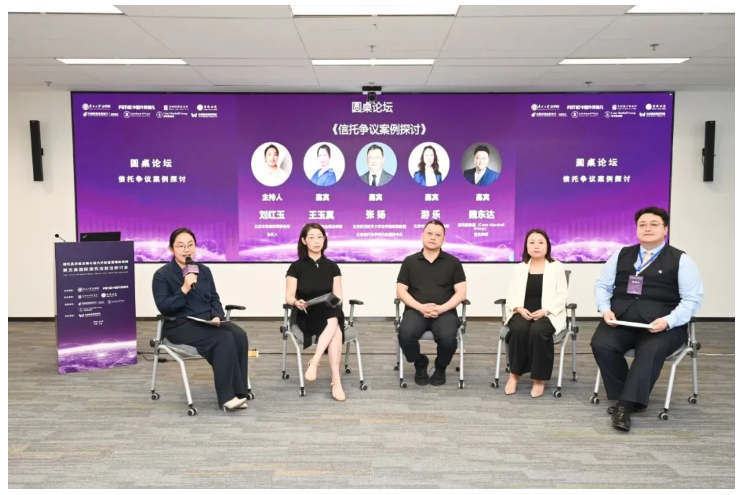
During the roundtable discussion, Liu Hongyu, a partner at Beijing King&Capital Law Firm, served as moderator. Wang Yuzhen, General Manager of the Compliance and Legal Department at China Foreign Trade Trust; Zhang Yang, Assistant Professor at the School of Law, Beihang University, and Deputy Secretary-General of the Beijing Trust Law Research Association; You Le, an attorney at Beijing King&Capital Law Firm; and Wei Dongda, a trust attorney at Cone Marshall Group, served as panelists and discussed “Trust Dispute Cases.”
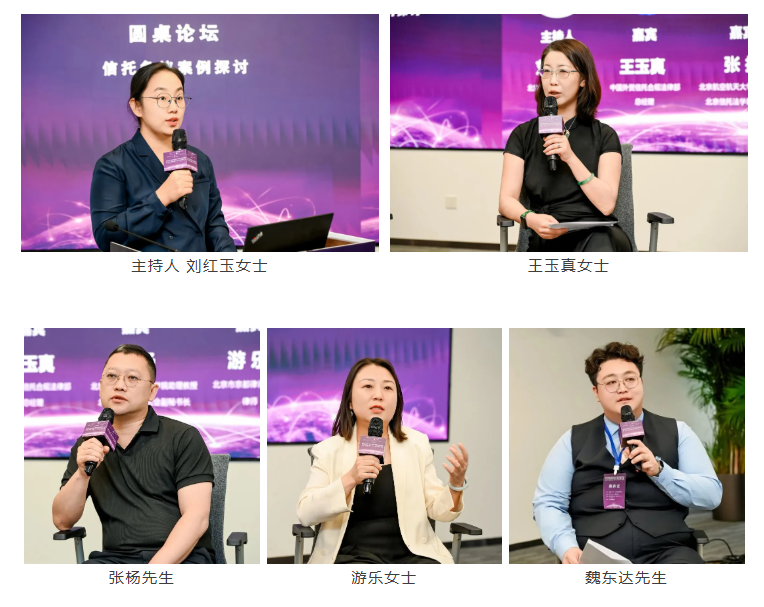 ed that terms such as “fictitious trusts” and “trust penetration” are merely preferred expressions in common parlance; their legal essence lies in the invalidity or revocability of the trust. Legally, these situations are already covered by Articles 11 and 12 of China’s Trust Law, so no new legislation is required. However, for cases where a trust becomes revocable due to excessive control by the settlor, it would be appropriate to refine the criteria for determination through flexible means such as case law and meeting minutes. Furthermore, he explained that to strengthen the protection of the independence of trust property under lawful circumstances, consideration could be given to explicitly reinforcing the principle of trust property independence during the revision of the Trust Law.
You Le pointed out that when designing the retention of settlor rights, a distinction must be made between high-risk control rights and safety-supervision rights. Absolute control rights—such as the right to unilaterally revoke the trust or arbitrarily distribute assets—can easily undermine the integrity of the trust; these should be replaced with a “right to recommend/veto + third-party checks and balances” model. Supervisory rights, such as the right to inspect records and hold parties accountable, may be retained to balance controllable succession with asset isolation, in accordance with legitimate trust purposes. Regarding the risk of trust property being subject to compulsory enforcement, she emphasized that this can be addressed by ensuring the compliance of the trust property’s source, the trust purpose, and the trust structure prior to the trust’s establishment, as well as by actively responding to lawsuits, mounting defenses, and mitigating losses after the trust is established.
Wei Dongda pointed out that offshore jurisdictions such as the British Virgin Islands (BVI) and the Cayman Islands permit settlors to retain certain rights at the legislative level; however, factors such as the type of rights retained, the timing of the trust’s establishment, and whether the trust is actually in operation must be considered, otherwise there remains a risk of the trust being deemed a sham. Furthermore, he mentioned that the inclusion of firewall clauses only hinders the recognition and enforcement of foreign judgments in offshore jurisdictions; they cannot be used to circumvent personal enforcement by foreign judicial authorities, re-litigation in offshore jurisdictions, or CRS/FATCA tax reporting obligations.
Finally, Xiao Shuwei, Senior Partner and Party Committee Secretary at Beijing King&Capital Law Firm, delivered the closing remarks. He noted that this two-day practical seminar on the trust industry brought together academic experts, judges, and industry professionals, combining legal depth, practical orientation, and local applicability. Participants listened attentively throughout the event, engaged in thorough discussions, and achieved fruitful outcomes in exploring various cutting-edge topics. He noted that the successful hosting of this conference was made possible by the close cooperation of all parties. He expressed special gratitude to the organizing team and all guest speakers for their dedicated contributions, as well as to the various trust institutions and law firms for their active participation. He looked forward to gathering again in the future to continue deepening research on wealth trusts and business trusts, build a higher-quality platform for industry exchange, and promote the high-quality development of China’s trust industry.
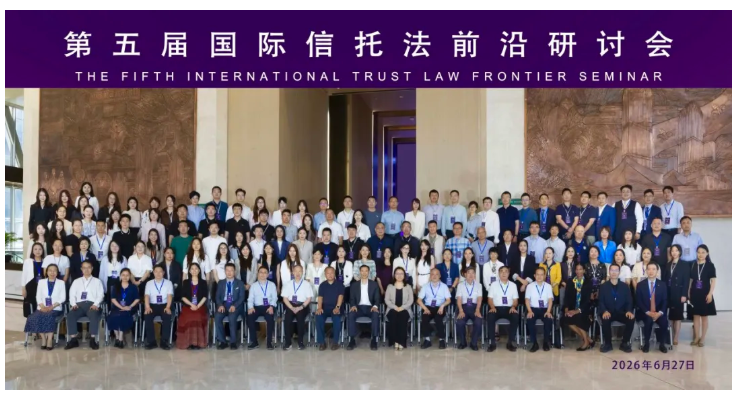
With that, the agenda for Sub-Forum B concluded successfully