


With three decades of deep expertise in criminal defense, we forge ahead with dedication to embark on a new journey. On May 9, 2026, the inauguration ceremony of the King&Capital Law Firm Criminal Law Professional Committee and the Symposium on the Frontiers of Criminal Justice in the New Era were successfully held in Beijing. Fan Chongyi, Honorary Dean of the Institute of Litigation Studies at China University of Political Science and Law and doctoral supervisor; Tian Wenchang, Honorary Director of King&Capital Law Firm; Huang Taiyun, Professor at the School of Law, Tianjin University; Gao Guijun, former member of the Judicial Committee of the Supreme People’s Court and former Head of the Fifth Criminal Division; Lu Jianping, Professor at the School of Law, Beijing Normal University and doctoral supervisor; Liu Pinxin, Professor at the School of Law, Renmin University of China and doctoral supervisor; Zhu Yonghui, Director of King&Capital Law Firm; Yang Zhaodong, Director of the King&Capital Law Firm Criminal Law Committee; Men Jinling, Senior Partner at Beijing King&Capital Law Firm; and Chu Changzhi, Managing Partner and CEO of Beijing King&Capital Law Firm, gathered to witness the committee’s establishment and engage in discussions on topics including the protection of private entrepreneurs’ rights and criminal defense, new approaches to defending against official misconduct under the revised “Supervision Law,” and transformations in criminal defense strategies for new types of crimes in the era of AI and big data.

The first segment of the event featured the inauguration ceremony for the King&Capital Law Firm Criminal Law Committee, presided over by Xia Jun, Secretary-General of the Committee. She noted that King&Capital Law Firm has consistently dedicated itself to the field of criminal law, earning trust through professionalism and building a reputation through dedication. The establishment of the King&Capital Law Firm Criminal Law Committee represents a major initiative by the firm to consolidate the efforts of its headquarters and branch offices, integrate national resources, and optimize its professional structure. The establishment of the King&Capital Law Firm Criminal Law Committee holds profound significance.

Zhu Yonghui, Director of King&Capital Law Firm, delivered the welcome address. He noted that criminal law practice is the foundation of King&Capital Law Firm, having achieved remarkable results over the past thirty years. Moving forward, the Criminal Law Committee will further consolidate resources to continuously strengthen the King&Capital criminal defense brand. At the same time, he emphasized that criminal law practice concerns the freedom of clients and the development of the rule of law; King&Capital will remain committed to the original mission of upholding the rule of law and work with industry peers to advance the development of criminal legal services. In closing, he expressed gratitude to the attending experts, scholars, and fellow lawyers, and wished the event every success.

Professor Fan Chongyi, advisor to the Kyoto Criminal Law Committee, delivered a presentation titled “Building the Quality of Criminal Case Handling in the New Era.” Drawing on the national requirements for high-quality development and relevant initiatives from the Supreme People’s Procuratorate, he emphasized that the quality of criminal defense is currently the industry’s top priority. He noted that the industry now places higher demands on lawyers to handle cases in a specialized, standardized, and digitalized manner. After analyzing the prominent issues currently facing lawyers in case handling, he proposed specific pathways for improvement across multiple dimensions, including judicial philosophy, admissibility of evidence, professional development, and professional ethics. He expressed his hope that the King&Capital Law Firm Criminal Defense Committee would take case quality as its core focus, further play a leading role, and drive the high-quality development of criminal defense.

In his remarks, Tian Wenchang, Founding Partner and Honorary Director of King&Capital Law Firm, noted that the firm has recently established multiple research centers and professional committees, fostering a strong atmosphere of theoretical research and in-depth practice. He pointed out that the core mission of the King&Capital Criminal Defense Committee is to enhance criminal defense capabilities and case handling quality, while integrating criminal defense resources across the main office and branch offices. “The Kyoto Criminal Defense Committee will not only strengthen its own practice but also uphold impartiality, continue to conduct pro bono criminal defense training, set a benchmark for criminal defense lawyers nationwide, and shoulder the important responsibility of driving the development of the industry.”

Yang Zhaodong, Director of the Kyoto Criminal Defense Committee, delivered a speech on behalf of the committee. He noted that after three decades of development, Kyoto’s criminal defense practice has become a hallmark of excellence in the industry, and the establishment of the committee is undoubtedly a significant milestone that builds on past achievements and ushers in a new chapter. He further outlined the committee’s organizational structure and stated that in the future, the committee will focus on three key areas—theoretical research, skill enhancement, and resource integration—to continuously strengthen its professional capabilities and expand its influence within the industry.
Amid a rousing countdown from the audience, the event reached its highlight—the unveiling ceremony for the King&Capital Law Firm Criminal Defense Professional Committee officially commenced. Guests including Fan Chongyi, Tian Wenchang, Huang Taiyun, Gao Guijun, Lu Jianping, Liu Pinxin, Zhu Yonghui, Yang Zhaodong, Chu Changzhi, and Men Jinling took the stage together to unveil the plaque for the King&Capital Law Firm Criminal Defense Professional Committee, witnessing this momentous occasion marking its official establishment. Zhu Yonghui, Yang Zhaodong, and Chu Changzhi presented letters of appointment to the advisors.
Following this, a certificate presentation ceremony was held on-site. Tian Wenchang and Yang Zhaodong jointly presented certificates to the 12 heads of specialized groups: Liang Yali, Zang Desheng, Yang Bailin, Fu Rongrong, Han Ruiqi, Fu Qingtao, Yang Haiming, Ma Lixi, Xu Wei, Wang Jiaming, Li Jingyu, and Zhang Xiaofeng.
Focus on the Protection of Private Entrepreneurs’ Rights and Criminal Defense

Following the inauguration ceremony of the King&Capital Law Firm Criminal Law Committee, the event proceeded to the seminar session on “Protection of Private Entrepreneurs’ Rights and Criminal Defense,” which was moderated by Zhu Yalin, Deputy Secretary-General of the King&Capital Law Firm Criminal Law Committee. She noted that the protection of private entrepreneurs’ rights has been a key focus area for the King&Capital Law Firm for many years. In particular, with the implementation of new regulations, related criminal defense practices face new challenges, placing higher demands on lawyers to update their professional knowledge and adapt their thinking. She further noted that criminal defense for private enterprises involves a wide range of issues, requires a high degree of specialization, and presents numerous complex practical challenges. The establishment of the King&Capital Law Firm Criminal Defense Committee will provide a platform for long-term collaboration and mutual professional development among criminal defense practitioners, helping lawyers enhance their professional capabilities and fully safeguard the legitimate rights and interests of private entrepreneurs.

Professor Lu Jianping, an advisor to the King&Capital Law Firm Criminal Defense Committee, delivered the opening address. Against the backdrop of the first anniversary of the implementation of the Law on the Promotion of the Private Economy, he shared insights on the history and future prospects of criminal defense for private enterprises. Using several representative cases as examples, he reviewed the tortuous journey of private economic development and criminal defense for private enterprises. Citing data from long-term research, he pointed out that current judicial practice still suffers from unequal protection between public and private entities, with stricter standards for criminalizing private enterprises, and that relevant new regulations may exacerbate this phenomenon. He emphasized that the governance of crimes involving private enterprises requires a dual approach addressing both internal and external factors, with the core being the implementation of judicial equality between public and private entities. In conclusion, he expressed his hope that the King&Capital Law Firm Criminal Law Committee would continue to deepen its efforts in protecting the rights and interests of private entrepreneurs and contribute to improving the legal safeguards for the private economy.

During the panel discussion, attorneys Yang Daming, Qin Yong, Wang Qipei, Liang Yali, Yang Bailin, Han Ruiqi, and Fu Qingtao took the stage together to discuss the protection of private enterprises’ rights and the prevention and control of criminal legal risks for private entrepreneurs in light of the issuance of the “Interpretation (II) on Several Issues Concerning the Application of Law in Handling Criminal Cases of Embezzlement and Bribery.”

Yang Daming, Deputy Director of the King&Capital Law Firm’s Criminal Defense Committee, drew upon the firm’s three decades of experience in criminal defense and classic business-related cases to emphasize that the core of criminal defense for private enterprises lies in the choice of stance; lawyers must adopt a defense perspective and steadfastly uphold the protection of private enterprises’ rights and interests. At the same time, citing the latest judicial regulations, he noted that with the formal implementation of the principle of equal treatment and punishment for both public and private sectors, criminal risks for private entrepreneurs and corporate executives have significantly increased, and criminal defense lawyers will face both greater professional opportunities and heightened responsibilities.

Qin Yong, Director of Beijing King&Capital (Chongqing) Law Firm and Deputy Director of the King&Capital Criminal Law Committee, analyzed the situation from the perspective of the alignment between economic foundations and the rule of law. He noted that the enactment of the “Law on the Promotion of the Private Economy” indirectly reflects that the private sector remains in a relatively disadvantaged position in both the market and the judicial spheres. He argued that, compared to protection through specialized legislation, private enterprises require equal judicial protection. At the same time, he urged private entrepreneurs to conduct business prudently and avoid professional and integrity-related risks.
I
Wang Qipei, a lawyer at Beijing King&Capital (Zhengzhou) Law Firm and Deputy Director of the Jingdu Criminal Law Committee, shared insights focused on the details of frontline case handling. She noted that the implementation of the new regulations provides a legal basis for equal protection in defense, effectively refuting one-sided arguments that criminalize cases based solely on tax revenue or business scale. She also noted that criminal defense in business-related cases requires lawyers to strengthen their professional capabilities and initiative. To address practical challenges such as ambiguous policy evolution, changes in administrative agencies, and difficulties in obtaining specialized evidence, lawyers must thoroughly study industry policies, clarify departmental responsibilities, and proactively verify and collect evidence. This involves transforming clients’ verbal defenses into legally valid factual grounds to effectively safeguard the legitimate rights and interests of enterprises.

Liang Yali, head of the Mineral Resources Crime Defense Specialized Group at the King&Capital Law Firm, drawing on her years of experience handling major corporate criminal cases, noted that such cases are both complex and specialized. Procedurally, they often involve the integration of civil and criminal proceedings, as well as administrative and criminal proceedings. and, in terms of subject matter, they involve the intertwined characteristics of multiple fields, including mine production safety, illegal mining, mine equity acquisitions, project acquisitions, foreign exchange transactions, the circulation of financial instruments, the import and export supervision of mineral products, as well as stock issuance and information disclosure by listed companies. These factors constitute the challenges in handling such cases, and the breakthroughs in defense often lie not in abstract legal provisions themselves, but in a comprehensive analysis of industry rules, transaction practices, approval and regulatory processes, and specialized knowledge. She argued that defense strategies for such cases should not be confined to the specifics of individual cases. Instead, they must transcend the narrow perspective of individual legal provisions, integrate criminal policy, and balance legal outcomes with social impacts to help enterprises mitigate criminal risks and maintain market stability.

Yang Bailin, Partner at Beijing King&Capital (Shanghai) Law Firm and Head of the Financial Crime Defense Group 1 under the King&Capital Criminal Law Committee, analyzed three typical types of criminal cases involving private entrepreneurs. He pointed out that criminal cases involving private enterprises often involve the overlap between criminal and civil law, as well as confusion between civil fraud and criminal fraud. He noted that in practice, there is often a one-sided judicial logic that directly equates mere property loss with the consequences of a criminal offense and presumes the subjective intent of unlawful possession. He further emphasized that defense strategies must strictly distinguish between civil risks and criminal offenses, rejecting the practice of attributing criminal liability solely based on outcomes.

Han Ruiqi, Head of the Tax-Related Crime Defense Group at the King&Capital Law Firm, focused his presentation on corporate tax-related criminal risks. He noted that while tax regulation is currently tightening, updates to fiscal and tax policies lag behind the development of the innovative economy. Furthermore, certain judicial concepts are flawed; for instance, the crime of issuing fraudulent invoices is still subject to a one-sided judicial approach that treats it as a “crime of conduct,” overlooking the core element of tax loss required for conviction. He called on criminal defense attorneys to uphold professional standards, clearly asserting that the crime of issuing fraudulent invoices does not constitute a crime without tax loss, and to use professional defense strategies to correct improper judicial concepts and safeguard corporate compliance.

Fu Qingtao, head of the Smuggling Crime Defense Specialized Group at the Kyoto Criminal Law Committee, pointed out that against the backdrop of tightening foreign trade regulations, smuggling cases are occurring frequently, presenting both opportunities for defense and significant challenges. He further outlined key defense arguments, including regulatory circumvention, social harmfulness, evidentiary flaws, and the determination of tax-related amounts, emphasizing that defense in such cases must prioritize safeguarding enterprises’ legitimate property rights and standardizing procedures for the seizure, detention, and confiscation of involved assets. He proposed establishing an integrated service system for import-export enterprises that combines criminal defense, compliance building, and risk prevention and control to support the steady development of foreign trade enterprises.
Exploring New Approaches to Defending Against Official Misconduct Cases Under the New “Supervision Law”

This session focused on “New Approaches to Defending Official Misconduct Cases Under the New Supervision Law” and was moderated by Wang Xintong, Deputy Secretary-General of the King&Capital Law Firm. Drawing on the latest judicial data, the implementation outcomes of the new Supervision Law, and the context surrounding the implementation of new judicial interpretations, she highlighted the new changes and practical challenges currently facing the defense of official misconduct cases, emphasizing that criminal defense attorneys urgently need to refine their expertise and update their defense strategies. In conclusion, she summarized that the difficulty of defending against official misconduct cases continues to increase under the new circumstances. She noted that this seminar effectively fostered professional consensus and provided fresh practical approaches and methods for addressing the challenges of such defense and improving the quality of effective representation.

Men Jinling, Advisor to the Kyoto Criminal Law Committee, delivered the keynote presentation. She focused on interpreting relevant provisions of the “Implementation Regulations of the Supervision Law,” pointing out that the widespread practice of restrictively applying the simultaneous audio-visual recording system in practice is highly likely to lead to defects in the legality of evidence and risks of wrongful convictions. At the same time, she clarified that the application of the 2026 Judicial Interpretation (II) on Embezzlement and Bribery must strictly adhere to the principles of applying the older law and applying the more lenient provision, thereby preventing improper retroactive application. Addressing the challenges of defending against official misconduct cases, she proposed a new “flat” defense approach that is comprehensive and covers the entire process. She emphasized that defense attorneys must abandon a narrow, single-point defense mindset and instead delve deeply into the details of the entire case process, thereby helping the criminal defense industry move toward greater precision and professionalism.

Following the keynote presentation, the session moved into a panel discussion. Several senior attorneys from the Kyoto Criminal Law Committee shared new practical defense strategies, drawing on their dual perspectives as both prosecutors and defense counsel, as well as their frontline case handling experience.

Liu Lijie, Deputy Director of the Kyoto Criminal Law Committee, cited typical cases to point out that the handling of certain official misconduct cases currently exhibits a tendency toward quota-driven approaches and an overemphasis on monetary amounts. The problem of relying on verbal evidence to reach a verdict has become increasingly prominent, leading to a series of issues such as a substantial lowering of evidentiary standards and the erosion of effective defense. In response, he proposed three core defense strategies: breaking through evidence-based defense by focusing on professional details; shifting defense efforts comprehensively to the pre-trial review stage; and accurately grasping the legal positioning of supervisory authorities. He advocated for vigorously arguing cases based on sound reasoning to achieve optimal defense outcomes within a framework that organically unifies these three objectives.

Wang Jinlian, Partner at Beijing King&Capital (Dalian) Law Firm and Deputy Director of the King&Capital Criminal Law Committee, focused on the challenges of deconstructing testimonial evidence. She noted that the high degree of homogeneity and consistency in details of testimonial evidence in official duty crime cases is a common issue in practice. Lawyers can address this by requesting access to full-process synchronized audio-visual recordings and proactively seeking new evidence to identify illegal evidence and break through the “evidence loop.” At the same time, she noted that although lawyers do not have the right to meet with clients during the supervisory investigation phase, they can expand the scope of defense by providing legal consultation and compliance guidance to family members, assisting them in applying for changes to coercive measures, and safeguarding the enterprise’s property and operational rights, thereby achieving effective defense throughout the entire process.

Zang Desheng, head of the first specialized group for defense in official misconduct cases at the Beijing Criminal Law Committee, focused his analysis on the currently prevalent cases of bribery and accepting bribes based on verbal agreements. He pointed out judicial irregularities in such cases, including convictions based solely on verbal agreements, disproportionately heavy sentencing due to the cumulative calculation of attempted bribery amounts, and bribe givers being unjustly burdened with massive confiscation liabilities. He emphasized the need to strictly distinguish, from a legal perspective, between the manifestation of criminal intent and the actual commission of a crime; to rigorously adhere to the three key criteria for conviction—clear solicitation of favors, fixed terms of the agreement, and an unrevoked mutual consent—and to strictly uphold the principle of legality in criminal law to prevent overbroad convictions and improper asset forfeiture.

Fu Rongrong, Senior Partner at Beijing King&Capital (Chongqing) Law Firm and Head of the Second Professional Group for Defense Against Official Misconduct at the King&Capital Criminal Law Committee, began by analyzing a typical case of a reversed second-instance judgment to share cross-examination techniques for professional price appraisal reports. By dissecting the entire defense process in a bribery case involving the purchase of a property at a below-market price, she summarized a practical methodology of “early case file review, meticulous verification, thorough investigation, and systematic organization.” She emphasized that defense counsel must not blindly accept expert appraisal conclusions but must instead thoroughly examine the working papers of the report, verify the basis for comparisons, and identify any omitted factors that may have influenced the outcome. Through meticulous cross-examination to achieve effective defense, counsel can help clients secure significant reductions in fines and sentences.
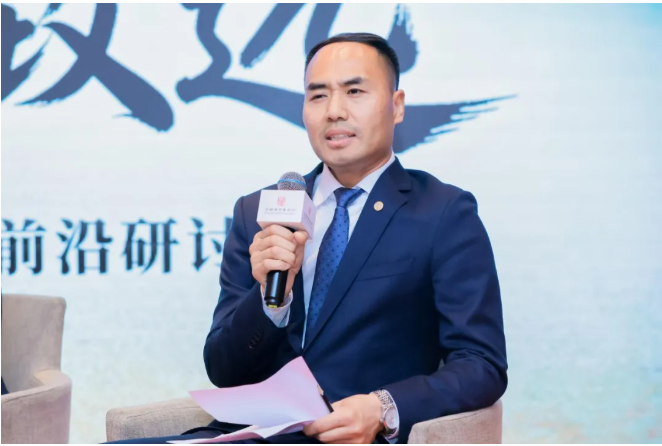

The fourth session of the seminar focused on the theme “Transformations in Criminal Defense in the Era of AI and Big Data” and was moderated by Sun Guangzhi, Deputy Secretary-General of the Kyoto Criminal Defense Committee. Drawing on typical cases and the current state of the judiciary, Sun pointed out that the use of intelligent systems in case handling by public security, procuratorial, and judicial authorities has become the norm, and that the criminal defense industry urgently needs to address its technological shortcomings. He emphasized that lawyers should cultivate a skeptical mindset and carefully evaluate the conclusions of AI tools, while expressing hope for the establishment of an industry-specific big data system to empower criminal defense practice. In his concluding remarks, he noted that technological change drives industry progress; criminal defense lawyers should embrace technological innovation, remain true to their professional integrity, and achieve an organic integration of intelligent tools with traditional defense capabilities to comprehensively enhance the quality and effectiveness of defense in cases involving new types of crimes.

Professor Liu Pinxin, an advisor to the King&Capital Law Firm Criminal Defense Committee, delivered a keynote speech focusing on how AI can assist lawyers. He systematically outlined the iterative evolution of criminal defense, dividing the industry’s development into three major stages: manual case file review, intelligent assistance, and deep AI empowerment. Drawing on a vast array of practical case examples, Liu Pinxin pointed out that traditional manual case file review struggles to handle case scenarios involving terabytes of electronic data, tens of millions of chat records, and billions of data entries. This approach is inefficient and highly prone to overlooking critical evidence that could prove innocence or mitigate charges. Currently, by leveraging localized AI tools, scripted algorithms, and big data analytics, it is possible to efficiently identify flaws in prosecution evidence and secure key defense evidence within a short timeframe. At the same time, he emphasized that localized AI-driven case handling offers core advantages of efficiency, confidentiality, and iterability, capable of thoroughly revolutionizing traditional criminal defense models and helping lawyers transition from “file handling” to “strategic empowerment.”

Following the keynote presentation, the seminar proceeded to a panel discussion. Several senior attorneys from the Kyoto Criminal Defense Committee drew upon their respective professional fields and practical experience to engage in an in-depth exchange on the transformation of criminal defense in the era of AI and big data from diverse perspectives.

During the panel discussion, Xu Ying, Deputy Director of the Kyoto Criminal Defense Committee, centered her remarks on the concept of “forced transformation.” She argued that the widespread adoption of AI and big data technologies is forcefully driving criminal defense lawyers to transform and upgrade their practices. As judicial authorities’ intelligent case handling matures, the anxiety stemming from the industry’s technological gap has become increasingly pronounced. She proposed that criminal defense lawyers in the new era must achieve six core transformations: transitioning from single-discipline legal expertise to a hybrid of law and technology; shifting from mere case file handlers to strategic designers; conducting evidence review and cross-examination that penetrates to the substance, while enhancing the ability to examine electronic data; shifting from the mere accumulation of legal provisions to precise and in-depth reasoning; and moving from a narrow criminal law mindset to a trinity of criminal, civil, and administrative law thinking; while simultaneously maintaining a humanistic approach to case handling. She specifically cautioned that lawyers must possess independent discernment, remain constantly vigilant against AI information bias, and use professional judgment to master technological tools rather than being overwhelmed by technology.

Nie Sufang, Deputy Director of the Kyoto Criminal Defense Committee, took a holistic view of the industry’s development and dialectically elucidated the core logic of “what changes and what remains constant” in criminal defense work in the era of AI and big data transformation. She noted that current crime patterns, methods of commission, forms of evidence, and case-handling technologies are continuously evolving. With the frequent emergence of new types of illegal activities and electronic data becoming the core evidence in cases, defense strategies and methods of cross-examination are being forced to constantly adjust and iterate. However, she emphasized that the core competitiveness of criminal defense remains unchanged. A lawyer’s core humanistic competencies—including criminal defense skills, practical experience, professional analysis of complex information, empathetic communication, and courtroom management—constitute a core barrier that AI cannot replace. “An outstanding criminal defense lawyer should look beyond the surface of complex technology to grasp the essence of the law, remain true to the professional spirit of criminal defense, and adapt to the evolving nature of new cases with a solid foundation in traditional skills, thereby achieving an organic integration of technological empowerment and professional integrity.”

Yang Haiming, head of the Intellectual Property Crime Defense Subcommittee of the King&Capital Law Firm, conducted an in-depth analysis of the new forms of criminal activity driven by AI. He pointed out that as new types of crimes continue to emerge, they have transcended the boundaries of traditional cybercrime, posing entirely new challenges to the application of criminal law and the standards for criminal liability. Drawing on the latest representative cases from 2026, he outlined key points for applying new regulations such as the Cybersecurity Law and the Measures for the Identification of AI-Generated and Synthetic Content. He emphasized that in adjudicating new forms of AI-related crimes, it is essential to strictly adhere to the principle of legality, carefully distinguish between technologically neutral acts and criminal conduct, and precisely define the boundaries of criminal liability. He emphasized that criminal defense attorneys must continuously monitor developments in technology and legal regulations, update their knowledge systems accordingly, and precisely address the challenges of defending against new types of crimes.

Wang Jiaming, head of the Second Financial Crime Defense Group at the King&Capital Law Firm, has long specialized in the fields of financial and securities crimes. In this session, she discussed innovations in the defense of new types of financial crimes in the era of big data. She noted that, in the digital era, securities and futures crimes have completely moved away from traditional manual methods. Quantitative trading and high-frequency algorithmic trading have given rise to new forms of market manipulation and insider trading that are highly covert, cross-regional, and contactless. The investigative logic of judicial authorities has shifted from the traditional “causal tracing” approach to “presuming subjective intent through data correlations,” marking a fundamental transformation in the attribution of criminal liability. In response, she pioneered a core approach to technical defense, advocating for a breakthrough beyond the limitations of traditional substantive and procedural defenses. She proposed thoroughly dissecting the prosecution’s data models, algorithmic logic, and underlying trading rules to refute improper data inferences from a technical standpoint, thereby resolving the challenges faced in defending against new types of financial crimes.

Xu Wei, head of the Cybercrime Defense Expert Group at the King&Capital Law Firm, summarized five major trends in criminal defense during the AI and big data era based on cutting-edge practices in cybercrime. He noted that all types of traditional crimes now commonly exhibit new characteristics involving the internet and data. Data cross-examination, computational power confrontation, and substantive review of expert opinions have become the core breakthroughs and key leverage points in defending new types of criminal cases. Drawing on typical cases from the latest white papers issued by the Supreme People’s Court and the Supreme People’s Procuratorate, he pointed out that new types of cases—such as the destruction of AI databases and on-chain and off-chain money laundering—are occurring frequently, placing extremely high demands on lawyers’ technical verification capabilities. He emphasized that the core of defending complex and challenging cases in the future lies in the confrontation between computational power and technology. Lawyers must proactively learn big data screening and AI data analysis skills, leverage professional intelligent tools to solve the challenges of cross-examining massive amounts of evidence, and simultaneously recognize the value of investing in intelligent case-handling equipment to adapt to industry technological trends.

Li Jingyu, head of the Criminal Defense Specialized Group for Crimes Against Personal Rights at the King&Capital Law Firm, drew upon his experience in traditional personal rights and sex crime defense cases. Upholding the philosophy of “people-oriented, upholding integrity while innovating,” he shared practical insights. He stated that AI and big data are merely tools to assist in case handling; the core of criminal defense remains a deep understanding of the elements of a crime and the reconstruction of factual circumstances. Regarding complex cases involving one-on-one evidence, such as rape, he demonstrated through practical case studies that technological tracing methods can be leveraged to refute false accusations and secure exculpatory evidence. He believes that criminal defense attorneys must both “aim for the stars” by effectively utilizing technological tools to enhance case handling, and “keep their feet on the ground” by deepening their traditional professional expertise. They must uphold the essence of the case and legal principles, achieving an organic integration of technological tools and traditional criminal defense wisdom.
Closing Remarks and Successful Conclusion of the Conference

On the same day, Yang Zhaodong, Director of the Kyoto Criminal Defense Committee, conducted a comprehensive review and in-depth summary of the discussions across the three sessions. Regarding the protection of private entrepreneurs’ rights, he acknowledged that current judicial practice involves differential treatment between public and private entities, and that judicial protection for the private economy still faces numerous challenges. The Kyoto Criminal Defense Committee will fulfill its social responsibility by using individual cases to advance the rule of law and advocate for the healthy development of the private economy; Regarding the defense of official misconduct cases under the new “Supervision Law,” he pointed out that behind the procedural and standardized case-handling processes of the Supervisory Commission lie loopholes such as sloppy case handling and oversimplified evidence. Lawyers should not shy away from the challenge but, on the contrary, rely on meticulous and professional defense strategies to identify defense points and uphold the bottom line of judicial fairness; Regarding the transformation of criminal defense by AI, he clarified that AI is a tool to assist lawyers, not a competitor. The human touch, value judgments, and emotional communication in criminal defense are core advantages that artificial intelligence cannot replicate. He called on the King&Capital Law Firm to proactively embrace technology while remaining true to its professional ethos. At the same time, he urged the King&Capital Law Firm to put into practice the philosophy of “advancing legislation through individual cases,” deepening theoretical understanding and empowering practical work to facilitate the standardized and high-end development of the criminal defense industry.

Finally, Chu Changzhi, Managing Partner and CEO of King&Capital Law Firm in Beijing, delivered the closing remarks. He stated that criminal law practice is the foundation and core DNA of King&Capital Law Firm. Over the years, King&Capital has continuously focused on cultivating criminal defense talent, conducting theoretical research, and empowering the industry, driving the standardization of the criminal defense sector and contributing King&Capital’s strength to the development of criminal defense nationwide. He outlined four key expectations for the development of the King&Capital Law Firm Criminal Law Committee: deepening professional expertise to establish industry standards; empowering all staff to build a tiered talent development system; tackling major cases to set industry benchmarks; and collaborating with academia to share legal insights. He expressed hope that the Committee would break down resource barriers between the main office and branch offices, build a collaborative and symbiotic “Greater Jingdu” legal service ecosystem, and continue to lead the industry’s high-quality development through premium criminal legal services.
The successful conclusion of this conference marks the entry of King&Capital Law Firm’s criminal defense practice into a new phase characterized by systematization, refinement, and technological advancement. Moving forward, the King&Capital Law Firm Criminal Defense Committee will continue to focus on cutting-edge issues in criminal law, deepen practical expertise, refine professional skills, uphold integrity while innovating, empower the rule of law with professional strength, and drive the high-quality development of the criminal defense sector through industry leadership.