

From July 24 to 26, 2026, the 17th Kyoto Criminal Defense Practical Training Seminar was successfully held in Beijing. New and returning participants from various regions across the country—including Shanghai, Fujian, Tibet, and Qinghai—gathered for systematic, hands-on training focused on core topics in courtroom advocacy. The course was led by Tian Wenchang, Honorary Dean of the Advanced Institute of Criminal Defense at Northwest University of Political Science and Law and Honorary Director of King&Capital Law Firm, who served as Chief Advisor. An advisory panel comprising Zhu Yonghui, Director of King&Capital Law Firm, and senior partners Men Jinling, Liang Yali, Zang Desheng, and Sun Guangzhi provided ongoing feedback and guidance throughout the program; senior partners Zhang Qiming, Xu Ying, Weng Xiaoping, and Nie Sufang served as lead instructors. Through three days and two nights of immersive instruction, the team provided participants with a comprehensive and in-depth breakdown and thorough explanation of the key practical aspects of courtroom advocacy.
Remarks by Representatives

Chu Changzhi, Managing Partner and CEO of King&Capital Law Firm, delivered the opening remarks, extending a warm welcome to the instructors and participants in attendance.
Mr. Chu Changzhi noted that courtroom advocacy is one of the most critical core modules of King&Capital’s criminal defense training program. It thoroughly tests criminal defense attorneys’ pre-trial preparation skills and ability to adapt on the spot, serving as a direct reflection of their comprehensive professional competence. He explained that this criminal defense training program was developed based on the well-established criminal defense training system at Northwest University of Political Science and Law. The instructors are all members of the original author team behind the King&Capital Criminal Defense Curriculum. The courses are highly specialized and extremely practical, and the faculty team continuously refines and optimizes the curriculum to deliver even higher-quality instruction. Finally, he emphasized that the training program consistently embodies King&Capital Law Firm’s commitment to its founding mission of public-interest education, precisely cultivating high-quality criminal defense professionals, and hopes to contribute, even in a small way, to the overall professional development of the criminal defense industry.

Zhu Yonghui, Director of King&Capital Law Firm, extended a warm welcome to all participants. He noted that July, August, and September are the peak season for legal practice, and that the participants’ willingness to brave the sweltering heat and set aside their busy schedules to attend the training fully demonstrates their passion for the criminal defense profession. Drawing on his own professional experience, he mentioned that he had studied under Professor Tian Wenchang and believed that Professor Tian’s courtroom advocacy style—characterized by “calmness, proactivity, and thoroughness”—is highly instructive. He pointed out that courtroom advocacy serves as a comprehensive test of a criminal defense attorney’s case preparation, reflecting not only their ability to master case facts, defense arguments, and trial procedures but also honing their professional skills in on-the-spot adaptability. He expressed his hope that during this two-and-a-half-day training, all participants would learn from one another and collectively enhance their practical skills in criminal defense.

In her remarks, Attorney Liang Yali, Director of the King&Capital Criminal Defense Research Center and Senior Partner, expressed sincere appreciation for the continued trust and active participation of both new and returning trainees. She noted that the teaching team is continuously refining the course content to grow alongside the trainees. Liang Yali pointed out that courtroom debate is the quintessential core of criminal defense and the aspect that most rigorously tests a lawyer’s professional competence. Drawing on an analysis of the current state of the industry, she noted that courtroom debates today are generally characterized by the prosecution and defense speaking past one another, lacking effective cross-examination, which makes it difficult to truly persuade the adjudicators and achieve an effective defense. She explained that this course will utilize a vast number of real-world cases to conduct practical training, guiding participants to construct a comprehensive argumentation framework across multiple dimensions—including facts, law, substantive law, procedure, conviction, and sentencing—while deepening their mastery of “calm, proactive, thorough, and rational” advocacy techniques. Finally, she sincerely hoped that participants would gain valuable insights from this hands-on training and refine their practical courtroom advocacy skills.

Attorney Zang Desheng, Director of the Kyoto Research Center for Complex Criminal Cases and Senior Partner, drew upon his more than two decades of experience as both a judge and a lawyer, combining it with insights from extensive courtroom practice. He emphasized that courtroom debate is the climax of criminal defense, requiring not only solid defense arguments but also a scientific approach to presentation. Only through the organic integration of these two elements can defense arguments be accepted by the adjudicators. He candidly acknowledged that achieving a precise balance between content and form is a key challenge in criminal defense practice. He expressed his hope that through this systematic training program, participants would engage in collaborative discussion and refinement to overcome practical bottlenecks in courtroom advocacy and effectively elevate the professional standards of criminal defense.

Attorney Zhang Qiming, Director of the King&Capital Financial Securities Criminal Defense Research Center and Senior Partner, drew on his long-standing professional habit of “pre-trial preparation” to vividly illustrate the importance of thorough preparation for court proceedings. He encouraged all participants to adopt the right attitude toward the practical training, prioritize pre-trial refinement, and solidly hone their debating skills. He explained that this training program features a tiered, practical training system. Through three major components—high-intensity debates on short case scenarios, simulated debriefings of classic cases, and in-depth discussions of real-world complex cases—it comprehensively trains participants’ logical reasoning, on-the-spot adaptability, and courtroom persuasion skills. He expressed his hope that participants would exchange ideas and generate valuable insights through practical debates, thereby not only enhancing their individual capabilities but also providing new perspectives for the practical handling of cases.

Attorney Nie Sufang, Director of the King&Capital Research Center for Fraud Crime Defense and Senior Partner, noted in her remarks that courtroom debate is not only a core component of criminal defense training but also the most challenging module to design and refine; it has consistently attracted enthusiastic participation from trainees and maintained high levels of engagement. She pointed out that as the culminating phase following the presentation of evidence, courtroom debate places extreme demands on a lawyer’s comprehensive professional capabilities. It requires lawyers not only to solidify their professional foundations in evidence assessment and legal application, and to master practical courtroom skills such as questioning and cross-examination, but also to possess advanced abilities in impromptu delivery and flexible adaptation. She emphasized that mechanically reading a defense statement cannot achieve an effective defense; excellent courtroom debate relies on on-the-spot presentation and dynamic exchanges. This training program focuses on refining debating logic and practical techniques, using real-world cases to reshape participants’ defense philosophies, hone their ability to add value in court proceedings, and help them apply what they’ve learned in real court cases, thereby achieving steady improvement in their professional capabilities.
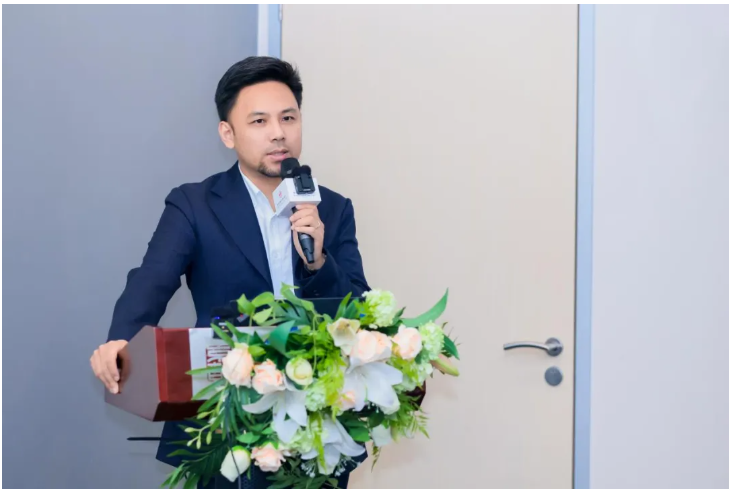
Attorney Weng Xiaoping, Executive Director and Senior Partner of the Kyoto Research Center for Corporate Crime Defense and Prevention, extended a warm welcome to both new and returning trainees gathered once again at Kyoto for the training. Drawing on his experience leading multiple training sessions, he offered three pieces of advice regarding the key learning objectives of this debate training. Weng Xiaoping emphasized that trainees must thoroughly study and fully grasp the training cases in advance, as adequate preparation is key to ensuring individual learning outcomes and enhancing the overall quality of the training. At the same time, he advised each group to clearly assign roles and coordinate their efforts based on the training sessions and case types to ensure that the practical exercises proceed efficiently and in an orderly manner. Finally, he urged all participants to cherish this training opportunity, delve deeply into the core techniques of courtroom debate, and complement one another’s strengths through discussions and practical exercises to achieve mutual progress and gain valuable insights. He also expressed his hope to continue meeting with the participants for future learning sessions and to jointly refine their skills in criminal defense practice.
Special Lecture

On the evening of the 24th, Tian Wenchang delivered a practical lecture titled “Techniques of Courtroom Debate,” providing in-depth training for all participants. He pointed out that criminal courtroom advocacy is an organic synthesis of science and art, combining both standardization and flexibility. Among these elements, “mandatory elements” constitute the essential foundation for criminal defense attorneys. These encompass a solid grasp of legal principles, a comprehensive analysis of the facts, and clear, standardized courtroom expression—forming the core foundation of defense work that must be mastered thoroughly and without omission; Conversely, “optional maneuvers” represent the elevation of a lawyer’s individual professional capabilities. Relying on rigorous logic, appropriate expression, and vivid language to form a unique defense style, they are the key to distinguishing the effectiveness of courtroom defense.
During the lecture, Attorney Tian Wenchang systematically broke down the core practical points of courtroom debate, drawing on his decades of case handling experience and numerous typical and complex cases. He emphasized that courtroom arguments must avoid attempting to cover every detail at the expense of losing sight of the main thread. Lawyers must precisely identify the core issues of a case, be adept at uncovering contradictions within the body of evidence, and simultaneously adhere to a calm and rational communication strategy. Their arguments should be both in-depth yet accessible, well-reasoned and substantiated, while avoiding hollow or emotionally charged statements. He encouraged the trainees to cherish this opportunity for hands-on training, proactively hone their advocacy skills, acknowledge their own weaknesses, and refine their comprehensive courtroom abilities through repeated practice, thereby achieving effective criminal defense through professional and efficient courtroom advocacy.
Practical Training

During the specialized courtroom debate sessions of this training program, attorneys Zhang Qiming, Xu Ying, Weng Xiaoping, and Nie Sufang served as instructors, focusing closely on the core of criminal defense practice and delivering systematic, in-depth lectures on the key challenges and difficulties of courtroom debate. The team of instructors analyzed the appropriate scenarios for different courtroom debate models and, drawing on real courtroom footage, provided detailed explanations of the logic behind prosecution and defense strategies as well as on-the-spot response techniques. At the same time, drawing on cutting-edge defense experience, they imparted practical debate methods and reminded participants to precisely control the pace of the trial and focus on the points of contention to mount precise offensive and defensive strategies. The instructors emphasized that courtroom debate must be grounded in facts and legal basis, minimize subjective statements, and flexibly adjust defense strategies based on evidence and procedural norms to clarify the case’s timeline and maintain control of the trial.
During the theoretical sessions, the instructor team analyzed legislative and judicial changes in courtroom debate following the revision of the Criminal Procedure Law, elucidating how trials have evolved into a modern framework characterized by adversarial proceedings between the prosecution and defense, with the judge acting as a neutral arbiter. The lectures directly addressed practical challenges in current criminal defense practice, systematically outlining taboos and behavioral red lines in courtroom debate. The instructors emphasized the core principle that arguments must remain objective and evidence-based, while strictly avoiding behaviors such as misleading the court or raising invalid defenses. Using typical case studies, they dissected common practical issues and shared methods for conducting proper arguments and making on-the-spot corrections, helping participants refine their professional, rational, and efficient debating skills to achieve precise and effective defense.

During the brainstorming and practical simulation sessions, participants engaged in discussions on the core objectives and value of courtroom advocacy, key points for pre-trial preparation, strategies for prosecution-defense confrontation, methods for analyzing points of contention in cases, and practical experience and taboos in courtroom advocacy, freely expressing their views and exchanging ideas. Not only did participants hone their on-the-spot delivery and practical skills for courtroom debate through multiple rounds of group mock trials, but the program also featured a special demonstration by the winning team from the finals of Beijing’s first “Young Lawyers’ Criminal Moot Court Competition”—attorneys from King&Capital Law Firm, including Feng Wang, Qian Hao, Xu Wei, Zheng Xuan, Chen Sainan, and Liu Bingyang.


The advisory and faculty teams provided on-site guidance and group-by-group feedback throughout the program. During realistic adversarial training, they guided participants in refining their abilities to construct logical arguments, control the pace of proceedings, and mitigate risks, thereby solidifying their foundational skills in courtroom advocacy and comprehensively enhancing their practical criminal defense capabilities.
This training program lasted three days and two nights, featuring a tightly packed and substantive curriculum rich in practical insights. The training completely avoided dry theoretical lectures; instead, it relied on real criminal defense cases and a clear, professional teaching style to break down complex courtroom debate techniques into detailed, easy-to-understand components. All participants immersed themselves fully in the program throughout. Through in-depth theoretical study, intellectual exchanges, and realistic simulations, they identified and addressed their weaknesses, steadily advancing their skills to solidify their practical foundation in courtroom advocacy. They truly gained insights from their studies, reaped the benefits of their practice, and returned home enriched with new knowledge.
Closing Remarks

The closing ceremony of the training program concluded successfully, with Attorney Liang Yali delivering the closing remarks for this session. She noted that this training program innovatively integrated diverse legal perspectives from criminal, civil, and commercial law as well as non-litigation practice, effectively breaking down the barriers of traditional, single-dimensional criminal case handling and precisely addressing the practical defense needs of complex, cross-disciplinary criminal-civil cases and challenging corporate-related cases. She emphasized that courtroom debate represents the ultimate distillation and core culmination of the entire defense process. All practical experience accumulated—including pre-trial review and analysis of case files, case law research, client consultations, evidence gathering, and comprehensive trial preparation—is ultimately concentrated and put into practice during the courtroom debate. At the same time, she systematically outlined the core logic of courtroom defense, proposing that precisely dissecting the facts of a case and retrieving authoritative legal opinions form the foundation for constructing a defense strategy. She noted that attorneys must dynamically optimize their defense strategies based on the case circumstances, coordinate various dimensions of defense, and possess a solid foundation in legal theory, meticulous logic, fluent expression, and strong professional ethics to achieve high-quality courtroom arguments.

Attorney Zang Desheng shared practical, targeted advice on courtroom arguments from a judicial perspective with all participants. Drawing on his experience as a judge, he candidly noted that it is often difficult for attorneys to capture the judge’s full attention during court proceedings. Aside from objective factors inherent to the judicial process, he explained, the core issue lies in defense arguments lacking originality and resorting to conventional reasoning. He emphasized that high-quality defense must go a step further by breaking free from conventional thinking and presenting novel perspectives and lines of reasoning that catch the judge’s attention and strike at the heart of the case—only then can it truly capture the attention of the judicial panel. At the same time, he pointed out that defense arguments must be grounded in the rules of evidence and adjudication standards, providing clear and actionable factual findings and reasoning to ensure that the defense’s arguments possess practical value that is both credible and citable.

Finally, Attorney Zhu Yonghui delivered the closing remarks. He highly commended the successful conclusion of this training session and the active participation of all trainees, noting that the course content was substantial and trainee engagement was enthusiastic. He remarked that both the faculty and trainees grew and improved together through in-depth interaction and the exchange of ideas. He noted that this training session fully embodied the distinctive features of the Kyoto Criminal Defense Training Program—“no hierarchy of status, no fixed standards for answers, full integration of thinking, and comprehensive sharing of resources.” All participants showcased their strengths, shared experiences, and honed their skills, achieving high-quality training outcomes.

With this, the 17th Kyoto Criminal Defense Training Program has successfully concluded. The 18th session, focusing on “Preliminary Hearings and the Exclusion of Illegal Evidence,” will commence in October 2026. We welcome all fellow attorneys to stay tuned for updates.