

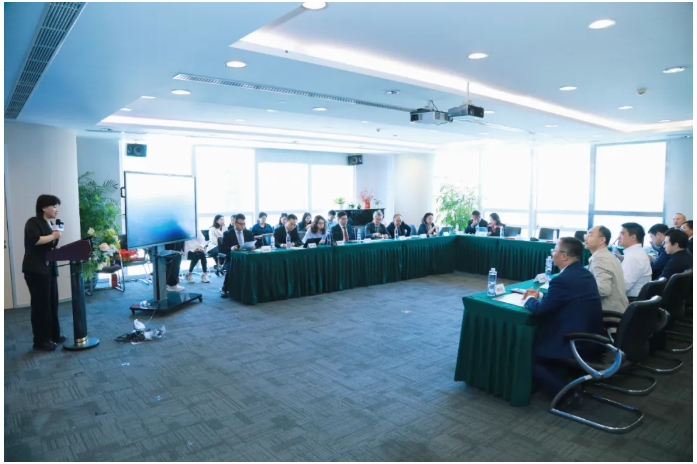
On September 11, 2026, the unveiling ceremony for the Research Center for the Disposal and Enforcement of Assets Related to Criminal Cases, the Research Center for Intellectual Property Crime Defense, and the Research Center for Energy Security and Legal Safeguards at King&Capital Law Firm, along with a symposium on energy security issues, was successfully held in Beijing. Tian Wenchang, founder and honorary director of King&Capital Law Firm; senior partners Liang Yali, Men Jinling, Zhang Xiaofeng, Liu Zhihan, Zhu Yalin, and Yang Hangsheng; partners Fu Qingtao, Yang Haiming, and Xu Wei; as well as numerous fellow attorneys attended the event both in person and online. The meeting was moderated by Yang Dakang, an advisor to King&Capital Law Firm.
Tian Wenchang, founder and honorary director of King&Capital Law Firm; senior partners Liang Yali, Men Jinling, Zhang Xiaofeng, Liu Zhihan, Zhu Yalin, and Yang Hangsheng; partners Fu Qingtao, Yang Haiming, and Xu Wei; along with numerous fellow attorneys, attended the event both in person and online. The event was moderated by Yang Dakang, advisor to King&Capital Law Firm.
Opening Remarks

Tian Wenchang, founder and honorary director of King&Capital Law Firm, was the first to take the stage to deliver opening remarks. Tian Wenchang pointed out that King&Capital’s establishment of more than ten research centers in a short period of time is a clear demonstration of the firm’s criminal defense practice moving toward greater refinement and specialization.
He emphasized that specialization cannot remain merely a slogan; it requires the establishment of substantive research platforms to produce solid research outcomes. At the same time, he reminded the research centers not to limit themselves to narrow topics within their respective fields but to maintain a holistic view of the broader criminal defense landscape.
Tian Wenchang focused his analysis on practical judicial challenges, including excessively high prosecution and conviction rates, the resurgence of analogical reasoning, the abuse of “penetrative adjudication,” and the confusion between the concept of “should have known” and the legal concept of “knowing” under criminal law. Drawing on international judicial practices, legislative standards of evidence, and judicial interpretations regarding the crimes of concealment and money laundering, he conducted an in-depth analysis, urging legal professionals to be vigilant against the arbitrary disruption of causal chains and to clarify the theoretical boundaries of general intent. He emphasized that lawyers should not only handle individual cases but also pay close attention to the progress of the rule of law, distill theoretical insights from practice, and fulfill their social responsibilities as legal professionals.

Attorney Men Jinling, a senior partner at King&Capital Law Firm, delivered a speech. She noted that Professor Tian Wenchang’s decades-long commitment to integrating theory with practice has set an exemplary standard for younger lawyers at King&Capital, and that the establishment of these three research centers will further bridge the gap between legal practice and academic research. She added that the firm is currently advancing plans to co-establish a postdoctoral research studio with Southwest University of Political Science and Law, and that in the future, it may further build a two-way platform for exchange between the legal profession and academia to promote research projects, facilitate case-based collaboration, and support the professional growth of young lawyers.
She expressed the hope that King&Capital, drawing on the firm’s deep-rooted experience and benchmarking against the research systems of top-tier universities, would build a legal research platform that deeply integrates practice and academia, thereby contributing to the development of the rule of law in China.
Finally, she extended her sincere congratulations to the three newly established research centers and looked forward to their future practical and efficient collaborative research efforts.
Unveiling Ceremony

Following the speeches, the event proceeded to a grand unveiling ceremony. Attorneys Tian Wenchang, Liang Yali, Men Jinling, Liu Zhihan, Zhu Yalin, and Fu Qingtao took the stage together and, in turn, unveiled the plaques for the Research Center for the Disposal and Enforcement of Assets Involved in Cases, the Research Center for Defense Against Intellectual Property Crimes, and the Research Center for Energy Security and Legal Safeguards. Amid enthusiastic applause from the audience, the three specialized research centers were officially established.
Following the unveiling, attorneys Tian Wenchang, Liang Yali, Men Jinling, and Zhang Libin presented letters of appointment to the centers’ advisors, directors, deputy directors, secretaries-general, and deputy secretaries-general, as well as to a group of senior researchers and researchers.
Inaugural Addresses

The heads of the three research centers delivered their inaugural addresses in turn. On behalf of Zhu Yalin, Director of the Research Center for Energy Security and Legal Safeguards, Attorney Zhang Xiaofeng, Executive Director of the center, delivered the inaugural address.
Zhang Xiaofeng noted that energy security has risen to become a vital component of national security. With the implementation of the new *Energy Law*, legal disputes regarding investment and financing, project development, and compliance oversight in the energy sector are becoming increasingly complex, creating an urgent market need for multidisciplinary legal services that combine industry expertise with legal proficiency. He proposed that the Center would integrate resources from King&Capital’s main office in Beijing and its branch offices, collaborate with academic research institutions, and focus on studying cases involving the intersection of criminal and civil law as well as administrative and criminal law in the energy sector. The Center will also analyze and evaluate complex and representative cases in the energy industry, covering areas such as investment and financing, mergers and acquisitions, compliance management, and dispute resolution for traditional energy enterprises. It is committed to building a nationally influential professional brand in energy legal protection and looks forward to the support of all colleagues at the firm.

Attorney Fu Qingtao delivered his inaugural address as Executive Director of the Research Center for the Disposal and Enforcement of Assets Involved in Criminal Cases.
Attorney Fu Qingtao explained that the Center’s core team has been deeply engaged in the front lines of criminal asset disposal for a decade. Since the issuance of relevant judicial interpretations in 2014, the field of criminal asset disposal has gradually become more standardized. However, in practice, judicial standards vary across regions, and practical challenges—such as the improper seizure and detention of third parties’ lawful property and the coordination between the enforcement of property penalties and sentence reductions or parole—continue to arise. There is an urgent need for legal professionals with expertise in criminal, civil, and enforcement law to tackle these issues. He stated that the Center has identified three major research areas: defense regarding property involved in criminal cases, the protection of third-party rights, and procedures for the confiscation of illicit gains; cases involving the intersection of criminal and civil law, administrative and criminal law, and criminal law and enforcement; and the enforcement of property-related sentences, as well as supporting measures for sentence reduction and parole. The Center will recruit researchers from across society, collaborate with universities and bar associations to conduct seminars and training, and adhere to the principle of using individual cases to drive the refinement of rules, thereby protecting the lawful property of enterprises and citizens through institutional safeguards.

As Director of the Intellectual Property Crime Defense Research Center, Attorney Liu Zhihan outlined three key characteristics of current intellectual property criminal cases in his inaugural address: the number of cases continues to rise, involving enormous sums of money; the digital economy has given rise to a large number of new and complex cases, making it increasingly difficult to establish technical facts; and a significant number of cases involve intersections between criminal, civil, and administrative law.
He argued that the key breakthrough in intellectual property criminal defense lies in scrutinizing the legal basis of the rights holder’s claims. Many criminal cases are, in essence, an extension of civil infringement into the criminal sphere; therefore, defense attorneys must master the administrative procedures for intellectual property rights confirmation and authorization.
Drawing on the “Amendment XI to the Criminal Law,” the 2025 Judicial Interpretation on Intellectual Property Criminal Cases, and the industry context surrounding the establishment of intellectual property procuratorial offices across various regions, Attorney Liu Zhihan outlined the Center’s development path of “one core, two fundamental principles, four major business segments, and six strategic plans.” Its services cover defense in intellectual property crime cases, criminal complaints, corporate criminal compliance, and the resolution of disputes at the intersection of criminal and civil law; The plans include forming specialized teams, hosting annual forums, publishing professional series, releasing industry white papers, establishing practical training bases at universities, and creating regular communication channels within the industry.
Thematic Seminar

Attorney Fu Qingtao, speaking on the topic “Analysis of Hot Issues in the Disposal of Property Involved in Criminal Cases and Related Issues of Recovery,” identified ten procedural and ten substantive practical issues requiring urgent research. Drawing on a real-life case involving the use of illicit proceeds to purchase equity from a bona fide third party, he focused his discussion on the recovery system, clarifying the distinguishing criteria between “recovery,” “continued recovery,” “remittance to the state treasury,” and “compensation to victims,” and proposed the principle of shared burden of gains and losses.
He argued that once proceeds of crime have been invested in transactions, the original funds cannot simply be recovered directly; instead, the corresponding equity value must be calculated, distinguishing between scenarios where the property has appreciated or depreciated. At the same time, he raised several issues, including the scope of recovery from accomplices, whether individuals who did not benefit can be subject to recovery, and the exclusion of third-party property from confiscation. He called on researchers to jointly conduct case studies and to continuously recruit research talent nationwide.

Attorney Yang Haiming delivered a presentation titled “Defense Strategies Regarding Assets in Organized Crime Cases.” He pointed out that in handling organized crime cases, defense work falls into two major categories: “protecting the individual” and “protecting assets.” In practice, many defense teams过度 focus on conviction and sentencing while neglecting the defense regarding assets, resulting in an incomplete defense strategy. He distinguished the legal rules governing asset disposition for different parties—including organizational leaders, active participants, and general participants—and clarified the legal differences between “confiscation of all personal property” and “confiscation of illicit gains and contraband” as supplementary penalties.
He also outlined several key defense strategies: paying attention to the timing of asset acquisition to distinguish between assets acquired before and after the establishment of the organized crime group; identifying the spouse’s lawful share in marital property; and addressing issues related to commingled assets and the allocation of shares in real estate purchased with partial contributions.
At the same time, Yang Haiming outlined defense strategies covering the entire process—from investigation through prosecution review to trial—including applying to lift seizures, freezes, and confiscations; conducting thorough cross-examination during trials; and having third parties file objections to property ownership. He emphasized that property defense in organized crime cases is an integral and crucial battleground in criminal defense.

Attorney Zhang Pengpeng shared insights on the challenges of recovering proceeds of crime from live-streaming tips. Drawing on his experience as legal counsel for a leading live-streaming platform, he analyzed the judicial difficulties in recovering proceeds of crime from streamers and platforms after such funds have been used for live-streaming tips.
He pointed out that there are significant discrepancies between criminal and civil courts regarding the legal characterization of live-streaming tips. Some criminal case precedents treat tips as gratuitous gifts, while civil courts generally classify them as online consumer service contracts. An even greater challenge lies in the fact that, as interested third parties, live-streaming platforms and streamers are not granted the status of parties to the proceedings under the Criminal Procedure Law, resulting in severe deficiencies in their ability to review case files, present evidence, appear in court, and seek legal remedies.
Drawing on multiple real-life case examples, he proposed establishing early communication regarding the scope of asset freezes during the investigation phase; verifying original data on top-ups and tips during the review and prosecution phase; distinguishing between total top-up amounts, tip amounts, platform commissions, streamer withdrawals, and net income after tax deductions; and, drawing on the special procedure for the confiscation of illicit gains, he called for legislative improvements to safeguard the rights of interested parties—including the right to information, the right to review case files, the right to appear in court, and even the right to appeal—as well as to refine the supporting procedures for the disposal of case-related assets.

Attorney Wang Siyu delivered a commentary on the three presentations mentioned above. He suggested adding a dedicated system for “compulsory measures regarding property” to the General Provisions of the Criminal Procedure Law. Drawing on the mechanism for reviewing arrest warrants, he proposed establishing judicial review for pretrial seizure and freezing actions, and discussed two academic approaches: having either the procuratorate or the court responsible for reviewing such compulsory measures regarding property.
At the same time, he proposed establishing a unified, cross-departmental, and cross-level center for the disposal and safekeeping of case-related property, promoting a moderate separation between litigation procedures involving case-related property and those involving individuals, and establishing a separate court for the review of case-related property. He noted that there are numerous substantive and procedural challenges in the field of case-related property and expressed his hope that all members of the center would draw on practical case examples to continue producing high-quality research outcomes.

Attorney Xu Yujie delivered a presentation titled “Defense Practices Regarding Presumed Knowledge in Intellectual Property Crimes,” using the crime of selling goods bearing counterfeit registered trademarks as a case study. He noted that subjective knowledge is an essential element of intellectual property crimes. In the absence of direct evidence, prosecutors often rely on circumstantial facts to infer subjective knowledge; however, judicial practice frequently confuses “certain knowledge,” “possible knowledge,” and “ought to have known,” which can blur the line between intentional and negligent crimes.
Citing multiple final judgments, he analyzed how judicial authorities often directly presume knowledge based on factors such as “prices that are significantly below market value, lack of authorization documents, absence of purchase receipts, and failure to conduct authenticity verification”—a line of reasoning he argued is flawed.
He proposed a strategic approach to counter this presumption: a presumption is merely a means of proof and does not equate to a conviction; strictly distinguish between “may have known” and “knew”; focus on refuting the factual basis upon which the presumption rests; make effective use of the proviso clauses in judicial interpretations to demonstrate that the defendant has exercised a reasonable duty of care; and strictly limit the scope of application of catch-all provisions, ensuring that industry experience is not used to lower the threshold for criminal liability.

In his presentation titled “New Developments in the Defense Against Intellectual Property Crimes in the Early AI Era,” Attorney Xu Wei argued that we are currently in the “early AI era”: AI technology is evolving at a rapid pace, but the corresponding legal framework lags behind; numerous legal issues remain unaddressed by clear statutory provisions. AI can serve as both a tool for crime and a target of criminal activity. New practical challenges include the deletion of data from large language models, ownership of AI-generated content, compliance with training corpora for large language models, whether trade secrets lose their confidentiality after being uploaded to large language models, and the presumption of subjective knowledge on the part of AI service providers.
Attorney Xu Wei offered four recommendations to defense attorneys: proactively learn about new technologies; frame new technology issues within the context of traditional criminal law principles; be adept at providing reasonable interpretations of legal provisions; and master “digital criminal defense” skills to translate complex technical data into plain language that investigative authorities can easily understand when reviewing defense arguments.
Panel Discussion
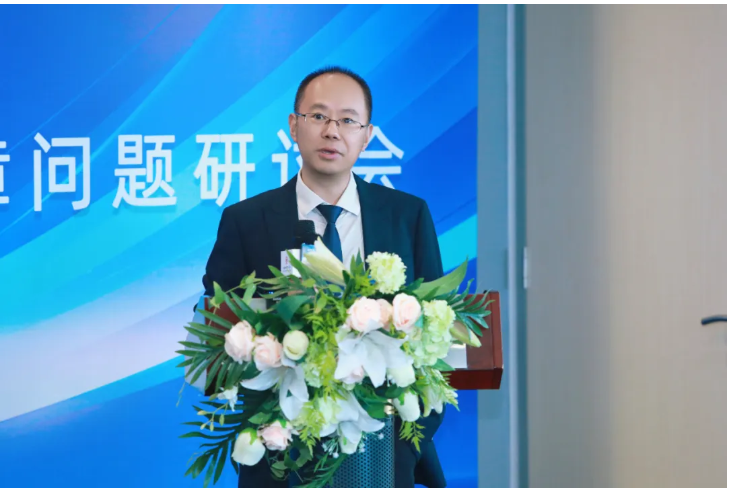
During the panel commentary session, Attorney Yang Hangsheng summarized the remarks made by Attorneys Xu Yujie and Xu Wei, once again echoing the core controversy regarding “knowing” versus “ought to have known” raised by Professor Tian Wenchang in his opening remarks. He noted that while AI has given rise to many new legal phenomena, most behaviors can still be addressed by the existing legal framework, and only a few new types of conduct require the iteration and updating of legal rules.
At the same time, he pointed out that although the Research Center for Intellectual Property Crime Defense is named “Defense,” its research should not be limited to defense strategies; criminal prosecutions involving intellectual property should also be included in its scope of study. Prosecution and defense are two sides of the same coin, and together they drive the correct implementation of criminal legal norms regarding intellectual property.
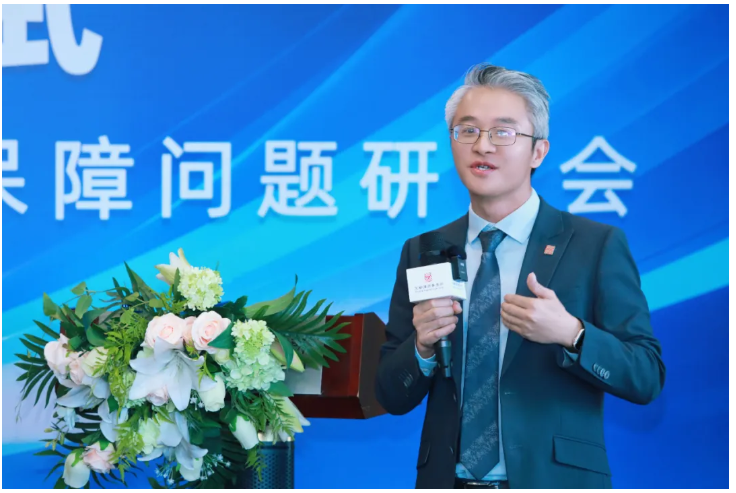
During the discussion, Attorney Feng Yunqian used a real-life case—in which a trademark’s legal basis was found invalid, leading to a guilty verdict in the first instance, a remand for retrial, and an acquittal in the second instance—to illustrate the highly interdisciplinary nature of intellectual property criminal defense, which requires expertise in criminal, civil, and administrative law. He pointed out that many criminal defense attorneys tend to overlook the administrative procedures for granting and validating trademarks and patents, noting that defects in the legal basis of the rights themselves can directly result in the inability to establish a criminal offense.
He noted that King&Capital’s deep-rooted expertise in criminal defense serves as the foundation for the development of intellectual property criminal defense, as intellectual property criminal cases often involve substantial stakes and offer vast market opportunities. He also extended an invitation to the entire industry, welcoming criminal defense attorneys, intellectual property civil litigators, intellectual property non-litigation attorneys, and corporate legal counsel to join the Research Center to jointly advance research on complex legal issues.

Attorney Ding Wei delivered a presentation titled “Can the Use of Sand and Gravel During Construction Projects Be Deemed Illegal Mining?” Ding Wei pointed out that in practice, numerous construction projects excavate sand, gravel, and soil within the project boundary lines, leading to charges of illegal mining under the allegation that they are “using construction as a pretext for illegal mining.” He reviewed multiple regulatory documents issued by the Ministry of Natural Resources, clarifying that the extraction of sand and gravel incidental to construction projects—provided it is not for profit—does not require a mining license; any surplus sand and gravel after the project’s own use may be sold externally in accordance with regulations.
He stated that the core criterion for determination is not the presence or absence of a mining license, but whether the extraction is necessary for construction. The focus should be on examining whether the extraction exceeds the site boundary or the designed excavation depth.
He also advised defense attorneys to closely scrutinize judicial appraisal reports, verify the scope of practice and qualifications of appraisal agencies, and distinguish between ecological damage assessments and the valuation of mineral products.

Attorney Tang Wanzhuo presented on “Identifying and Addressing Criminal Risks in the Energy Transition.” Drawing on her experience defending an energy company in a case involving organized crime, she analyzed how policy conflicts within the energy sector, against the backdrop of industry transformation, gradually evolve into criminal risks.
She categorized these risks into three major types: policy conflicts arising from the restructuring of the traditional energy sector, where disputes over compensation for resource consolidation and corporate mergers are highly prone to giving rise to charges such as provoking trouble, bid-rigging, and illegal mining; risk shifts across the entire new energy industry chain, where the mining of critical minerals such as lithium, cobalt, and rare earth elements, as well as the disposal of hazardous waste from energy storage batteries, lead to environmental pollution and challenges in determining joint criminal liability; new risks arising from the digitization and marketization of energy governance, such as those related to carbon emissions verification, green certification, ESG disclosure, and green finance, which give rise to new types of risks like the provision of false certification documents.
In addition, she discussed the current trend of corporate criminal risks being passed on to corporate executives and actual controllers against the backdrop of functionalist criminal law and the abuse of “piercing the corporate veil” principles. She stated that criminal defense attorneys cannot limit themselves to post-incident defense; they should intervene early in corporate risk management. When handling cases, they must fully reconstruct the historical context of industry policies and transform these contextual facts into grounds for exoneration.
Closing Remarks

After all the seminar sessions concluded, Attorney Liang Yali, a senior partner at King&Capital Law Firm, delivered the closing remarks. She provided a comprehensive review of the day’s events and highly praised the practical insights shared by the seven presenting attorneys. Attorney Liang Yali noted that this unveiling ceremony and seminar marked a significant practical implementation of King&Capital’s strategy for specialized segmentation, with the three research centers directly addressing cutting-edge practical challenges such as asset recovery rules, presumption of knowledge, AI-related legal risks, and energy transition. She expressed her hope that the three research centers would produce more high-quality practical outcomes in the future, thereby driving the high-quality development of legal services in the interdisciplinary fields of criminal, civil, and administrative law.

In his concluding remarks, Zhu Yonghui, Director of King&Capital Law Firm, extended warm congratulations on the official unveiling of the three research centers and the assumption of their new roles by the directors, deputy directors, secretaries-general, and researchers. He also expressed his honor at being appointed as an advisor to all three centers and pledged to conscientiously fulfill his advisory duties.
He reviewed King&Capital Law Firm’s 31-year journey in criminal defense—from the Criminal Practice Department to multiple specialized research centers—which has now evolved into a comprehensive matrix comprising three major platforms and nine specialized criminal law research centers. He further elaborated on the firm’s original intent in establishing these specialized research centers en masse: to drive criminal defense toward deeper specialization; to stimulate research enthusiasm among all attorneys and provide a growth platform for young lawyers; and to build a platform for external exchange and cooperation, thereby promoting the overall progress of the industry.
At the same time, he extended an invitation to colleagues in the legal profession, welcoming outstanding legal talent to join King&Capital Law Firm to jointly deepen their expertise in criminal legal services.
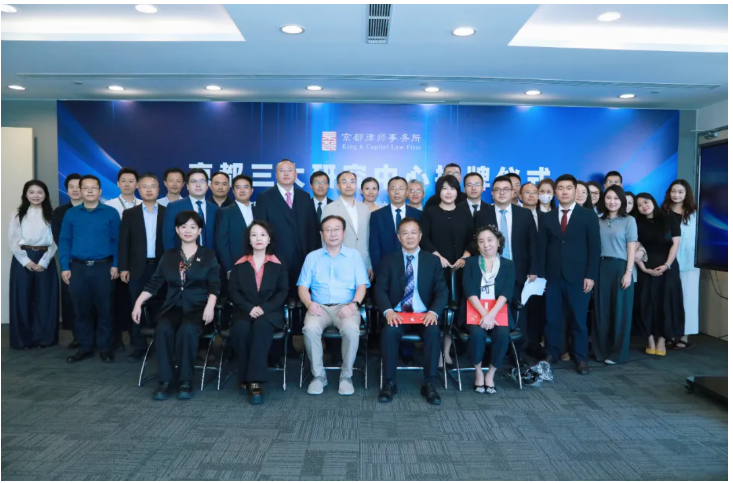
With this, the unveiling ceremony for King&Capital Law Firm’s Research Center for the Disposal and Enforcement of Assets Involved in Cases, Research Center for Intellectual Property Crime Defense, and Research Center for Energy Security and Legal Safeguards, along with the seminar on energy security issues, concluded successfully. Grounded in practical case studies and leveraging academic resources, these three research centers will continue to produce research findings, address real-world challenges in judicial practice, and contribute King&Capital’s strength to the advancement of the rule of law.